
Leg Training often goes off the rails for one simple reason: most people try to “hit everything” in one session, then wonder why their knees ache, their squat stalls, and their quads never really grow. A complete routine is less about doing more, and more about doing the right lifts in the right order, with enough weekly volume to adapt.
If you want stronger squats, bigger quads and glutes, and legs that feel athletic instead of beat up, the plan below gives you a repeatable structure. You’ll get a warm-up that actually matters, two clear weekly options (2 or 3 leg days), plus form cues and substitutions for common equipment limits.
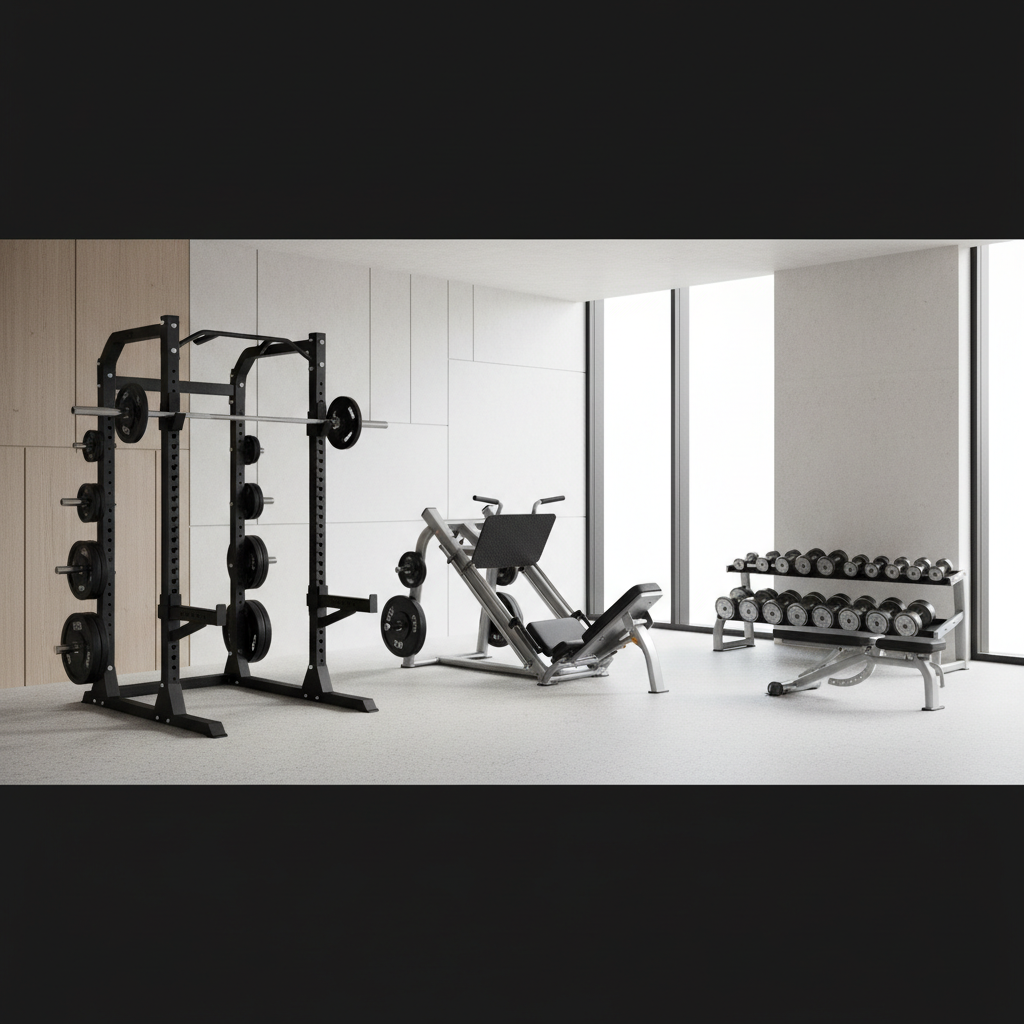
I’ll also be upfront about a common misunderstanding: “leg day” is not automatically effective because it’s hard. The better question is whether your program covers knee-dominant work (quads), hip-dominant work (glutes/hamstrings), calves, and enough single-leg training to keep you balanced.
What a “complete” leg routine actually needs
A solid leg plan usually checks a few boxes without turning into a two-hour ordeal. Think of this as your quality filter before you add sets.
- One primary strength lift (squat pattern or hinge pattern) done early, when you’re fresh
- One secondary compound that complements the first (leg press, RDL, front squat, hack squat)
- Targeted accessories for hamstrings, glutes, adductors, calves
- Single-leg work (split squat, step-up, lunge) for stability and symmetry
- Progression rules so you know when to add weight or reps
According to the American College of Sports Medicine (ACSM), resistance training programs are typically built around key variables like exercise selection, order, intensity, and volume, because those factors drive adaptation and recovery. In plain terms, the structure matters as much as the effort.
Quick self-check: which situation are you in?
Before you copy a routine, diagnose your “leg problem.” The fixes differ.
Pick the statement that sounds most like you
- “My knees get cranky” → you may need better warm-up sequencing, quad work choices, and range control
- “My glutes never feel it” → you may be under-dosing hip extension work or using loads you can’t control
- “I’m strong but my legs look the same” → volume distribution and rep ranges may be too narrow
- “I get sore for days” → you may be doing too much novelty, too many failure sets, or not spacing sessions well
- “My lower back takes over” → bracing, stance, and hinge selection likely need adjustment
If pain is sharp, persistent, or changes your gait, it’s wise to consult a qualified clinician or physical therapist before pushing harder. Training through the wrong signal is how “minor” issues become long layoffs.
The warm-up most people skip (and then pay for)
Leg Training warm-ups shouldn’t feel like cardio punishment. The goal is joint readiness, bracing, and practicing the pattern you’ll load.
8–12 minutes, simple and repeatable
- 2–3 minutes easy movement: bike, treadmill incline walk, rower
- 2 rounds of pattern prep: bodyweight squat x8, hip hinge drill x8, reverse lunge x6/side
- Activation (choose 1–2): glute bridge x10, band lateral steps x10/side, calf raises x12
- Ramp-up sets for your first lift: 3–5 lighter sets, small jumps, no rushing

One small cue that helps many lifters: treat warm-up reps like “practice,” not filler. Controlled descent, stable feet, exhale and brace before you move. Your working sets feel better almost immediately.
Complete leg training routine (2-day weekly plan)
This option works well if you lift 3–4 days per week and want two focused lower-body sessions. You’ll hit quads and glutes twice, with hamstrings and calves covered both days.
Day A (knee-dominant emphasis: quads)
- Back squat 4 sets x 4–6 reps (2–3 reps in reserve)
- Leg press 3 sets x 8–12 reps
- Bulgarian split squat 2–3 sets x 8–10/side
- Leg extension 2 sets x 12–15 reps (controlled, no swinging)
- Standing calf raise 4 sets x 8–12 reps (pause at top and bottom)
Day B (hip-dominant emphasis: glutes/hamstrings)
- Romanian deadlift (RDL) 4 sets x 5–8 reps
- Hip thrust 3 sets x 8–12 reps
- Seated or lying leg curl 3 sets x 10–15 reps
- Walking lunge 2 sets x 10–12/side
- Seated calf raise 3–4 sets x 10–15 reps
Rest times: 2–3 minutes on the first lift, 60–120 seconds on accessories. If you’re gasping, it’s fine to rest a bit longer; quality reps beat rushed reps.
3-day option (when you want faster progress without wrecking recovery)
If you recover well and your schedule allows, a third lower session often helps because volume spreads out, technique stays cleaner, and each day feels less like a marathon.
Day 1: Squat strength
- Back squat 5 x 3–5
- Front squat or hack squat 3 x 6–10
- Leg extension 2 x 12–15
- Calves 4 x 8–12
Day 2: Hinge strength
- RDL or deadlift variation 4 x 4–6
- Hip thrust 3 x 8–12
- Leg curl 3 x 10–15
- Back extension (glute bias) 2 x 10–12
Day 3: Single-leg + pump (lighter, joint-friendly)
- Split squat or step-up 3 x 8–12/side
- Leg press (higher reps) 3 x 12–20
- Hamstring curl (higher reps) 2–3 x 12–20
- Calves 4 x 12–20
This third day looks “easy” on paper, but it’s where many people finally add quad volume without aggravating knees or frying their back.
How to progress (without guessing every week)
Leg Training becomes consistent when progression is boring and predictable. Here are two methods that work in most gyms.
Method 1: Double progression (best for machines and accessories)
- Pick a rep range, like 8–12.
- Use the same weight until you hit 12 reps on all sets with clean form.
- Increase weight slightly next week, repeat.
Method 2: Top set + back-off (best for squats/RDLs)
- Work up to a top set of 4–6 reps at a challenging load (leave 1–2 reps in reserve).
- Drop 8–12% load, do 2–3 back-off sets for 6–8 reps.
If your reps crash week to week, it’s often sleep, stress, or too many sets to failure, not a “bad program.” Adjust the throttle before you swap the whole plan.
Exercise substitutions (and a simple weekly template table)
Equipment varies, and bodies vary. Swapping exercises is fine as long as you keep the pattern and intent.
Smart swaps by movement pattern
- Squat pattern: back squat → safety bar squat → hack squat → goblet squat
- Hip hinge: RDL → dumbbell RDL → good morning (light) → cable pull-through
- Glute focus: hip thrust → glute bridge → smith machine thrust → cable kickback
- Hamstring curl: machine curl → stability ball curl → sliding towel curls
| Goal | Weekly Leg Days | Typical Set Focus | Good Fit If… |
|---|---|---|---|
| Strength emphasis | 2 | More 3–6 rep work on 1–2 main lifts | You want measurable squat/RDL progress |
| Hypertrophy emphasis | 2–3 | More 8–15 rep work, slightly higher total sets | You want size and can recover well |
| Joint-friendly consistency | 3 (lighter Day 3) | Moderate loads, controlled tempo, fewer grinders | Knees/back get irritated by heavy-only plans |
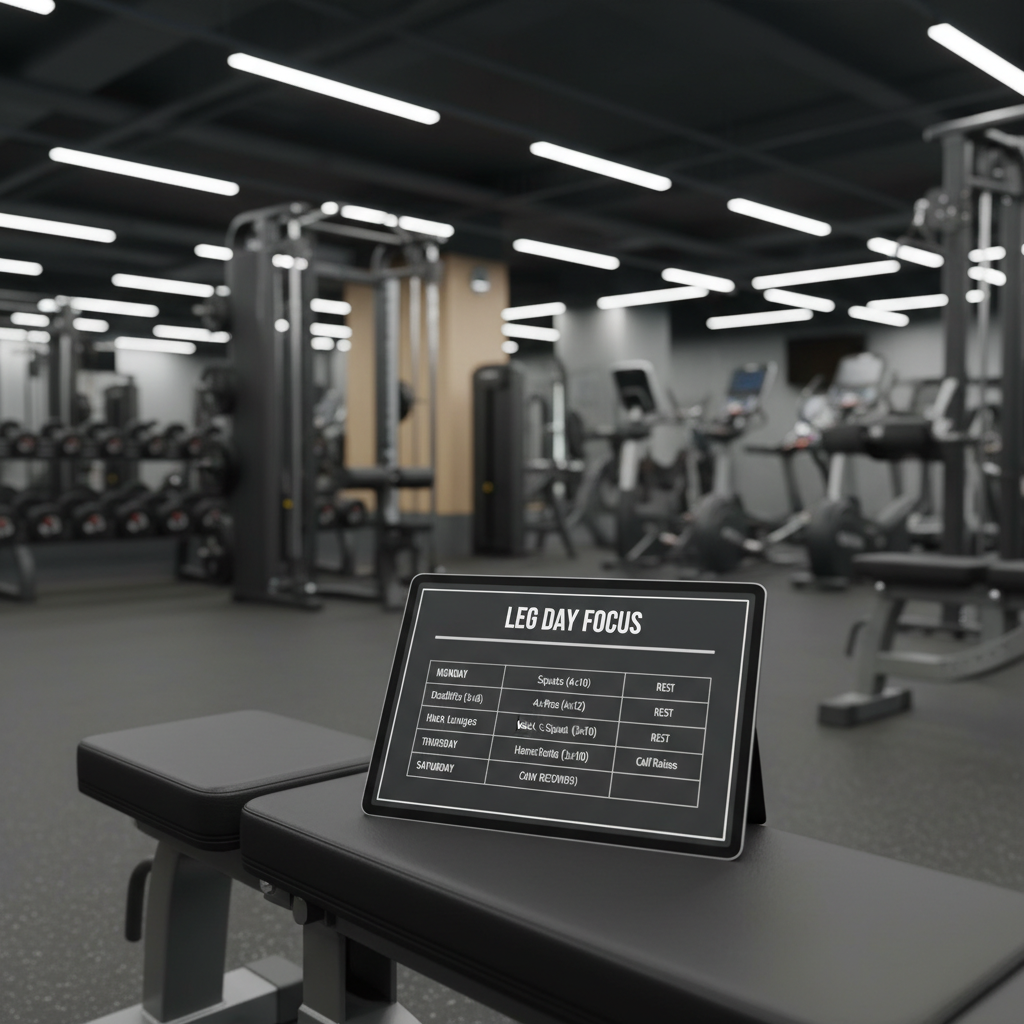
One substitution rule I like: if you swap a barbell lift for a machine, you can often add a little volume because stability demands drop, but keep your reps smooth, no ego reps.
Common mistakes that quietly stall leg growth
These are the habits that make people feel like they “train hard” while progress stays slow.
- All heavy, all the time: strength matters, but hypertrophy usually needs more quality reps across the week.
- Skipping single-leg work: imbalances show up later as knee tracking issues or hip shifts in squats.
- Cutting depth short for load: partials can have a place, but consistent, controlled range often builds more dependable progress.
- Turning accessories into cardio: rushing calf raises and leg curls reduces the thing you came for: tension.
- Too much failure training: occasional hard sets work, but constant grinding often wrecks performance on the main lifts.
According to the Centers for Disease Control and Prevention (CDC), strength training is part of overall health recommendations, but form and appropriate progression matter for safety. If you’re unsure about technique, a session with a qualified coach can save you months of trial and error.
Practical tips for better sessions this week
If you want immediate carryover, keep these as your non-negotiables for the next four workouts.
- Pick one main lift and guard your energy for it, no exhausting supersets before squats.
- Film one set from the side, check depth and spine position, small tweaks beat random exercise changes.
- Track two numbers: load and reps on main lifts, total hard sets per muscle group.
- Leave 1–3 reps in reserve on most sets, save true max effort for occasional tests.
- Stop “chasing soreness”, chase repeatable performance.
If you’ve had recent surgery, ongoing joint pain, or a medical condition that affects exercise tolerance, it’s smart to ask a healthcare professional what modifications make sense before you increase intensity.
Conclusion: make your leg routine boring in the best way
Leg Training works when it becomes predictable: a main lift you practice, complementary volume that builds muscle, and progression rules you can follow even on average days. Pick the 2-day or 3-day layout, run it for 6–8 weeks, and only change one variable at a time.
Your next step is simple: choose your main squat pattern and hinge pattern, write them at the top of your workout notes, then commit to adding a rep or a small load increase whenever you earn it with clean form.
FAQ
How many times per week should I do leg training?
Most people do well with 2 sessions per week, and a 3rd lighter day can help if recovery stays solid. If you’re constantly sore or your numbers drop, you’re probably doing too much for your current conditioning.
Is squatting enough for a complete lower-body routine?
Squats cover a lot, but they rarely give hamstrings and calves enough direct work. Adding a hinge (like an RDL) and a curl or calf movement usually makes the routine more complete.
What if I only have dumbbells for leg training?
You can build an effective plan with goblet squats, split squats, step-ups, dumbbell RDLs, and sliding hamstring curls. The main limitation is loading, so higher reps and slower tempo become more important.
Should I train legs to failure?
Sometimes, on safer isolation moves like leg extensions or curls, a near-failure set can be useful. Taking heavy squats and hinges to failure frequently often backfires because technique breaks down and fatigue lingers.
How do I know if my knee pain is “normal soreness” or a problem?
General muscle soreness tends to feel dull and improves over a few days. Sharp pain, swelling, pain that changes how you walk, or discomfort that worsens week to week is a sign to back off and consider a professional evaluation.
What’s a good rep range for building bigger legs?
A mix works best for many lifters: some heavier sets (3–8 reps) on the main lift, and more moderate to higher reps (8–20) on machines and accessories to accumulate quality volume.
Why do my glutes take over and my quads don’t grow?
Often it’s stance and intent: sitting too far back, using a low-bar style without enough knee travel, or cutting depth short can shift work away from quads. Quad-focused options like front squats, hack squats, and controlled leg press reps usually help.
If you’re trying to make Leg Training more consistent but you’re stuck choosing exercises, managing knee comfort, or setting weekly volume, a coach or structured template can be a time-saver, especially when you want clear progression without overthinking every session.