
Senior fitness training for mobility and balance usually comes down to two goals: keep joints moving well, and help your body react quickly when you shift weight. If you feel wobbly stepping off a curb, or stiff getting up from a chair, you’re not alone, and you’re not “too far gone” to improve.
Mobility and balance matter because they affect the everyday stuff that decides independence: reaching overhead, turning to look behind you, walking while carrying groceries, getting up at night without feeling unsteady. The good news is you don’t need complicated routines, you need a few well-chosen movements done consistently.
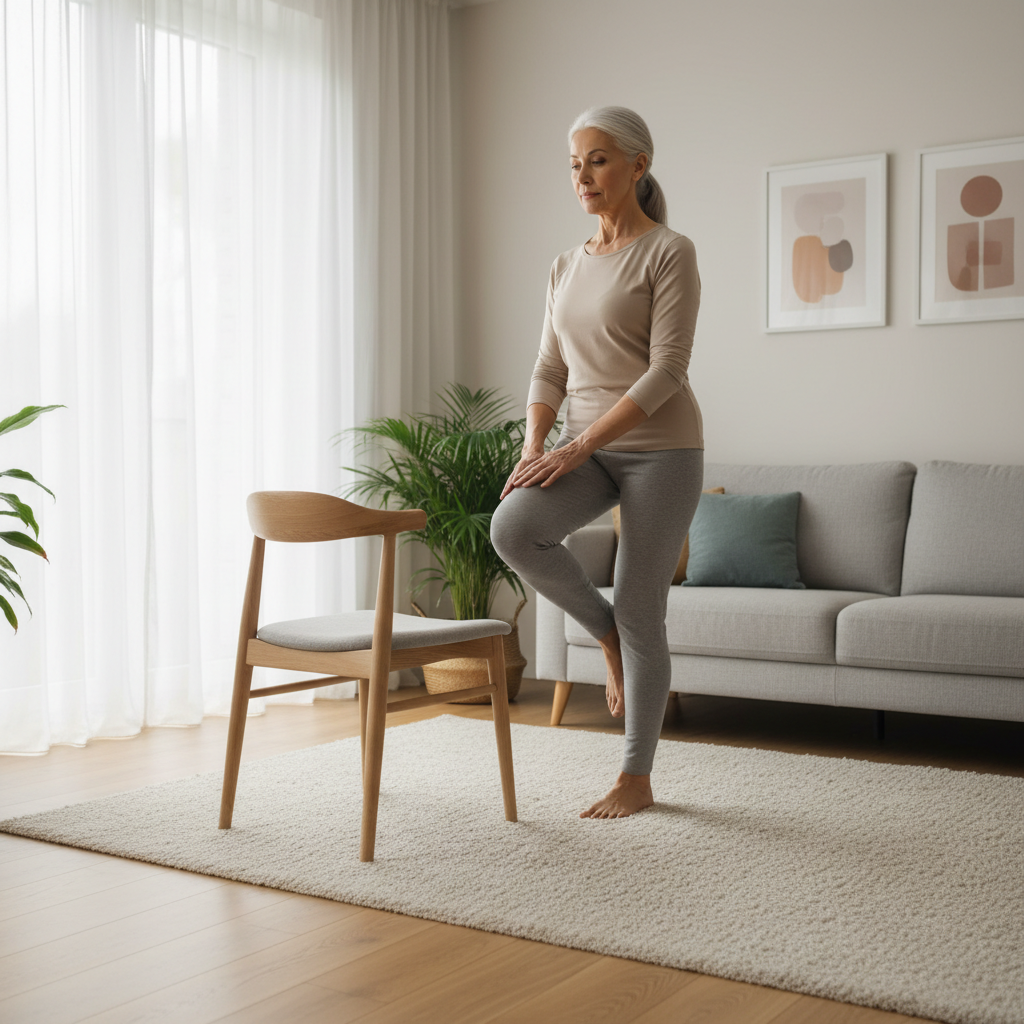
One quick misconception: balance is not just “standing on one foot.” In real life it’s strength, ankle and hip mobility, vision, reaction time, and even medication side effects working together. This guide helps you identify what’s most likely holding you back, then gives practical exercises you can use at home.
Why balance and mobility feel harder with age (and what’s actually fixable)
If your balance feels “off,” it’s often not a single cause. It’s a stack of small changes that add up, and many respond well to targeted practice.
- Lower-body strength drops, especially in glutes and thighs, making it harder to recover from a trip or quick turn.
- Joint stiffness (hips, ankles, upper back) shortens your stride and reduces your ability to shift weight smoothly.
- Slower reflexes mean your body reacts a beat later when you sway.
- Foot and ankle changes (reduced sensation, weaker calves) can make uneven ground feel “surprising.”
- Health factors like blood pressure changes, vision issues, or medication effects may contribute.
According to the National Institute on Aging (NIA), balance and strength exercises can support stability and help reduce fall risk in many older adults. If you’ve been avoiding movement out of fear of falling, that’s understandable, but it can also create a loop where less activity leads to more stiffness and weaker balance reactions.
Quick self-check: what type of balance issue do you have?
This is not a diagnosis, it’s a practical sorting tool. If any test feels unsafe, skip it and consider asking a clinician or physical therapist to assess you.
Try these simple checks
- Chair stand check: Can you stand up from a chair without using your hands? If not, leg strength is a priority.
- Single-leg stance (supported): With fingertips on a counter, can you lift one foot for 10 seconds without gripping hard? If not, balance reactions need practice.
- Ankle mobility feel: Do you feel like your heels “fight you” when you squat a little or step down? Ankles may be limiting your gait.
- Turning check: When you turn in place, do you take lots of small steps or feel dizzy? Turning control or dizziness triggers may be involved.
If dizziness, fainting, chest pain, new numbness, or sudden weakness shows up, stop and seek medical guidance promptly. Many causes are treatable, but they shouldn’t be guessed at.
Safety setup before you start (small details matter)
For senior fitness training, the safest routines are the ones you’ll actually repeat, so set your environment up to remove “surprise” risks.
- Use a stable support: kitchen counter, heavy chair, or railing (avoid wheeled chairs).
- Wear supportive shoes if you’re on slippery floors; barefoot can be fine on non-slip surfaces if your feet tolerate it.
- Keep the area clear: no throw rugs, cords, or pets underfoot during practice.
- Start at a talkable effort. If you can’t speak in short sentences, you may be pushing too hard.
And one more thing people skip: plan for “off days.” If your energy is low, you can still do a 5-minute mobility sequence. Consistency beats intensity here.
Core exercises that actually improve mobility and balance
These movements cover the big buckets: ankles, hips, posture, and weight shifting. Pick 6–8 to start, then rotate variations once they feel easy.
Mobility builders (joint-friendly)
- Ankle rocks at a counter: Feet hip-width, bend knees slightly, shift forward until you feel calf/ankle stretch, then back. 8–12 reps.
- Hip hinge drill: Hands on hips, push hips back like closing a car door, keep spine long. 6–10 reps, slow.
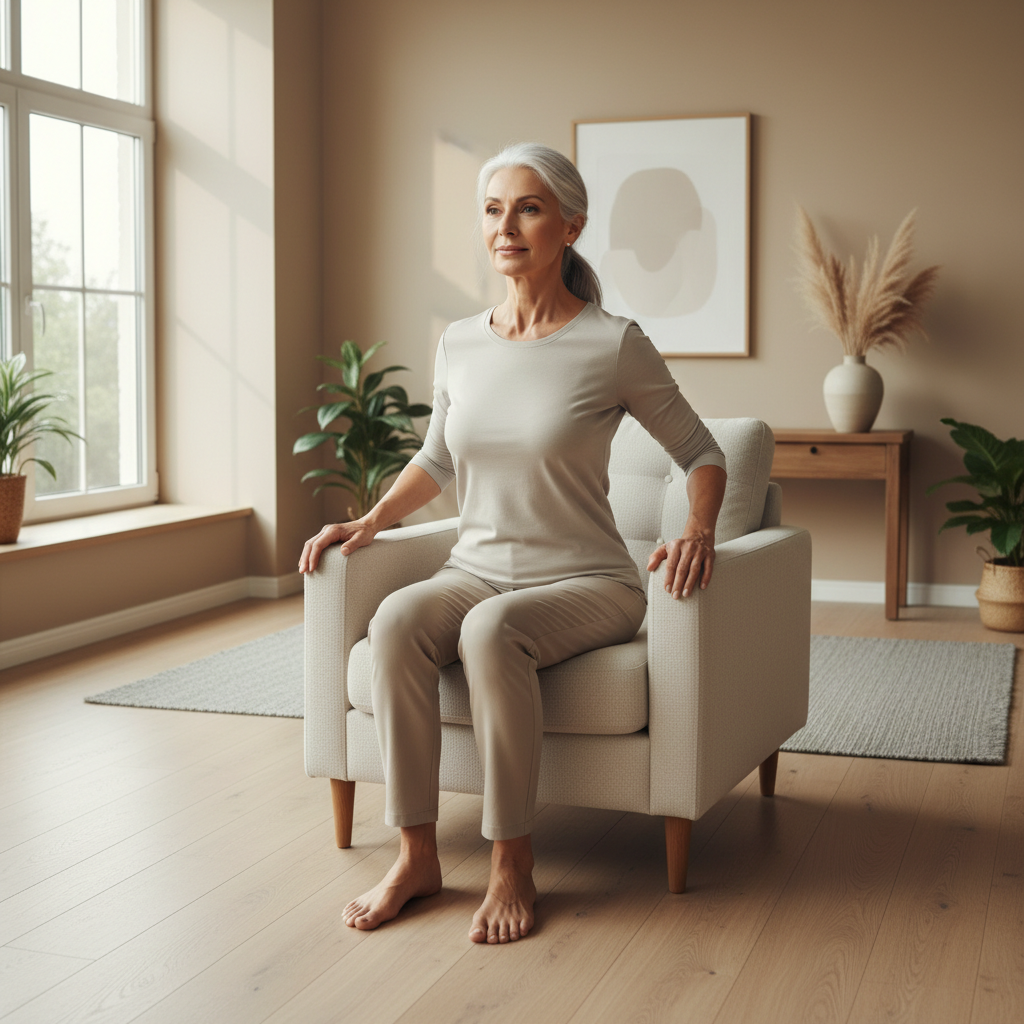
- Thoracic opener: Sit tall, hands across chest, gently rotate right/left. 6 reps each side.
Balance practice (progressable and practical)
- Tandem stand (heel-to-toe): Near a counter, hold 10–20 seconds, switch lead foot.
- Weight shifts: Shift weight side-to-side, then forward/back, without lifting feet. 30–60 seconds.
- Marching in place: Slow controlled lifts, light fingertip support if needed. 20–40 marches total.
Strength moves that transfer to daily life
- Sit-to-stand: From a firm chair, stand and sit with control. Start 5–8 reps. Add a cushion if knees complain.
- Calf raises: Hold counter, rise up, pause, lower slowly. 8–12 reps.
- Side steps: Small steps left/right along a counter. 8–12 steps each way.
According to the Centers for Disease Control and Prevention (CDC), strength and balance activities are commonly recommended as part of fall prevention strategies. The takeaway is simple: practice the movements that mimic real situations, not just “gym-style” exercises.
A simple 3-level progression (so you don’t get stuck)
This is where many people stall: they repeat the same easy version for months, or jump too fast to “no hands” and feel unsafe. Use this progression instead.
| Exercise Type | Level 1 (Start) | Level 2 (Build) | Level 3 (Challenge) |
|---|---|---|---|
| Balance stance | Tandem stand with two-hand support | Fingertip support, longer holds | Head turns or eyes looking around |
| Walking control | Marching in place at counter | High-knee marches across room | Carry a light object while walking |
| Leg strength | Sit-to-stand from higher seat | Lower chair or slower tempo | Hold a light weight at chest |
| Ankles/calves | Calf raises, small range | Full range, slower lowering | Single-leg calf raise (supported) |
Progress rule: move up only when you can do the current level with steady breathing and without gripping the support hard.
Practical weekly plan (20–30 minutes, 3–5 days/week)
If you want a routine you can remember, repeat the same structure each week. Adjust volume based on energy and any joint irritation.
3-day plan (a solid baseline)
- Day A: Mobility (10 min) + Sit-to-stand + Calf raises + Tandem stand
- Day B: Mobility (10 min) + Side steps + Marching + Weight shifts
- Day C: Mobility (10 min) + Sit-to-stand + Side steps + Turning practice (slow)
How many sets?
- Start with 1 set per move, then add a second set after 1–2 weeks if you recover well.
- For balance holds, aim for 2–4 total holds per side across the session.
Where senior fitness training tends to work best is when you attach it to a habit: after morning coffee, right before lunch, or while watching a show. If you wait for “motivation,” you’ll often skip the exact days you need it most.
Common mistakes that slow progress (and what to do instead)
- Only stretching, no strength: Mobility improves, but balance reactions still lag. Keep sit-to-stand and calf work in the mix.
- Going too hard on “good days”: Overdoing it can cause soreness that makes you avoid the next session. Leave 2–3 reps in the tank.
- Practicing balance when tired: If you’re wobbly from fatigue, do mobility instead and save balance drills for earlier.
- Ignoring footwear and vision: Slippers, worn-out shoes, or outdated glasses can make training feel harder than it should.
- Not measuring anything: Track one or two markers, like chair stands in 30 seconds or a supported single-leg hold time.
According to the American Physical Therapy Association (APTA), physical therapists can help identify movement limitations and tailor balance training, especially when falls or near-falls are involved. If you’re unsure why you feel unsteady, an individualized screen can save time and worry.
When to seek professional help (and why it’s not “overreacting”)
Home routines are great, but certain situations deserve an extra set of eyes. Consider professional support if any of these apply:
- You’ve had a fall, or several near-falls, in the last 6–12 months
- New dizziness, vertigo, or lightheadedness shows up during standing or turning
- Numbness in feet, significant pain, or sudden weakness limits walking
- You use a cane or walker and still feel unsafe on everyday surfaces
A primary care clinician can review medications and medical causes, and a physical therapist can build a safe progression. Many people do both, and that combination often clarifies what’s actually driving the instability.
Key takeaways and next steps
If you want the simplest path forward, keep it boring in a good way: do a little mobility, add leg strength, and practice balance with support until it feels steady. Senior fitness training usually rewards consistency more than intensity, and you can adjust the difficulty without changing your whole routine.
Two actions to take this week: choose 6 exercises from this article and schedule three sessions, then track one marker (like sit-to-stand reps) so you can see progress without guessing.
FAQ
What is the best time of day for senior fitness training focused on balance?
Many people do best earlier in the day, when energy and attention are higher. If afternoons are your only option, keep balance drills supported and save harder challenges for days you feel steady.
How long does it take to notice better mobility and balance?
Some people notice smoother movement within a couple of weeks, especially with daily mobility. Balance confidence may take longer because the nervous system needs repeated practice, and progress can feel non-linear.
Are balance exercises safe if I use a cane or walker?
Often yes, but it depends on why you need the device and how stable you feel. Start with counter-supported drills and consider a physical therapist if you’ve had recent falls or feel unsure during turns.
What if my knees hurt during sit-to-stand?
Try a higher seat, slower tempo, and focus on hips moving back as you sit. If pain persists or worsens, it’s worth checking technique with a professional and discussing joint issues with a clinician.
Should I do balance training every day?
Light practice can be fine daily, especially weight shifts and supported stances. Harder sessions that include more strength work may need rest days, particularly if soreness affects your walking.
Does walking count as balance training?
Walking helps endurance and coordination, but it doesn’t always challenge the specific balance reactions that prevent falls. Pair walking with a few minutes of targeted drills like tandem stance and side steps.
What equipment helps most at home?
A sturdy chair, a countertop, and optionally a light resistance band cover most needs. Fancy tools are less important than a safe setup and a plan you repeat.
If you’re trying to improve steadiness but want a routine that fits your space, your joints, and your schedule, a simple plan customized around your current level can feel much more doable than piecing together random videos.