
Focus Training is the difference between “I can do it in practice” and “I can do it when it counts.” If your mind drifts mid-play, you rush after a mistake, or you freeze when the score gets tight, you are not alone, and it rarely means you lack talent.
Most athletes try to fix focus by “trying harder,” which works for about five minutes, then stress, noise, fatigue, and self-talk take over. The good news is that attention works a lot like a skill: you can train it, measure it, and make it show up on demand.

This guide breaks down what focus really is in sports, why it breaks under pressure, and how to build a simple plan you can follow this week. You will also get a quick self-check, a practical table of drills, and a “what to do in the moment” reset routine.
What “focus” means in real sports situations
In competition, focus is less about staring harder and more about attention control: choosing what you notice, how long you stay with it, and how quickly you return after distraction.
- Sustained attention: staying locked in for long stretches (common in endurance, baseball, soccer).
- Selective attention: filtering noise, opponents, crowd, and irrelevant thoughts (common in free throws, serves, penalty kicks).
- Switching: shifting focus fast between cues (ball, space, timing, teammates).
- Refocusing: recovering after an error, bad call, or trash talk.
Many athletes do fine on sustained attention, then get punished by switching and refocusing. That is why “I lost focus” often really means “I could not recover focus fast enough.”
Why athletes lose focus under pressure (and what’s actually happening)
When the moment feels important, your system treats it like a threat. You get a narrower attention beam, more body tension, and more internal commentary. That combo can be helpful for quick reaction, but it often hurts fine motor control and decision-making.
According to the American Psychological Association (APA), stress can change attention and working memory, which influences how well you process information in the moment. In sports, that can look like forcing plays, missing simple reads, or getting stuck on the last mistake.
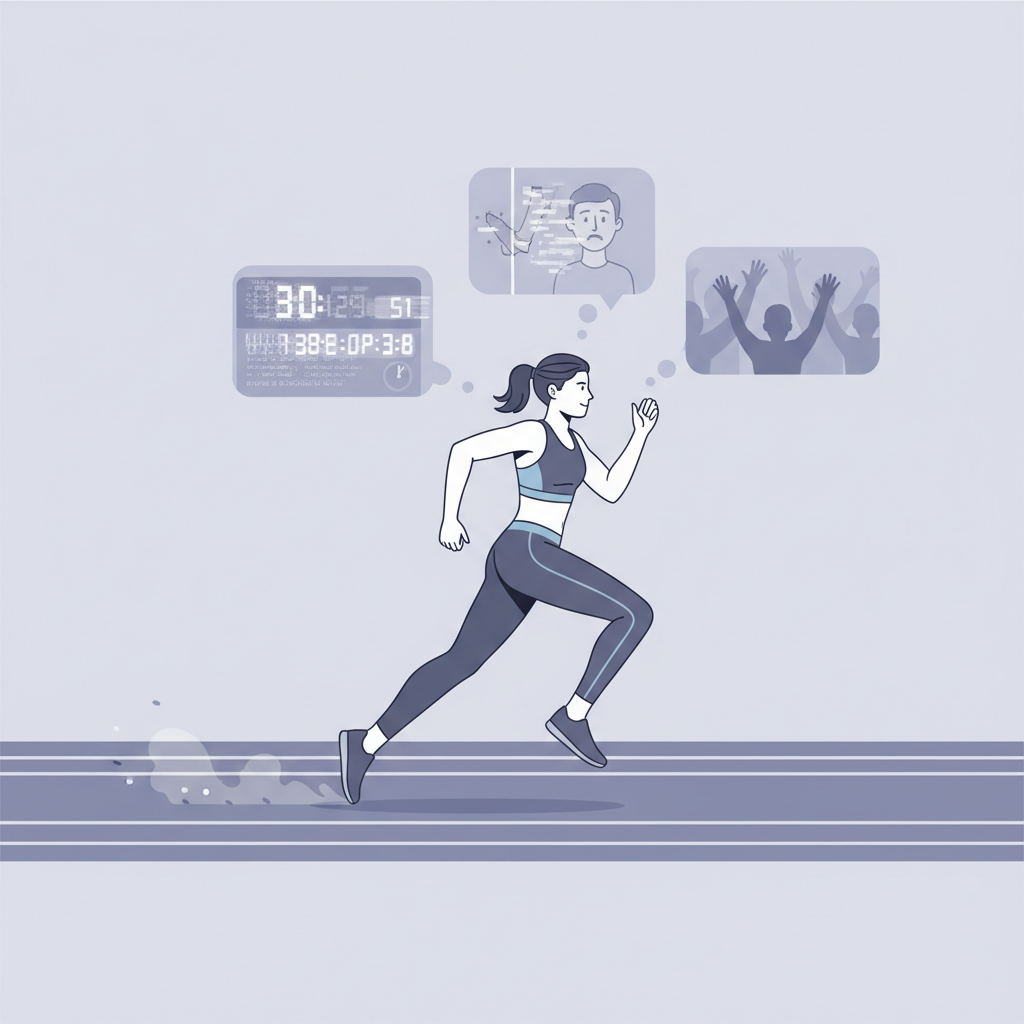
Common real-world triggers I see most teams run into:
- Outcome obsession: playing the score instead of the next task.
- Over-coaching in your head: too many technical cues at once.
- Emotional hangover: carrying frustration after a turnover or missed shot.
- Fatigue: attention drops fast when sleep and recovery are off.
- Environment: new venues, loud crowds, travel, time changes.
Quick self-check: what kind of focus problem do you have?
Use this as a fast diagnosis before you add more drills. Your solution should match your pattern.
- I start strong, fade late → sustained attention + conditioning + sleep/recovery issue.
- I get pulled by noise, refs, opponents → selective attention and cue selection.
- I spiral after one mistake → refocus routine and emotional regulation.
- I overthink mechanics in games → simplify cues, external focus, pressure reps.
- I feel “blank” in big moments → arousal too high, need downshift skills.
If you checked more than two, that is normal. Start with the one that costs you points most often, not the one that sounds most impressive.
Focus Training drills you can use this week (with a simple progression)
Keep Focus Training practical: short, repeatable, and tied to your sport cues. The table below gives options that fit most athletes, even with limited time.
Drill menu (pick 2–3, not all of them)
| Goal | Drill | How to do it | When to use |
|---|---|---|---|
| Refocus after mistakes | Reset breath + cue | One slow exhale, say one cue word, then act | Between reps, after errors |
| Selective attention | Noise training | Add music/crowd audio, stay on 1–2 cues | Skill sessions, team practice |
| Pressure tolerance | Consequence reps | Miss = small consequence (extra rep, restart set) | End of practice |
| Switching speed | Call-and-respond cues | Coach/partner calls cue, you execute instantly | Warm-ups, reaction work |
| Stop overthinking | External focus target | Focus on target/trajectory/space, not body parts | Technical sessions, pregame |
A useful progression is simple: start calm and controlled, then add speed, then add consequences, then add chaos. If you jump to chaos too early, you often train panic, not focus.
The “in-the-moment” reset: a 10-second routine for competition
This is the part athletes want most, and it works best when you practice it in low-stakes reps. Pick a routine short enough that you will actually use it.
- Name it: “That was a mistake” or “I got distracted.” Short, neutral.
- Exhale: longer out-breath than in-breath, drop shoulder tension.
- Pick one cue: a single actionable word like “rim,” “smooth,” “through,” “next.”
- Commit to the next task: one decision, one action.
If you are a coach, you can standardize this across the team so athletes do not improvise under stress. Consistency beats creativity here.

Building a simple 14-day plan (so it becomes automatic)
Most focus work fails because it stays “mental” and never becomes a habit tied to real reps. Here is a plan that usually fits a normal training week.
Days 1–4: pick cues and reduce noise
- Choose 1–2 performance cues per skill (example: “target” + “finish”).
- After each rep, rate focus 1–5, then move on, no journaling essay.
- Practice the 10-second reset after any rep you dislike, even if it was not a true mistake.
Days 5–10: add pressure in controlled doses
- Add consequence reps at the end of practice when fatigue shows up.
- Keep cues the same, this is not the week for new technique thoughts.
- If you compete, simulate “start cold” moments: one warm-up rep, then a scored rep.
Days 11–14: add chaos, keep the routine
- Add distraction: noise, time limit, opponent, scoreboard constraint.
- Use the same reset routine, same cue word, same pre-performance steps.
- After sessions, note one pattern: when you lose focus, what shows up first?
Small tip that matters: if you change your cues every session, you are not training focus, you are training indecision.
Common mistakes that quietly sabotage Focus Training
These are the traps that make athletes feel like mental training “doesn’t work,” when the setup is the real issue.
- Too many cues: three technical thoughts turn into hesitation. One or two usually holds up better.
- Only practicing when calm: you need some pressure reps, otherwise game stress feels unfamiliar.
- Using negative cue words: “don’t miss” pulls attention toward the miss. Use a task cue.
- Ignoring recovery: sleep debt and under-fueling often show up as attention problems.
- Expecting a perfect mind: the goal is quicker return, not zero distraction.
According to the U.S. Olympic & Paralympic Committee (USOPC), sport psychology skills are trainable and work best when integrated into daily practice routines, not saved for “big moments.”
When it makes sense to get professional support
If focus issues come with panic symptoms, persistent low mood, disordered sleep, or feel tied to broader anxiety, it may help to talk with a qualified professional. Many athletes benefit from a Certified Mental Performance Consultant (CMPC) or a licensed mental health clinician with sport experience. If you are unsure, start by asking your athletic trainer, team physician, or school counselor for an appropriate referral.
Conclusion: make focus a repeatable skill, not a vibe
Focus Training works when it is specific, practiced under mild pressure, and anchored to a reset routine you trust. Pick one problem pattern, train two or three drills for two weeks, and keep your cue words stable long enough to become automatic.
If you want a clean next step, choose your 10-second reset, write one cue word on tape or in your notes, and rehearse it at the end of every practice when you feel tired and tempted to rush.
FAQ
How long does Focus Training take to show results?
Many athletes notice small changes within 1–2 weeks, mostly in faster recovery after mistakes. Bigger changes usually take longer because you are building a habit under pressure, not learning trivia.
What’s the best cue word for staying focused?
The best cue word is the one that is actionable and sport-specific, like “target,” “snap,” or “through.” If a word makes you think about outcomes, it may not hold up well in games.
Can I improve focus if I have ADHD?
Often, yes, but it may require more structure and shorter training blocks. If you have a diagnosis or suspect ADHD, it is smart to coordinate with a qualified healthcare professional for personalized guidance.
Should I use visualization for sports focus?
Visualization can help, especially when you pair it with a cue and a reset routine. Many athletes get more value from short, vivid reps than long sessions that drift into daydreaming.
Why do I focus well in practice but not in games?
Practice usually lacks consequence, unpredictability, and social pressure. Add controlled pressure reps and distractions in training, then keep your routine identical on game day.
Is meditation required for better focus in sports?
No. Meditation can support attention control for some people, but you can build strong competitive focus using cue selection, reset routines, and pressure-based practice.
What should coaches do when an athlete “checks out”?
Give one clear task cue, not a speech, and help them run their reset routine. Later, review patterns together and adjust training so pressure and distraction are practiced, not feared.
If you are building a team routine or you want a more plug-and-play plan, a short checklist of cues, resets, and pressure drills can save time and make the work feel less abstract, especially during a busy season.