
Portable Equipment is the difference between “I’ll get back to it Monday” and actually keeping your routine when you’re traveling. The trick is packing tools that work in tight spaces, don’t annoy hotel neighbors, and still feel challenging enough to count as a real workout.
A lot of people overpack for fitness, then use none of it, or underpack and end up doing the same half-hearted bodyweight circuit every day. Travel also changes your recovery, sleep, and schedule, so your normal plan often needs a smarter, lighter version.
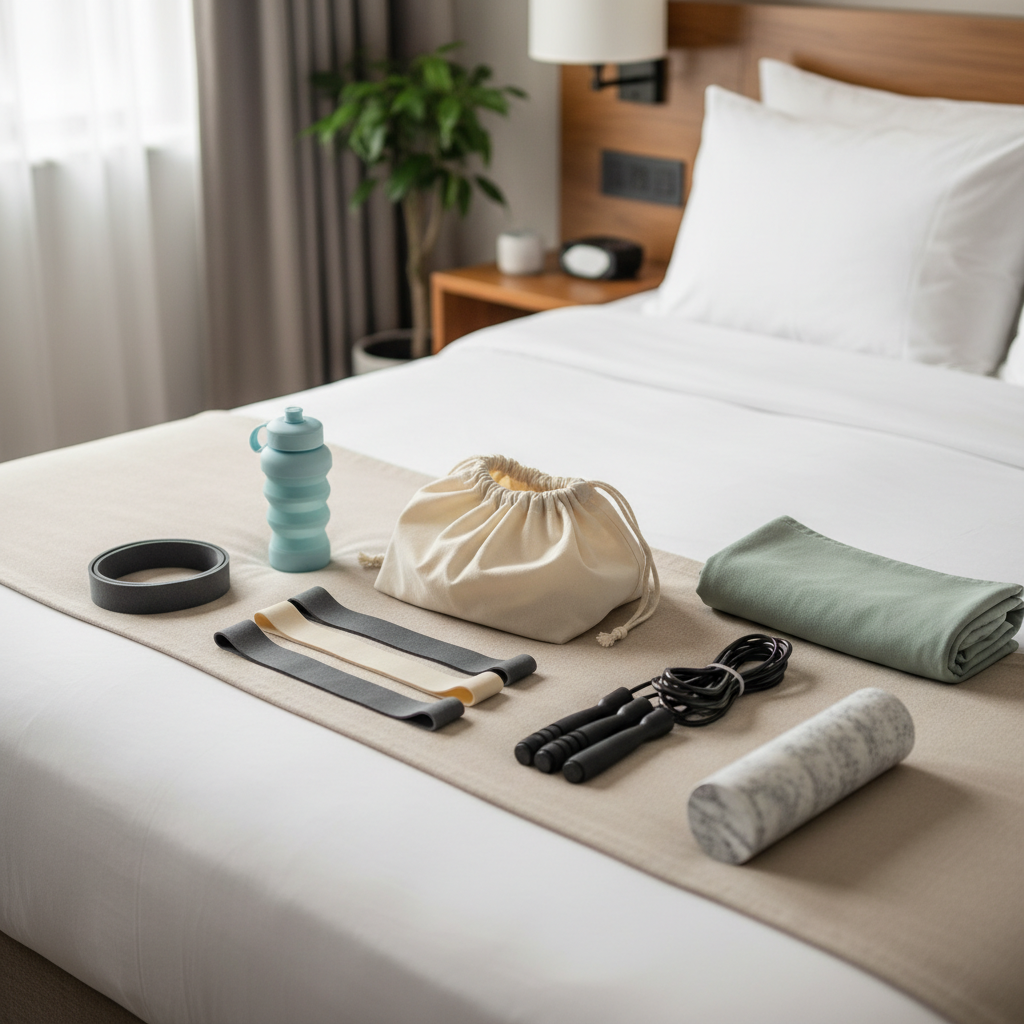
This guide breaks down what’s worth bringing, what’s usually a waste of luggage space, and how to build quick sessions that fit a hotel room, a park, or even an airport lounge. You’ll also get a simple decision checklist, a packing table, and a few go-to routines.
What “portable” really means for travel workouts
In travel terms, portable isn’t just “small.” It usually means light, flexible, quiet, and easy to replace if something gets lost. Most travelers do best with gear that supports strength, mobility, and a bit of conditioning without needing heavy resistance.
- Packability: folds flat, fits in a pouch, no sharp edges.
- Versatility: supports push, pull, hinge, squat, carry, and core patterns.
- Low friction: quick setup, minimal anchoring, no complicated assembly.
- Noise control: avoids slamming, bouncing, or loud impacts in hotels.
According to Centers for Disease Control and Prevention (CDC)... adults generally benefit from regular physical activity that includes muscle-strengthening work, which is helpful context when you’re choosing tools that make strength training realistic on the road.
The most useful Portable Equipment to pack (and why it earns its spot)
If you only pack a few items, start with tools that cover multiple movement patterns. Many people default to cardio-only travel workouts, but a small amount of resistance work tends to keep you feeling “trained” even when steps and schedules change.
1) Resistance bands (loop + tube style)
Bands are travel MVPs because they weigh almost nothing and scale well. With one or two strengths you can hit rows, presses, squats, deadlift patterns, and anti-rotation core work.
- Best for: full-body strength, warm-ups, shoulder-friendly training
- Watch for: cheap bands that snap, and door anchors used carelessly
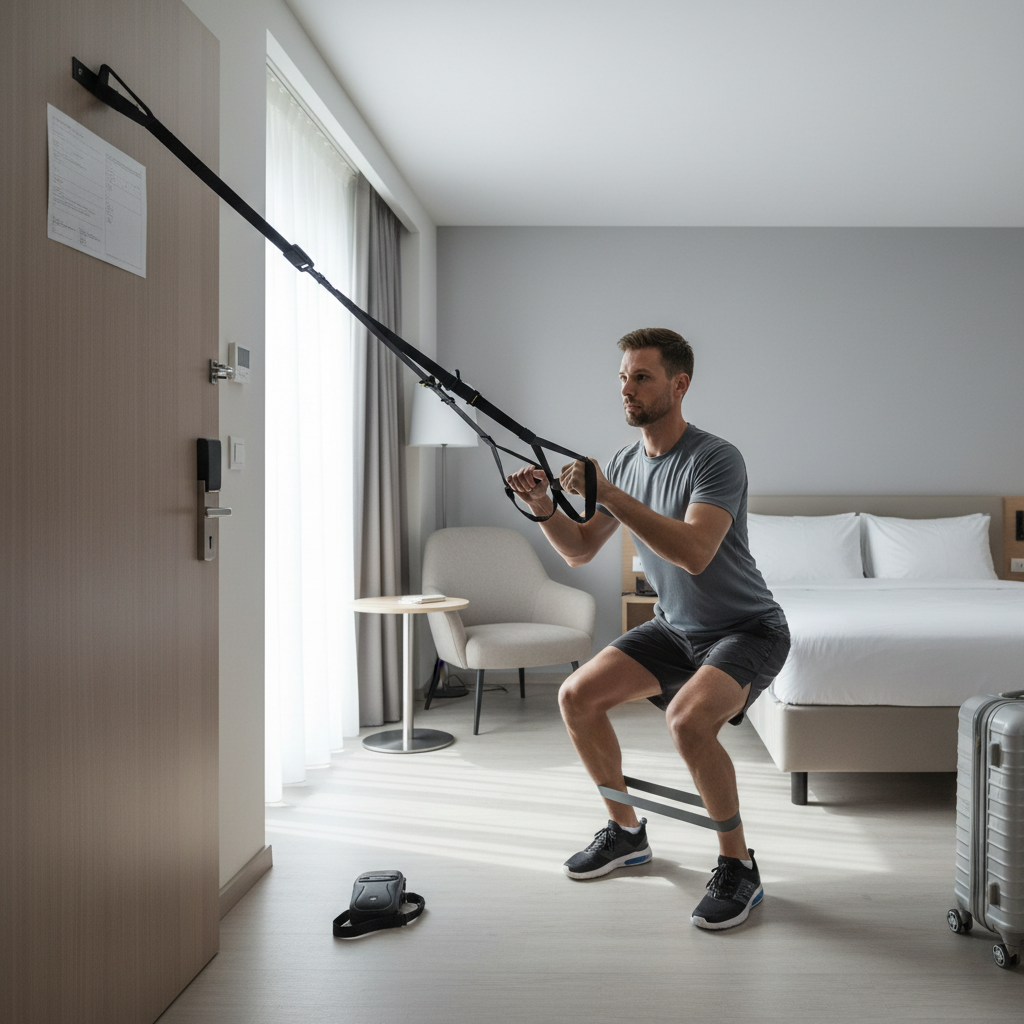
2) Suspension trainer (strap system)
A strap trainer can mimic a lot of cable-machine movements using your bodyweight. It’s great if you want rows and presses without relying on hotel dumbbells that may or may not exist.
- Best for: pulling volume, core stability, scalable push movements
- Watch for: safe anchor points, especially on doors and railings
3) Jump rope (or a “quiet” rope alternative)
A rope is a compact conditioning tool, but hotel floors and neighbors matter. If you’re staying above someone, consider a ropeless handle set or do rope intervals outdoors.
- Best for: short cardio blocks, coordination, warm-ups
- Watch for: noise, low ceilings, and slippery flooring
4) Mini mobility kit (lacrosse ball + mini band)
Travel stiffness is real, especially after flights and long drives. A ball and small band can keep hips, calves, upper back, and feet happier with minimal space.
- Best for: recovery, pain management support, warm-up prep
- Watch for: severe pain or numbness, consider consulting a professional
Quick packing table: choose the right kit for your trip
If you hate decision fatigue, use this table like a menu. Pick one option per row based on space, time, and your training goal.
| Goal | Bring | Works best when | Common mistake |
|---|---|---|---|
| Strength maintenance | Loop bands + tube band | Hotel room workouts, 20–30 min | Only packing one “easy” band |
| Upper-body focus | Suspension trainer | You can anchor safely, consistent schedule | Anchoring on unstable doors/handles |
| Cardio in short bursts | Jump rope or ropeless handles | Outdoor space or quiet flooring | Going too hard day one, calf/Achilles flare-ups |
| Recovery and mobility | Lacrosse ball + mini band | Flights, long drives, lots of sitting | Rolling aggressively on painful areas |
Self-check: what should you actually bring?
Before you buy anything, answer these fast questions. This is where many people save money and suitcase space.
- Do you realistically have 15–25 minutes? If not, prioritize a band and a mobility tool.
- Will you be in one place or moving daily? If you switch hotels often, go lighter and simpler.
- Do you need quiet workouts? Skip impact tools and focus on resistance and tempo.
- Are you training around aches or prior injuries? Choose joint-friendly options, and consider professional guidance.
- Do you get motivated by “real” resistance? Bring at least two band strengths, not just a light loop.
Key point: If you can only commit to one item, a small band set tends to deliver the best strength-per-ounce ratio.
Practical travel routines (15–30 minutes, small space)
These sessions assume minimal equipment and low setup time. Adjust effort by adding reps, slowing tempo, shortening rest, or choosing a stronger band. If anything causes sharp pain, stop and consider checking with a qualified professional.
Routine A: 20-minute full-body band circuit
- Band squat or split squat: 10–15 reps
- Band row (anchor at door or sturdy post): 10–15 reps
- Band overhead press or push-up: 8–12 reps
- RDL hinge with band: 10–15 reps
- Dead bug or plank: 30–45 seconds
Run 3 rounds, rest about 45–75 seconds between movements if you need it. This feels simple, but tempo makes it serious: try a 3-second lower on squats and hinges.
Routine B: Quiet hotel conditioning (no jumping)
- Marching high knees in place: 45 seconds
- Slow mountain climbers: 45 seconds
- Shadow boxing (controlled footwork): 45 seconds
- Side plank: 30 seconds per side
Do 4–6 rounds with short breaks. It’s not glamorous, but it keeps your engine running without pounding the floor.
Routine C: “I’m wrecked from travel” recovery reset (12–15 minutes)
- Calf and foot rolling with ball: 60–90 seconds per side
- Hip flexor stretch + glute squeeze: 45–60 seconds per side
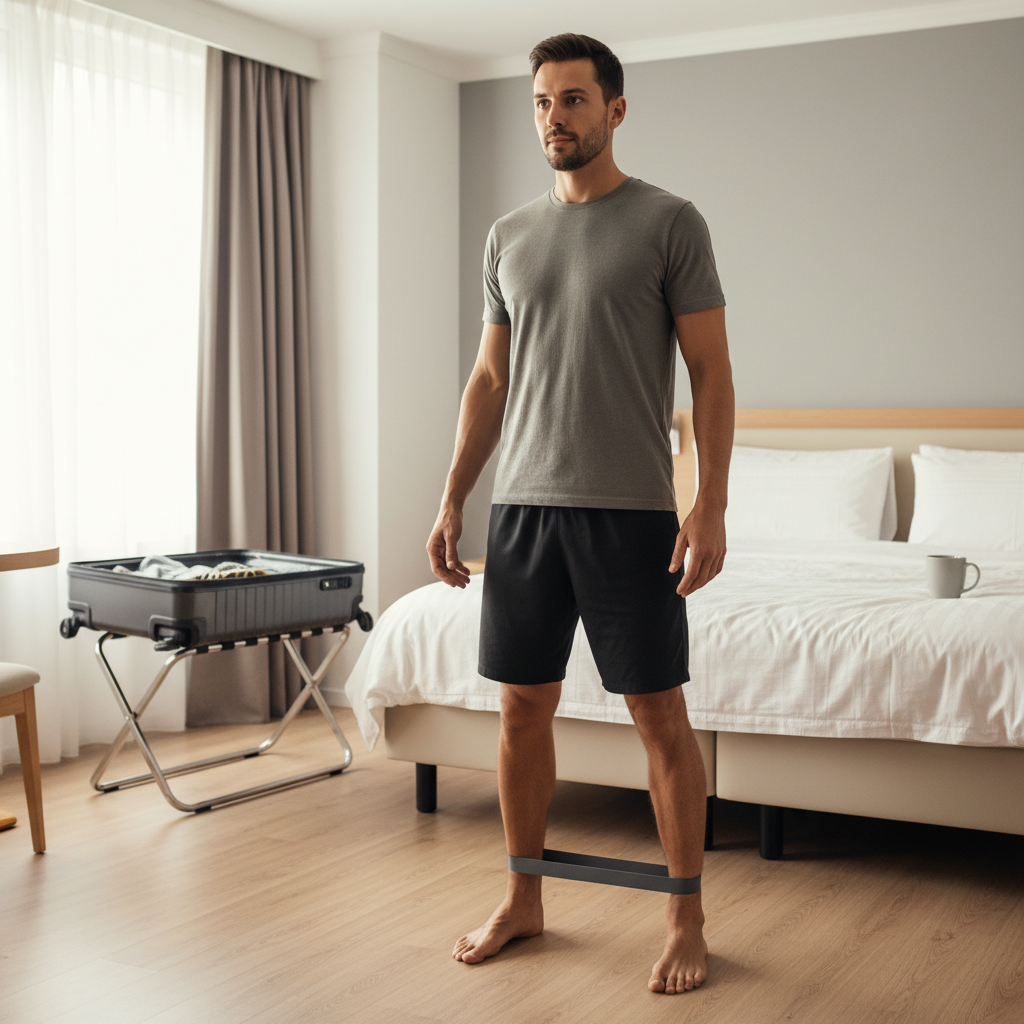
- Mini band lateral steps: 10–15 steps per direction
- Thoracic openers (gentle rotations): 6–8 per side
According to American College of Sports Medicine (ACSM)... regular movement and appropriate recovery support long-term training consistency, which matters more than “winning” a single travel workout.
Common mistakes (that make travel fitness feel impossible)
- Trying to match your home program exactly. Travel weeks often need a maintenance plan, not a personal-record chase.
- Buying gimmicky gadgets. If it only does one move, it rarely earns luggage space.
- Skipping pulling work. Lots of travel workouts become push-ups only, then shoulders start complaining.
- Ignoring recovery signals. Poor sleep, dehydration, and jet lag can change how hard training feels.
- Unsafe anchoring. Doors, railings, and furniture vary a lot, test stability before loading.
When to get professional help (and why it’s not overkill)
If travel workouts consistently trigger pain, numbness, dizziness, or unusual shortness of breath, it’s smarter to pause and consult a qualified healthcare professional. The same goes if you’re returning from injury and trying to “wing it” with random band exercises.
A coach or physical therapist can also help with a travel-specific plan when you have a clear goal, like maintaining strength during a long work trip without aggravating knees, back, or shoulders. That kind of personalization often saves weeks of trial and error.
Conclusion: keep it light, keep it repeatable
Portable Equipment works best when it supports repeatable habits, not when it turns your suitcase into a gym. A band set, a simple mobility tool, and one conditioning option cover most travel needs without creating excuses.
If you want an easy next step, pick one travel routine from above, schedule three sessions for your trip, and pack only the tools that make those sessions friction-free.
FAQ
What is the best Portable Equipment for strength training while traveling?
For most people, resistance bands win because they’re light, versatile, and usable in tight spaces. If you can anchor safely, a suspension trainer adds more “gym-like” pulling options.
Can I get a good workout in a small hotel room?
Usually yes, if you focus on full-body patterns and manage intensity with tempo and shorter rest. Quiet options like bands, slow climbers, and planks also help avoid noise issues.
Is a jump rope worth packing for travel?
It can be, especially for quick cardio, but it depends on ceilings, flooring, and neighbors. Many travelers do better using it outdoors or swapping in a quieter conditioning circuit indoors.
How many resistance bands should I bring?
Two or three options typically cover more situations than a single band. A common setup is one lighter band for upper-body work and one stronger band for lower-body movements.
Are door anchors safe for bands and suspension trainers?
They can be, but only with careful setup and a solid door. Test the anchor gently before loading, avoid questionable hardware, and skip it if you’re not confident in stability.
What if travel throws off my recovery and everything feels harder?
That’s common with poor sleep, time changes, and long sitting. Scale sessions down, prioritize mobility, and aim for consistency over intensity until you feel normal again.
Do I need to work out every day on a trip?
Not usually. Many people maintain fitness with 2–4 short sessions per week plus walking. The “best” frequency depends on your stress, schedule, and how your body feels.
If you’re trying to stay consistent on the road and want a simpler setup, start by building a tiny travel kit around Portable Equipment that you’ll actually use, then match it to two repeatable routines instead of chasing a perfect plan.