
Joint Support is one of those topics athletes usually search when a familiar pattern shows up: training feels great in the moment, but knees, hips, shoulders, or wrists start “talking back” later.
If you compete, lift heavy, run high mileage, or play impact sports, joints take repeated stress, and recovery becomes the real bottleneck. The right supplement won’t replace smart programming, but it can be a helpful layer when you already handle the basics.
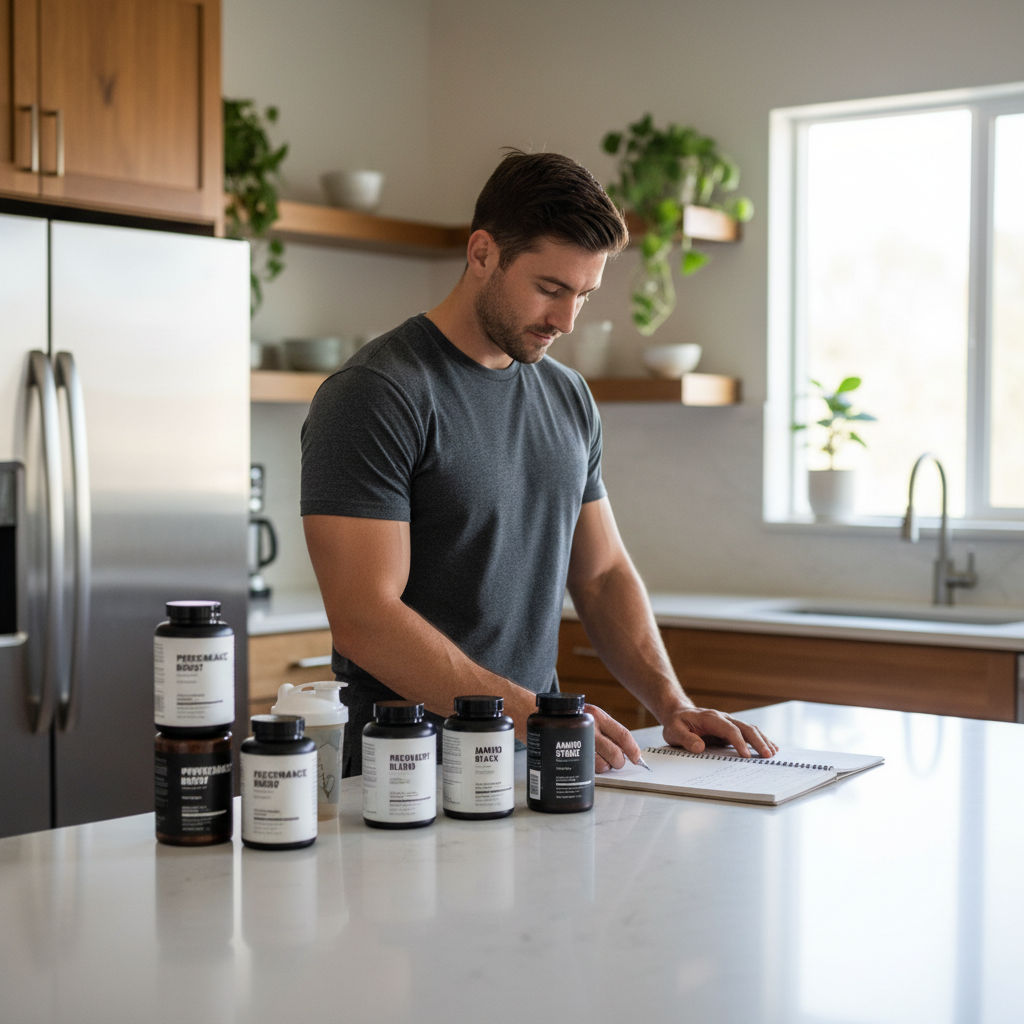
This guide keeps it practical: why athletes get joint irritation, how to tell what you actually need, which ingredients have the most plausible upside, and how to use them without wasting money or taking unnecessary risks.
Why athletes’ joints get cranky (and what supplements can and can’t do)
Most joint complaints in sport aren’t mysterious. They usually come from load management problems, tissue capacity limits, or technique issues that pile up over weeks.
- High repetitive load: running mileage, jumping, throwing, barbell volume, plus daily life.
- Sudden ramp-ups: a new cycle, new shoes, a return after time off, or extra conditioning.
- Strength imbalances: stabilizers lag behind prime movers, so joints take more shear stress.
- Age and prior injuries: old sprains and surgeries change mechanics even when you “feel fine.”
Supplements can’t realign movement patterns or fix a torn structure. What they may do, in many cases, is support comfort, recovery perception, and connective-tissue metabolism so you can keep training consistently while you correct the real drivers.
Quick self-check: are you a good candidate for Joint Support?
Before buying anything, get honest about which bucket you’re in. This prevents the classic mistake of buying a “joint stack” when the actual issue is training errors.
You’re a reasonable candidate if…
- You have mild to moderate stiffness after training that eases with warm-up.
- Your programming is solid, but your sport is inherently high-impact.
- You’re increasing volume carefully, yet joints still feel “tight” for 24–48 hours.
- You want a longer-term support layer, not a quick painkiller effect.
Pause and consider a professional evaluation if…
- Pain is sharp, worsening, or tied to swelling, locking, giving way, or numbness.
- Night pain, fever, redness, or unexplained heat in a joint shows up.
- You can’t load the joint without changing your gait or form.
According to the American Academy of Orthopaedic Surgeons (AAOS), persistent or worsening joint symptoms are a good reason to seek an orthopedic evaluation, especially when function changes.
Ingredients that show up most often (and how to think about them)
Labels can get noisy fast. Here are the ingredients athletes most commonly see in Joint Support formulas, plus the “why” behind each, stated conservatively.
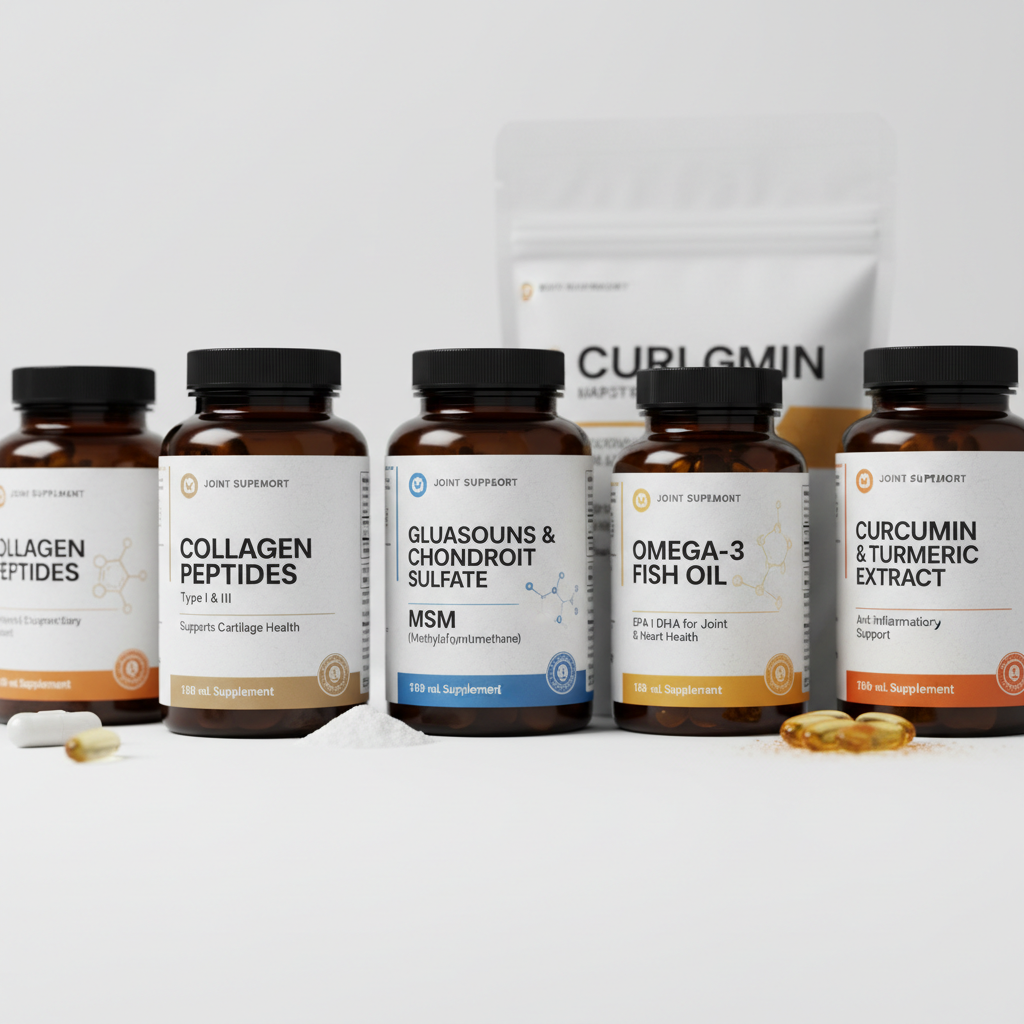
- Collagen peptides: may support connective tissue when paired with training stimulus; many athletes like it for “tendon/ligament” feel over time.
- Vitamin C: often paired with collagen because it supports collagen synthesis pathways; dosing is usually modest.
- Glucosamine / Chondroitin: classic cartilage-focused ingredients; responses vary a lot by person, and benefits, if any, typically take weeks.
- MSM: used for comfort and stiffness; often combined with glucosamine.
- Omega-3s (EPA/DHA): not “joint-only,” but relevant for inflammation modulation and recovery; useful when dietary fish intake is low.
- Curcumin: may help with exercise-related soreness perception; absorption depends heavily on the formulation.
- Boswellia: sometimes included for comfort support; quality and standardization matter.
According to the National Institutes of Health (NIH) Office of Dietary Supplements, evidence for many joint-related ingredients is mixed and depends on the condition studied, the exact form used, and the dose.
How to choose a Joint Support supplement without getting played
Most disappointment comes from buying a product that sounds “athletic” but has under-dosed ingredients, unclear sourcing, or a label that hides the real amounts in proprietary blends.
- Skip proprietary blends when possible; you want to see exact amounts.
- Look for third-party testing on the label or website (for example, NSF Certified for Sport or Informed Choice). This matters for competitive athletes.
- Decide your goal: cartilage-style support (often glucosamine/chondroitin/MSM) vs connective tissue support (often collagen + C) vs recovery comfort (often omega-3s/curcumin).
- Check pill burden: some formulas require 6–10 capsules daily; if you won’t do that, choose a simpler option.
If you’re drug-tested, be extra strict about certifications. According to USADA, supplement contamination is a real risk for athletes, and certification can reduce (not eliminate) the chance of banned substances.
Practical use: timing, expectations, and a simple 8-week trial plan
Joint supplements rarely feel like a pre-workout. Many are slow-burn. If you try them, run it like a controlled experiment so you can tell what changed.
Set expectations that match reality
- Timeline: many people evaluate over 4–12 weeks, not days.
- Outcome: look for less stiffness, smoother warm-ups, and fewer “flare” days, not superhero joints.
- One change at a time: if you add three products and change training, you learn nothing.
A simple 8-week trial
- Pick one product that matches your goal and has transparent dosing.
- Track 3 metrics weekly: morning stiffness (0–10), training pain (0–10), and “time to feel warm” (minutes).
- Keep training volume increases conservative; big ramp-ups can mask or overwhelm any benefit.
- At week 8, decide: continue, switch approach, or stop.
Food and training habits that make Joint Support actually work
Supplements tend to look better when the foundation is decent. Not perfect, just decent.

- Protein consistency: connective tissue still needs building blocks; aim for steady intake across the day.
- Strength through range: tendons and joints often tolerate load better when you train control in the ranges your sport demands.
- Warm-up that matches the sport: tissue temperature and neuromuscular prep can change how joints feel immediately.
- Sleep: if sleep is short, everything hurts more, and recovery markers drift the wrong way.
If you want one “unsexy” strategy that helps many athletes, it’s this: stop making volume jumps your joints have to pay for later.
Comparison table: common Joint Support options for athletes
This is a quick sorting tool, not a prescription. Exact dosing and outcomes vary by product and person, and medical conditions or medications can change what’s appropriate.
| Option | Best fit for | What to watch | Typical evaluation window |
|---|---|---|---|
| Collagen peptides + Vitamin C | High tendon/ligament load sports, lifting, jumping | Added sugars/flavors, consistency matters | 6–12 weeks |
| Glucosamine/Chondroitin (± MSM) | General joint comfort, especially with higher age/training history | High capsule count, mixed response rates | 8–12 weeks |
| Omega-3 (EPA/DHA) | Low fish intake, recovery support focus | Fishy burps, anticoagulant interactions possible | 4–8 weeks |
| Curcumin (enhanced absorption) | Post-training soreness/stiffness support | GI sensitivity, drug interactions possible | 4–8 weeks |
Common mistakes (and how to avoid them)
- Using Joint Support as a pain mask: if you keep adding load to a problem, symptoms often return louder.
- Ignoring technique: knee pain from sloppy single-leg mechanics won’t vanish because you bought capsules.
- Switching too fast: many products need time; changing every 10 days creates noise.
- Not checking interactions: blood thinners, anti-inflammatories, and some supplements can overlap; ask a pharmacist or clinician when unsure.
- Assuming “natural” equals risk-free: “natural” ingredients still have biologic effects.
Key takeaways + a realistic conclusion
Joint Support supplements can be worth trying when your training, sleep, and load progression already make sense, but lingering stiffness still slows you down. Pick a product with transparent dosing and credible testing, run an 8-week trial, and track symptoms like you track performance.
If symptoms escalate, show up with swelling or instability, or change how you move, don’t try to out-supplement it, get a sports-medicine or physical therapy opinion and protect your season.
FAQ
What is the best Joint Support supplement for athletes?
It depends on what you mean by “joint.” Many athletes start with collagen peptides (connective tissue focus) or omega-3s (recovery support), while others prefer glucosamine/chondroitin for general comfort. The best pick is usually the one you can take consistently and evaluate over time.
How long does Joint Support take to work?
Many people look for changes over 4–12 weeks. If you expect a same-day effect, you’ll likely be disappointed, especially with collagen or glucosamine-style products.
Can Joint Support supplements replace physical therapy or strength work?
Usually not. Supplements may help support comfort, but strength through range, technique cleanup, and smarter load management tend to drive the biggest durable changes.
Should drug-tested athletes avoid joint supplements?
Not necessarily, but they should be picky. Look for third-party testing programs used in sport, and avoid sketchy “proprietary blends.” If you compete under strict rules, consider checking ingredients with your governing body resources.
Is collagen or glucosamine better for joint comfort?
They target different ideas. Collagen is often chosen for tendons/ligaments and connective tissue, glucosamine/chondroitin is more cartilage-oriented. Many athletes choose one based on symptoms and then reassess after a structured trial.
Can I stack collagen, omega-3, and curcumin together?
Some people do, but stacking makes it harder to know what helped, and it can increase cost or side effects. If you try a stack, add one item at a time and check for medication interactions with a clinician.
If you’re training hard and want a Joint Support routine that feels straightforward, consider starting with one evidence-informed ingredient, a certified product, and a simple tracking plan. If you want help matching options to your sport, diet, and drug-testing needs, a sports RD or sports-medicine clinician can usually save you time and guesswork.