
Progression Plan is the difference between “I work out a lot” and “I’m actually getting stronger and more muscular.” If you’ve been training consistently but your lifts, reps, or physique look stuck, it’s usually not because you need more exercises, it’s because your progression rules are fuzzy.
Growth happens when training creates a stimulus your body has a reason to adapt to, and that stimulus has to increase over time. The catch is that “increase” does not always mean adding weight every session. In real gyms, sleep, stress, technique, and schedule all get a vote.
This guide gives you a practical workout progression plan for hypertrophy, with clear decision rules, a week-by-week structure, and a few guardrails so you push hard without turning every month into an injury detour.
What “progression” really means for muscle growth
Progression is simply increasing the training stimulus over time in a way you can recover from. For hypertrophy, that stimulus comes mostly from hard sets taken close to failure, enough weekly volume, and consistent technique so the target muscle actually does the work.
According to the American College of Sports Medicine (ACSM), progressive overload is a core principle of resistance training, meaning you gradually increase demands to keep adaptations moving.
In practice, progression can be:
- More load (heavier weight for the same reps)
- More reps (same weight, higher reps)
- More sets (more hard work for a muscle across the week)
- Better execution (fuller range of motion, cleaner tempo, less cheating)
- More density (same work in less time, within reason)
If you only chase load increases, you’ll often stall early, especially on isolation lifts. A good Progression Plan uses multiple “levers,” and tells you which one to pull next.
Why most people stall: the usual suspects
When progress slows, many lifters blame genetics or their program. More often, it’s one of these real-world issues.
- Progression rules are vague: “Go heavier when it feels easy” sounds fine until nothing feels easy.
- Volume creep without recovery: adding sets every week while sleep and protein stay the same.
- Inconsistent technique: reps get shorter or faster, so the logbook improves but the muscle stimulus does not.
- Training too far from failure: “3 reps in reserve” accidentally becomes “8 reps in reserve” on busy days.
- No deloads: fatigue builds quietly, then everything feels heavy for weeks.
One more that’s common in the U.S. gym scene: people change exercises constantly. Variety has a place, but you need enough repeat exposure to measure improvement.

Quick self-check: which progression problem do you have?
Before you “fix” anything, figure out what’s actually limiting your Progression Plan. Use this quick checklist for the last 3–4 weeks.
- If performance is flat across many lifts and you feel run down: likely fatigue management, sleep, or stress.
- If compounds move up but isolations don’t: likely rep targets too low, form drift, or impatience with small jumps.
- If reps vary wildly session to session: likely inconsistent effort (distance from failure) or unstable scheduling.
- If joints feel worse while numbers go up: likely technique, range of motion shortcuts, or too-aggressive loading.
- If pumps feel good but strength never improves: likely not enough hard sets, or you’re always under-recovered.
Write down which one fits best. That’s your “primary constraint,” and it should dictate your next adjustment.
A simple 8-week workout progression plan (hypertrophy focused)
This is a clean template many lifters can run with 4 days per week. It’s not the only way, but it’s a reliable way to make progression obvious.
Weekly structure (example: Upper/Lower split)
- Day 1 Upper: press + row focus, 2–3 accessories
- Day 2 Lower: squat pattern + hinge accessory, calves/abs
- Day 3 Upper: pull focus + secondary press, arms
- Day 4 Lower: hinge pattern + quad accessory, calves/abs
Pick 1–2 “anchor” lifts per day (big compounds or stable machines), and keep them for the full 8 weeks so you can track real change.
Progression rules (double progression)
Double progression is simple: you progress reps first within a rep range, then add load and restart at the low end.
- Choose a rep range, like 6–10 for compounds, 10–15 for accessories.
- Keep 1–3 reps in reserve (RIR) on most sets, push closer on the final set if recovery stays good.
- When you hit the top of the range on all working sets with solid form, add weight next week.
According to the National Strength and Conditioning Association (NSCA), tracking training variables and applying progressive overload systematically supports long-term adaptation and safer programming.
8-week flow (with a built-in deload)
This is the part most people skip, then wonder why week 6 feels like concrete.
- Weeks 1–3: build reps across sets, keep form strict
- Week 4: slight push, but stop if technique degrades
- Week 5 (deload): reduce sets by ~30–50% and keep loads moderate
- Weeks 6–8: repeat the climb, aim to beat weeks 1–4 totals
Deloads are not “weak weeks,” they’re what lets the next block work.
Progression options table: what to do when you can’t add weight
When the bar refuses to move, you still have choices. Use this table as a decision guide.
| Situation | What to change | Good fit for |
|---|---|---|
| You’re stuck at the same load for 2–3 weeks | Add reps within the range (double progression) | Most lifts, especially machines and dumbbells |
| Form is clean, effort high, still stuck | Add 1 set per exercise (or per muscle per week) | People recovering well who need more volume |
| Joint irritation or technique breakdown | Keep load, improve ROM/tempo, reduce ego reps | Long-term lifters, anyone feeling beat up |
| Compounds stalled, accessories still moving | Swap variation (e.g., pause squat, incline press) | Intermediate lifters after a full block |
| Everything feels heavy, motivation low | Deload early, or cut volume for 7–10 days | High stress, poor sleep, busy work weeks |
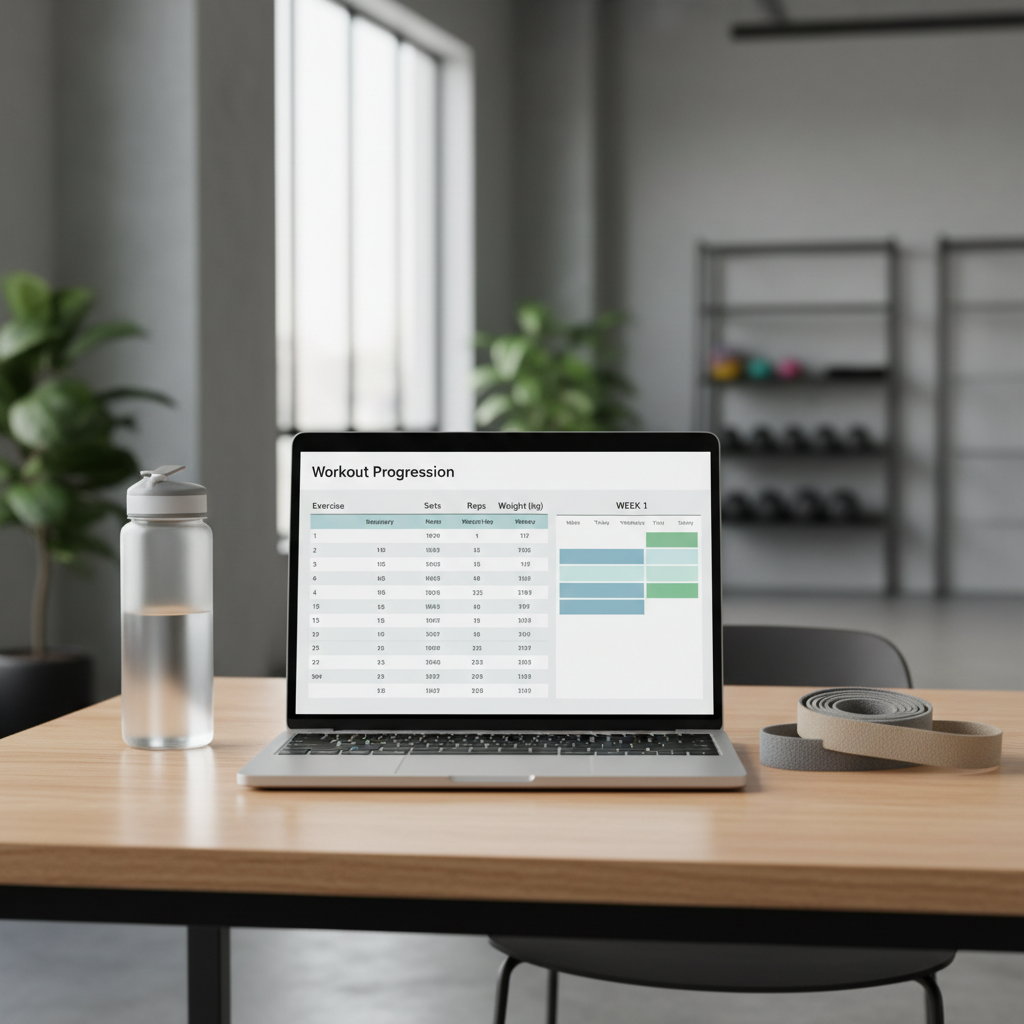
How to apply the plan in the gym: a realistic session workflow
This is what “good execution” looks like, without turning training into a math project.
1) Warm-up sets that help, not drain
- Ramp up in 3–5 short warm-up sets on your first lift.
- Stop warm-ups well before fatigue, save your effort for working sets.
2) Working sets with a clear effort target
- Most sets: RIR 1–3 (you could do 1–3 more reps if you had to).
- Last set on stable movements: optionally RIR 0–1 if recovery stays solid.
3) Log the “boring” details
- Weight, reps, sets, and a quick note like “deep reps” or “lost tightness.”
- That note becomes your technique accountability next week.
If you’re unsure about training close to failure, or you have a history of injury, it may help to consult a qualified coach or healthcare professional for safer boundaries.
Common mistakes that quietly break a Progression Plan
Most stalls come from small leaks, not dramatic program failures.
- Adding weight too fast: micro-plates or smaller dumbbell jumps often keep progress smoother.
- Changing rep ranges weekly: you can rotate blocks, but keep one block consistent long enough to adapt.
- Counting low-quality reps: partial ROM and bouncing might raise numbers while lowering stimulus.
- Ignoring nutrition: gaining muscle usually goes better with enough protein and calories, exact needs vary.
- Turning every set into a max: constant all-out training often reduces weekly volume and consistency.
According to the Centers for Disease Control and Prevention (CDC), strength training offers broad health benefits, but appropriate intensity and recovery matter, especially if you’re new or returning after a break.
Key takeaways + what to do next
If your goal is growth, your Progression Plan should feel almost boring on paper and very clear in the gym: repeat key lifts, push sets close enough to matter, and progress using reps, load, or volume without wrecking recovery.
- Start today: pick 6–10 core exercises, assign rep ranges, and commit to 8 weeks.
- Start this week: add a deload to your calendar now, not after you burn out.
If you want one simple action: choose one anchor lift, run double progression for 3 weeks, then review your log for what actually improved.
FAQ
How often should I change exercises in a workout progression plan for growth?
Usually less often than people think. If your joints tolerate the movement and you can track progress, keeping key lifts for 6–10 weeks often makes progression easier to measure.
Is adding weight every week required for hypertrophy?
No. Many lifters progress via reps, better execution, or slightly more weekly sets. Load increases help, but they’re not the only lever that drives growth.
What rep range is best for a Progression Plan?
Many programs use 6–10 for bigger lifts and 10–15 for accessories because it balances tension and joint comfort, but individual response and exercise choice matter.
How close to failure should I train?
For muscle gain, many people do well training within 1–3 reps of failure on most working sets. If fatigue spikes or form breaks down, back off and prioritize consistency.
What should I do if I miss a week of training?
In many cases, repeat your last successful week instead of trying to “make up” volume. If the break was due to illness or pain, consider easing back and asking a professional if symptoms persist.
Do I need a deload even if I feel fine?
Often, yes, especially as training volume climbs. Deloads can prevent hidden fatigue from turning into a longer stall, and they make the next progression block more productive.
How do I know if I’m doing too much volume?
Common signs include declining performance, poor sleep, nagging aches, and workouts that feel harder while results stall. Try reducing sets for 1–2 weeks and see if performance rebounds.
Can beginners use this progression approach?
Yes, but beginners may progress faster and should keep exercise selection simple. If you’re new to lifting, getting form checked can be worth it before pushing intensity.
If you’re building your own plan and want something more hands-off, a coach or a well-structured template can help you set realistic targets, pick the right progression lever, and avoid spinning your wheels when life gets messy.