
Lower back pain stretches can be a practical first step when your back feels tight, cranky, or “stuck,” especially after sitting, lifting, or sleeping in a weird position.
They’re not magic, and they won’t fix every cause of discomfort, but the right stretches often help you calm muscle guarding, restore a bit of motion, and feel more confident moving again.
What usually trips people up is doing too much too soon, copying random moves from social media, or stretching a spot that’s already irritated. Below is a simple, safe approach: pick the stretch that matches your symptom pattern, do it gently, and use a quick checklist to know when to stop.
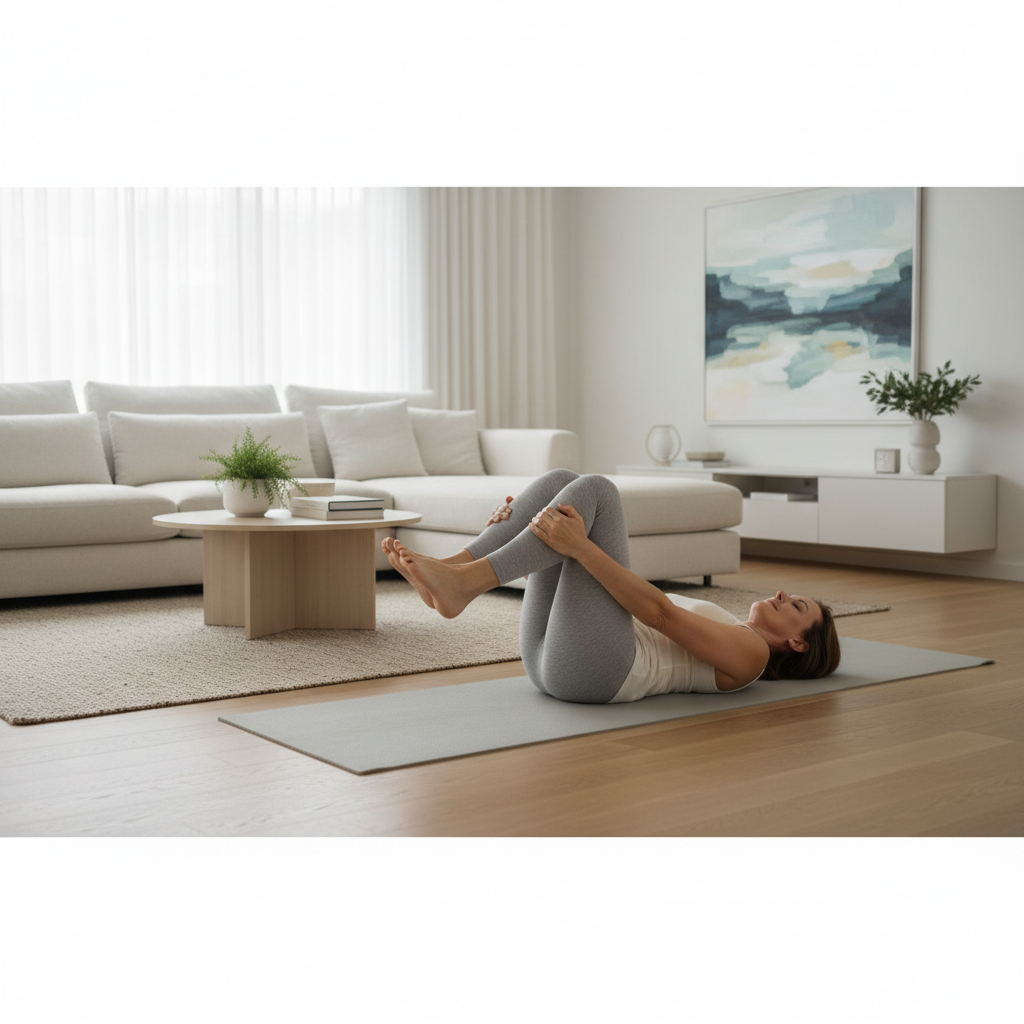
What lower back pain stretches can (and can’t) do
In many everyday cases, stretching works because it reduces perceived tightness and helps your nervous system “allow” movement again. That’s a big deal when your back feels protected and rigid.
But stretching does not always solve the root issue. Pain can come from joints, discs, irritated nerves, or referred pain from hips and even stress-related muscle tension. If a stretch consistently increases sharp pain, numbness, or symptoms down the leg, it’s often a sign to change tactics.
According to the American Academy of Orthopaedic Surgeons (AAOS), many episodes of low back pain improve with time and conservative care, and gentle movement is commonly part of that plan. If your situation feels unusual or intense, it’s reasonable to check in with a clinician.
Quick self-check: choose the right type of stretch for your pain
Before you start, take 30 seconds to categorize what you’re feeling. This saves a lot of trial-and-error.
- Mostly stiffness after sitting (no leg symptoms): mobility-focused hip and back stretches often feel good.
- Achy back after lifting (muscle-sore feeling): gentle, supported stretches plus light walking often help.
- Pain that travels into buttock/leg, tingling, numbness: avoid aggressive hamstring stretches; consider nerve-friendly options and professional guidance.
- Sharp pain with bending or twisting: choose neutral-spine, low-range movements first.
- Morning stiffness that eases after moving: short, frequent sessions usually beat one long session.
Stop and get medical advice soon if you have new bowel/bladder changes, saddle numbness, fever, unexplained weight loss, major trauma, or rapidly worsening weakness. Those are not “stretch it out” problems.
5 go-to lower back pain stretches (step-by-step)
These are common, generally well-tolerated options. Pick 2–3, not all five, and keep the intensity at a “mild stretch” level. Breathing should stay easy.
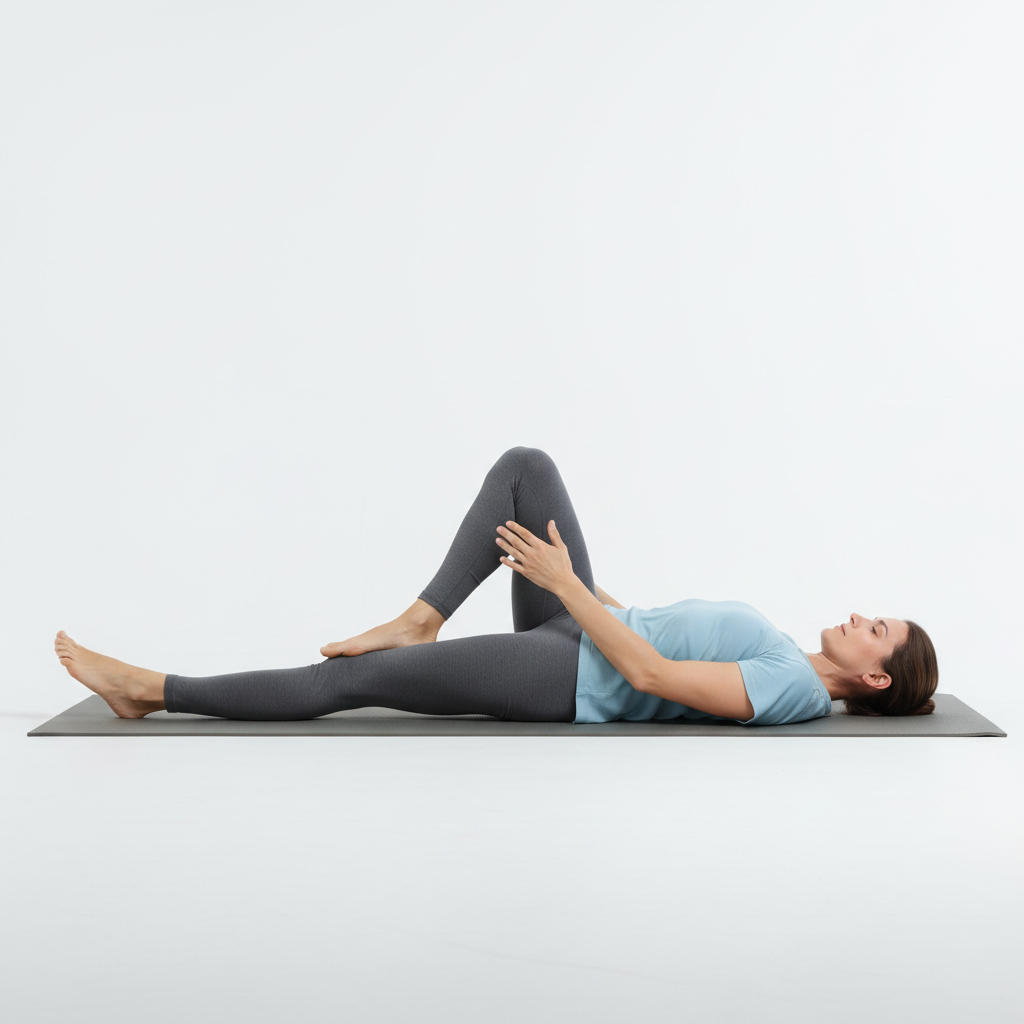
1) Single knee-to-chest (gentle lumbar decompression)
When it fits: tight back after sitting, general stiffness without leg symptoms.
- Lie on your back, one knee bent, the other leg relaxed.
- Bring one knee toward your chest, hands behind the thigh or on the shin.
- Hold 20–40 seconds, switch sides, repeat 2 times.
Make it safer: if grabbing the shin stresses your knee, hold behind the thigh instead.
2) Figure-4 stretch (targets glutes/piriformis area)
When it fits: “deep butt” tightness that seems to tug on the low back.
- Lie on your back, knees bent.
- Cross ankle over the opposite knee, making a “4.”
- Thread hands behind the thigh of the bottom leg and gently pull in.
- Hold 20–40 seconds per side, 2 rounds.
Watch for: sharp pinching in the hip. Back off or reduce range.
3) Child’s pose to side reach (lats + low back)
When it fits: broad tightness from mid-back into low back, especially after desk work.
- From hands and knees, sit hips back toward heels.
- Reach arms forward, forehead toward the floor or a pillow.
- For a side reach, walk hands to the right, hold 15–25 seconds, then left.
Modify: place a pillow between calves and thighs if knees complain.
4) Hip flexor stretch (half-kneeling)
When it fits: low back discomfort with a “front of hip” tight feel, common with lots of sitting.
- Kneel on one knee, other foot in front like a lunge.
- Gently tuck pelvis (think: belt buckle slightly up), then shift forward a few inches.
- Hold 20–30 seconds per side, 2 rounds.
Don’t do this: by cranking your back into a deep arch, the stretch should be in the front of the hip, not the spine.
5) Cat-cow (easy movement, not a hard stretch)
When it fits: stiff back that feels better with motion, warm-up before other lower back pain stretches.
- On hands and knees, slowly round your back (cat), then gently arch (cow).
- Move within a comfortable range for 6–10 cycles.
Tip: think “smooth and slow,” not “how far can I go.”
A simple routine: what to do for 10 minutes (and why it works)
Most people do better with short, repeatable routines than occasional marathon stretching. If your back is irritable, frequency matters more than intensity.
- 1 minute: easy walk around the room or gentle marching in place
- 2 minutes: cat-cow (slow), then pause in neutral spine
- 3 minutes: single knee-to-chest, both sides
- 3 minutes: figure-4, both sides
- 1 minute: relaxed breathing on your back, knees bent
If your main issue is hip tightness from sitting, swap figure-4 for the hip flexor stretch and keep the rest.
Table: match your symptoms to the stretch that usually fits
This isn’t a diagnosis, just a practical pairing guide. If a move feels worse two sessions in a row, swap it out.
| What you feel | Often helps | Be cautious with |
|---|---|---|
| Stiff after sitting, tight back | Cat-cow, knee-to-chest | Deep forward folds |
| Butt tightness that tugs low back | Figure-4 stretch | Aggressive twisting |
| Front-of-hip tight, feels “pulled forward” | Hip flexor stretch | Overarching the low back |
| Morning stiffness that eases after moving | Short, frequent sessions | Long static holds early |
| Symptoms travel down leg, tingling | Gentle walking, clinician-guided plan | Hard hamstring stretches |
Common mistakes that keep stretches from helping
A lot of frustration comes from treating all back pain the same. Reality is messier.
- Stretching through sharp pain: mild discomfort can be normal, sharp or electric pain is not a “good stretch.”
- Holding your breath: it usually ramps up muscle guarding, exhale helps your body let go.
- Chasing the deepest range: with low backs, “less but consistent” often wins.
- Only stretching the back: hips and glutes drive a lot of low back stress, which is why hip work matters.
- Skipping the next step: if you only stretch but never rebuild tolerance, pain often comes back.
According to the National Institute of Neurological Disorders and Stroke (NINDS), staying active within tolerance is commonly recommended for many types of back pain, rather than strict bed rest. Stretching fits that idea when it stays gentle and symptom-aware.
When stretching isn’t enough: add light strengthening (the “stays better” part)
If you want results that last, pair lower back pain stretches with a small dose of stability work. You’re not trying to become a powerlifter, you’re teaching your trunk and hips to share the load again.
Two simple options (2–3 days/week)
- Glute bridge: 2 sets of 8–12 reps, slow up and down, stop before back takes over.
- Bird-dog: 2 sets of 6–10 reps per side, move slowly, keep hips level.
If either move spikes symptoms, shorten the range, slow down, or ask a physical therapist to tailor it.
Key takeaways (save this)
- Pick 2–3 stretches that match your symptoms, then repeat them consistently.
- Mild stretch is enough; sharp pain, numbness, or worsening leg symptoms means stop and reassess.
- Hip mobility matters because tight hip flexors and glutes often feed low back tension.
- Add light strength if you want longer-term change, stretching alone can be temporary.
Conclusion: a realistic way to use stretches for lower back pain
If you keep lower back pain stretches gentle, targeted, and consistent, they often help you feel less stiff and more capable within a week or two. The win is not a perfect stretch routine, it’s finding two or three moves your body reliably tolerates, then pairing them with easy movement and a bit of strength.
Try the 10-minute routine for three days, note what improves or flares, then adjust. If symptoms travel down the leg, worsen quickly, or come with red-flag signs, it’s smart to consult a qualified healthcare professional.
FAQ
What are the best lower back pain stretches for sitting all day?
Cat-cow, hip flexor stretching, and a gentle knee-to-chest are common picks because they undo the “stuck in a chair” pattern without demanding extreme range.
How long should I hold stretches for low back pain?
For many people, 20–40 seconds is plenty. If longer holds increase soreness later, shorten the hold and repeat more often.
Should I stretch my hamstrings if my back hurts?
Sometimes yes, but it depends. If you have nerve-like symptoms down the leg, aggressive hamstring stretching can aggravate it, so a clinician-guided plan may be safer.
Is it okay to do lower back pain stretches every day?
Many people tolerate gentle daily sessions well, especially when intensity stays low. If you feel more sore each day, reduce frequency or range and see how your body responds.
What if stretching makes my back pain worse?
Stop that specific move and switch to easier motion like short walks or cat-cow in a smaller range. If worsening continues or you notice numbness, weakness, or escalating leg pain, consider medical evaluation.
Do I need heat or ice before stretching?
Not always, but heat can make stretching feel easier when muscles feel guarded, and ice may help if you feel inflamed after activity. Use what helps you move more comfortably, and keep it moderate.
When should I see a physical therapist for low back pain?
If pain keeps recurring, limits sleep or work, or you can’t find any lower back pain stretches that feel safe after a week or two, a physical therapist can help identify drivers and tailor exercises to your pattern.
If you’re trying to build a simple plan around lower back pain stretches but keep second-guessing form, progression, or which moves fit your symptoms, a short session with a physical therapist or qualified trainer can be a time-saver and helps you avoid the “random stretch roulette” cycle.