
Massage Gun use can be a simple way to feel looser after training, long desk days, or travel, especially when tight spots make your usual stretching feel pointless.
A lot of people buy one, try it for 30 seconds on the sorest area, decide it “doesn’t work,” or go the opposite direction and crank the speed until it hurts. Neither approach tends to help.
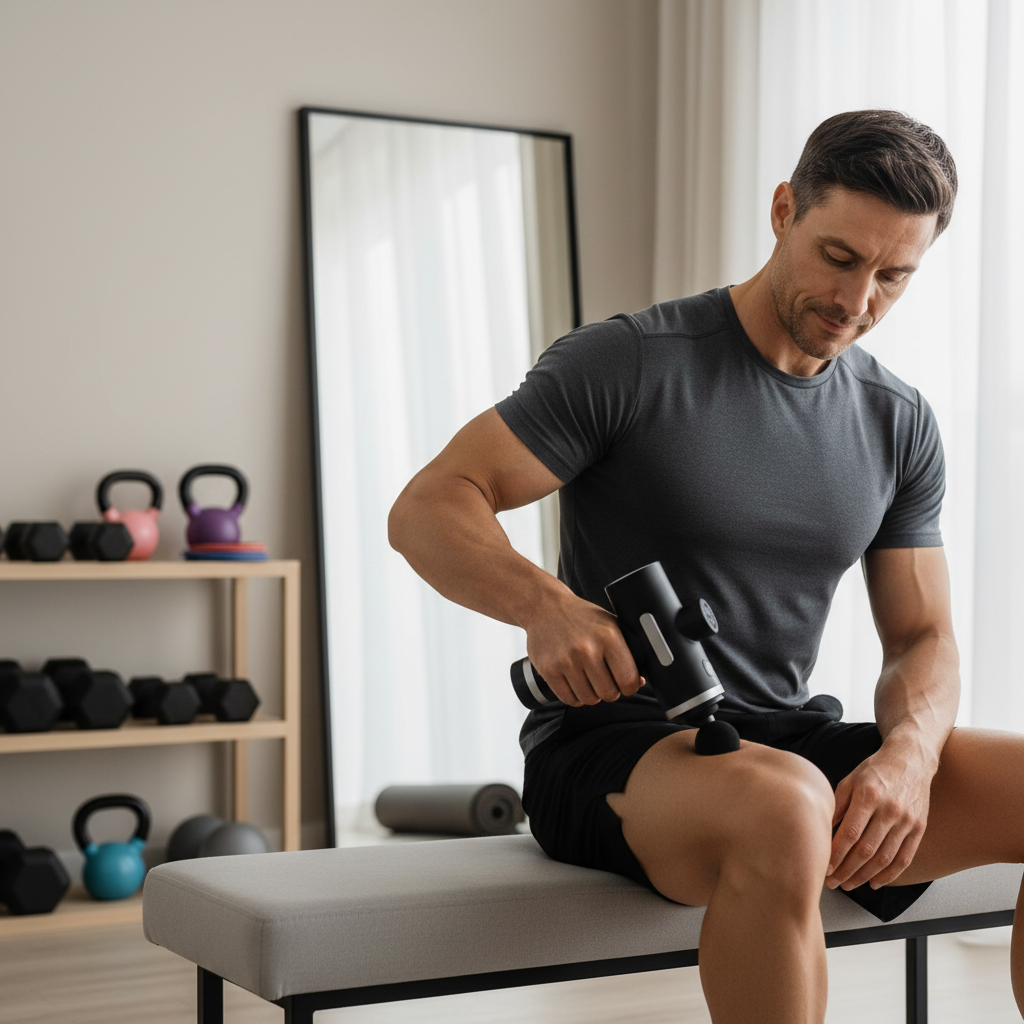
This guide breaks down what deep muscle recovery realistically means, when a percussion massager can help, how to use it without aggravating tissue, and what to look for if you’re shopping. You’ll also get a quick routine you can repeat without overthinking.
What a massage gun actually does (and what it doesn’t)
A massage gun delivers rapid pulses into soft tissue, commonly called percussion therapy. Practically speaking, it can help you reduce the “tight” feeling, improve short-term range of motion, and make movement feel smoother before or after exercise.
What it usually does not do is “flush lactic acid” or permanently break up scar tissue in a single session. Deep muscle recovery is often about calming sensitivity and improving circulation and movement quality, not “beating knots into submission.”
According to the American Council on Exercise (ACE), percussion tools may help increase range of motion and temporarily reduce muscle soreness for some people when used appropriately.
Why you feel sore or tight after training (common real-world causes)
Most soreness and stiffness come from a mix of factors, and the right approach depends on which one dominates for you that day.
- Delayed onset muscle soreness (DOMS): often peaks 24–72 hours after unfamiliar or high-volume work, even if you did everything “right.”
- Protective tension: your nervous system “guards” a region that felt stressed, and the area reads as tight.
- Localized overuse: certain muscles take over when technique or mobility is off, common with shoulders, hip flexors, calves.
- Stress and sleep debt: recovery capacity drops, and everything feels more tender.
- Dehydration or low fueling: not the only reason, but it can make training feel rougher than it needs to.
A massage gun can be helpful across several of these, but it’s usually best as one tool in a recovery stack, alongside walking, light mobility, sleep, and sensible training load.
Quick self-check: is a massage gun a good idea today?
If you’re unsure, this simple checklist prevents the two most common mistakes: using it on the wrong problem or using it too aggressively.
Green lights (usually okay)
- General muscle soreness after exercise, no sharp pain
- Tightness that eases when you warm up
- You want a looser feel before lifting or a calm-down after
- Muscle feels “stiff,” but not hot, swollen, or bruised
Yellow lights (use caution, keep it gentle)
- The area feels irritated from a new program, or you’re unsure if it’s strain vs soreness
- You bruise easily or take blood thinners, ask a clinician first
- You have nerve-like symptoms (tingling, numbness), stop and reassess
Red lights (skip it, consider professional guidance)
- Sharp pain, sudden weakness, visible swelling, or suspected tear
- Recent surgery, fractures, or unhealed injuries near the area
- Using it over the front of the neck, spine bones, or directly on joints
According to the U.S. Food & Drug Administration (FDA), it’s smart to follow the device’s safety instructions and consult a healthcare professional if you have conditions that could make use risky.
How to use a massage gun for deep muscle recovery (step-by-step)
The goal is a “good pressure” sensation, not pain. If you’re grimacing or holding your breath, you’re probably overshooting.
Simple technique that works for most people
- Start on low speed: let the tissue adapt for 20–30 seconds.
- Keep it moving: slow passes, about 1 inch per second, avoid drilling one point.
- Angle matters: keep the head flat to the muscle belly, not jammed into edges.
- Time cap per area: 60–120 seconds per muscle group is often plenty.
- Follow with movement: air squats, band pull-aparts, or a short walk to “lock in” the loose feel.
Where “deep” actually comes from
In many cases, “deep” is less about maximum force and more about slow passes + enough time. If you can relax your jaw and breathe normally while using the device, you’re more likely to get the nervous system downshift you want.
Practical routines: pre-workout, post-workout, and rest days
You don’t need a 30-minute session. A short, repeatable routine tends to beat a complicated one you never do.
Pre-workout (5–7 minutes)
- Quads or hamstrings: 45–60 seconds each
- Glutes: 45–60 seconds each
- Upper back/lats (avoid spine bones): 45–60 seconds
- Then do dynamic warm-up: leg swings, lunges, light sets
Post-workout (6–10 minutes)
- Target what you trained: 60–90 seconds per muscle group
- Finish with easy breathing and a short walk if possible
Rest day “reset” (8–12 minutes)
- Calves, quads, glutes: 60 seconds each
- Forearms or pec minor area: gentle, short passes
- Light mobility: hips, T-spine rotations
Choosing a massage gun: what matters (and what’s mostly marketing)
Specs can get loud. What matters is whether you can use it consistently and comfortably.
| Feature | Why it matters | What to look for (practical) |
|---|---|---|
| Amplitude (stroke length) | How far the head travels, often tied to “deeper” feel | Moderate-to-higher amplitude if you like a firmer feel, but not required for most users |
| Stall force | Whether it stops when you press in | Enough power to maintain rhythm under light-to-moderate pressure |
| Speed range | Lets you go gentle on sensitive areas | Multiple speed levels, with a truly low setting |
| Noise | Loud tools reduce consistency | Quiet motor if you’ll use it at night or around others |
| Weight & handle angle | Comfort and reach, especially back/hips | Balanced feel, easy grip, not fatiguing after 5 minutes |
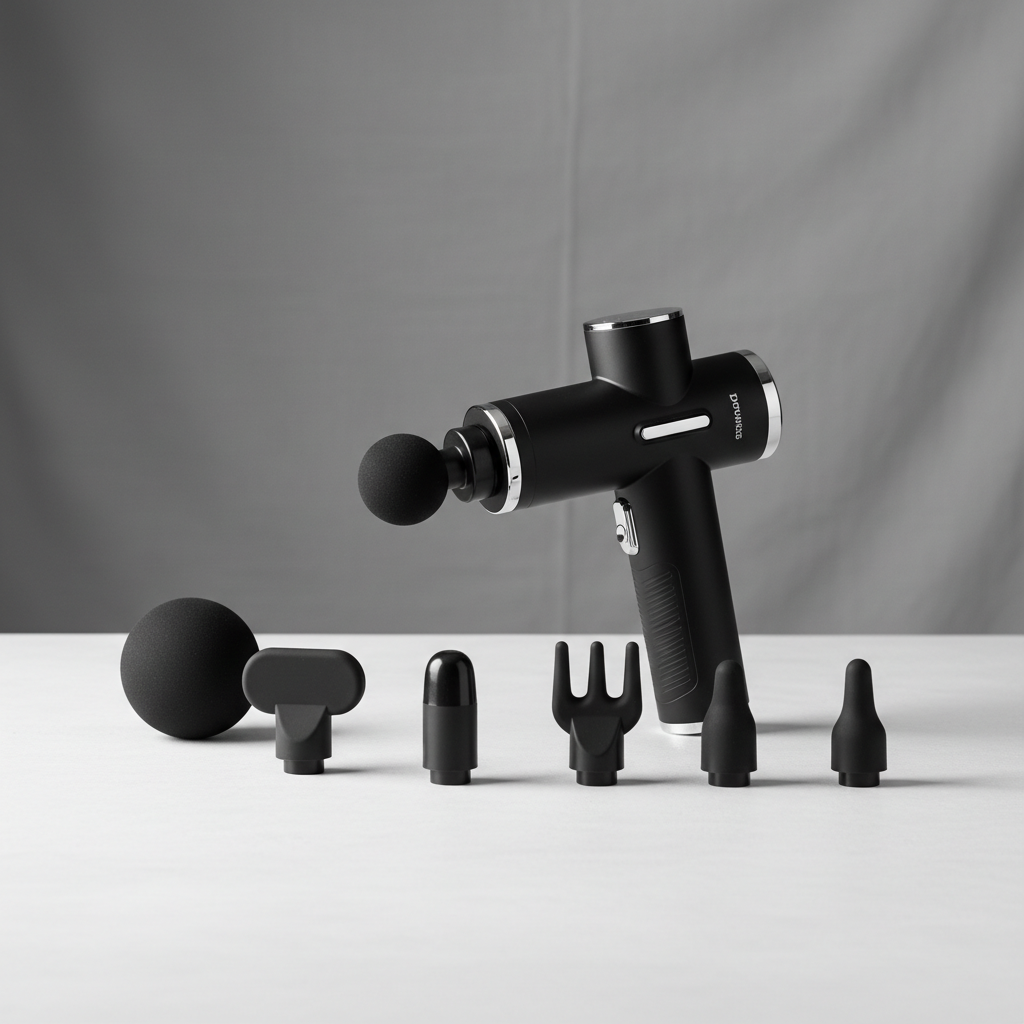
| Attachments | Fine-tunes pressure and comfort | Ball for general use, flat for larger muscles, fork for areas around (not on) tendons |
Key point: the “strongest” option is not automatically the most useful. If a device makes you tense up, you’ll use it less and get less benefit.
Common mistakes that make recovery worse
- Camping on one spot: prolonged pressure on a tender point can irritate tissue and leave you feeling worse the next day.
- Turning it up to chase pain: discomfort is not a progress metric, especially for DOMS.
- Using it over joints or bones: it feels weird because it is, stick to muscle bellies.
- Ignoring the cause: if your calf tightness keeps returning, you may need load management, footwear changes, or technique work, not just more percussion.
- Skipping follow-up movement: a little mobility after helps your body “use” the new range.
When to ask a professional (and what to say)
If pain persists past a typical soreness window, keeps you from normal daily activity, or comes with numbness, swelling, or instability, it’s worth checking in with a physical therapist, athletic trainer, or physician. That’s especially true if you’re unsure whether you’re dealing with DOMS or an injury.
Helpful details to share: where it hurts, what movements trigger it, how long it lasts, what you tried (including your Massage Gun routine), and whether symptoms travel or feel nerve-like.
Conclusion: a massage gun is a tool, not a test of toughness
Massage Gun sessions work best when they’re short, consistent, and paired with movement. If you keep pressure moderate, stay off joints and bony areas, and use it as part of a broader recovery plan, most people get a noticeable “I move better” effect even when deep soreness still needs time.
If you want one next step, do this tonight: pick one tight muscle group, use low speed for 60–90 seconds with slow passes, then take a 10-minute easy walk. If that feels better tomorrow, you have a routine you can repeat without guesswork.