
Core stability exercises help you control your trunk, pelvis, and spine so your strength shows up where you want it, instead of leaking out through wobbly reps and nagging low-back tension.
If you’ve ever felt your lower back take over during planks, squats, or even long hours at a desk, that’s usually a stability issue more than a “weak abs” issue. You can have strong muscles and still lack the coordination to keep your torso steady under load.
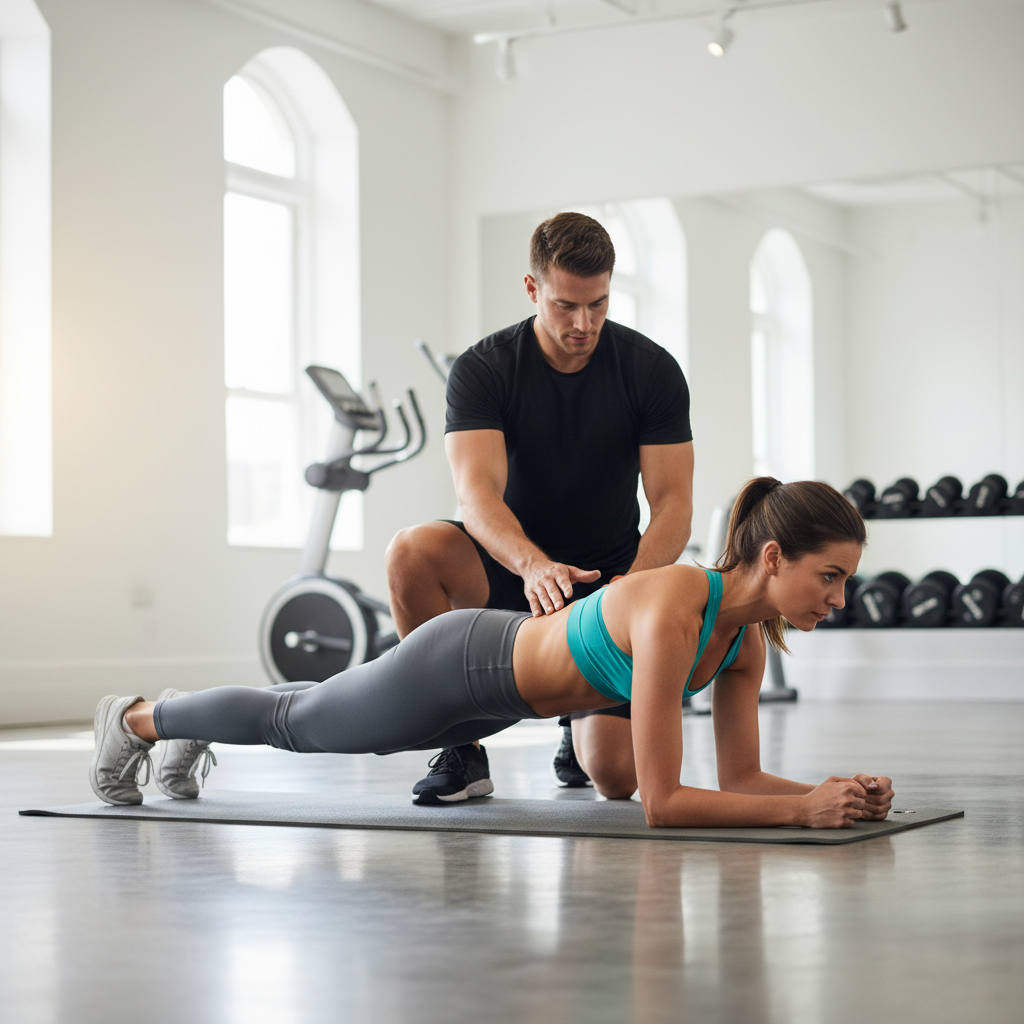
This guide breaks down what “core stability” actually means, how to tell what you need, and a practical routine you can repeat without overthinking it. I’ll also flag the common mistakes that make people feel worse and when it makes sense to loop in a professional.
What core stability really means (and why it’s not just “abs”)
Core stability is your ability to resist unwanted motion and keep good position while you breathe, move your limbs, and handle load. In plain English, it’s the difference between “I can hold a plank for 60 seconds” and “I can keep my ribs stacked over my pelvis while I carry groceries, run, or lift.”
According to the American Council on Exercise (ACE), core training is often about improving muscular endurance and neuromuscular control around the trunk and pelvis, not only building a visible six-pack. That focus matters because many back and hip complaints show up when control breaks down under fatigue.
Think of the core as a team: diaphragm (breathing), deep abdominal wall, pelvic floor, spinal stabilizers, glutes, and even the lats. When the team coordinates, your spine stays “quiet,” and your shoulders and hips can do their job.
Why people feel unstable: common real-world causes
Most people aren’t unstable because they’re lazy, they’re unstable because life trains them that way. A few patterns show up a lot.
- Rib flare + low-back arching: you “brace” by jamming your ribs up, then your lumbar spine takes the stress.
- Glutes not contributing: hips feel tight, but the real issue is weak hip extension control, so the back does extra work.
- Breath-holding: you create pressure, but you can’t keep it while moving, so the brace disappears mid-rep.
- Too much flexion work: endless sit-ups build fatigue and irritation without improving anti-rotation or anti-extension control.
- Speed before position: fast circuits hide compensation until something gets cranky.
If any of that sounds familiar, you’re exactly the right audience for core stability exercises that prioritize alignment and control.
Quick self-check: which type of stability do you need?
You don’t need a lab to get a useful read. Use these simple checks and note what breaks first: position or effort.
Check 1: Dead bug control (anti-extension)
- Lie on your back, knees over hips, arms up.
- Exhale gently, feel ribs come down, low back stays “heavy” on the floor.
- Extend opposite arm and leg slowly, return, switch.
- Common fail: low back arches or ribs pop up.
Check 2: Side plank quality (anti-lateral flexion)
- Hold 20–30 seconds each side.
- Common fail: hip drops, shoulder shrugs, neck tension.
Check 3: Bird dog steadiness (anti-rotation)
- Hands and knees, extend opposite arm and leg.
- Common fail: hips twist open, weight shifts hard to one side.
If one check feels drastically worse than the others, start there. Many solid programs under-deliver because they train your favorite pattern and ignore your weak link.
The core stability exercise menu (choose based on your goal)
Below is a practical menu you can rotate. The trick is not collecting exercises, it’s doing a few consistently with clean reps.
| Goal | Best-fitting exercises | What “good” feels like |
|---|---|---|
| Anti-extension (stop low-back arch) | Dead bug, plank, stability ball rollout (advanced) | Ribs down, steady breathing, no pinching in low back |
| Anti-rotation (stop twisting) | Pallof press, bird dog, suitcase carry | Hips stay square, slow controlled limbs |
| Anti-lateral flexion (stop side-bending) | Side plank, suitcase carry, side plank march (advanced) | Long neck, hips lifted, obliques working without cramping |
| Hip-to-core connection | Glute bridge march, hip hinge iso hold, farmer carry | Glutes on, pelvis steady, hamstrings not doing everything |
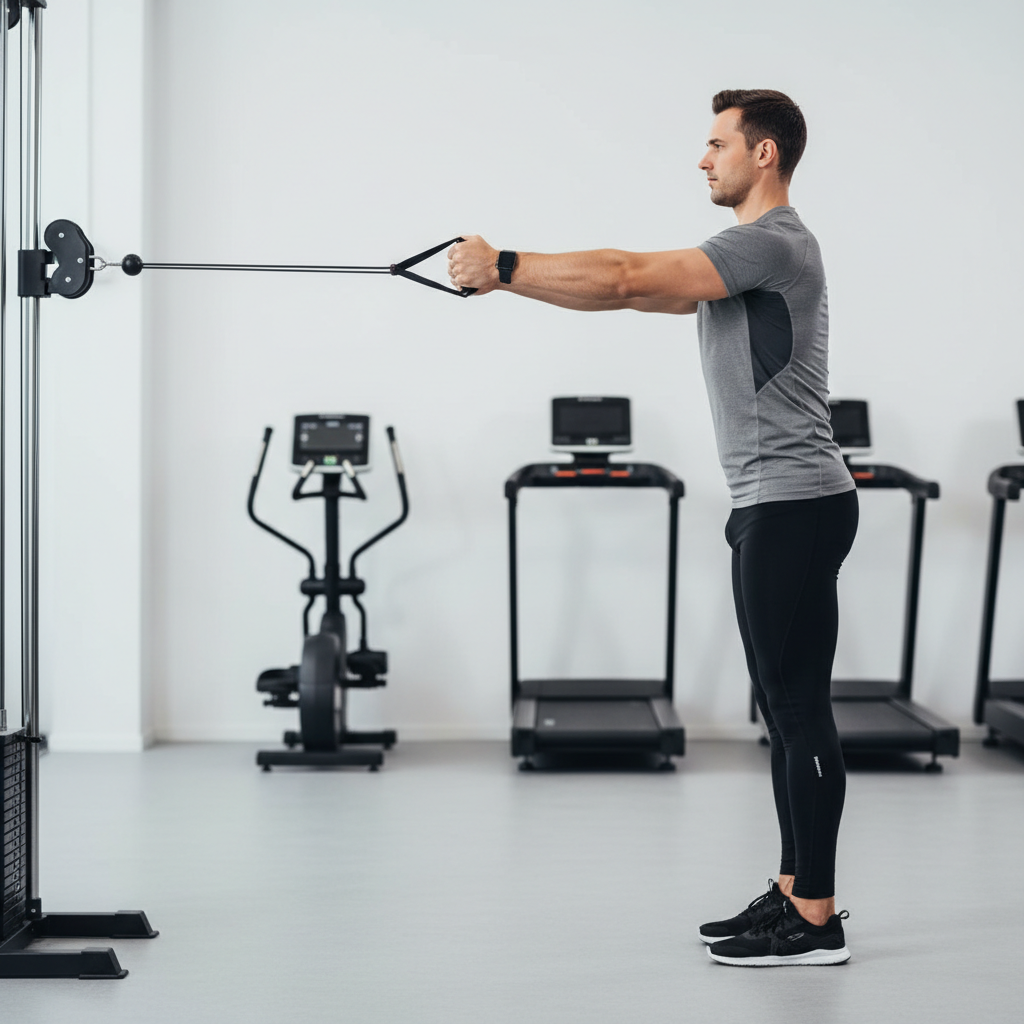
Key point: when an exercise gets hard, your job is to keep the spine and pelvis position boring. If you “win” by twisting, arching, or shrugging, you trained compensation.
A simple 20-minute routine (2–4 days/week)
This is a realistic starting plan. Keep the reps a little conservative and stop a set when you lose position, not when you collapse.
Warm-up: 3–4 minutes
- 90/90 breathing: 4 slow breaths, exhale longer than inhale
- Cat-cow: 6 controlled cycles, move slowly
Main circuit: 2–3 rounds
- Dead bug: 6–10 reps per side, 3-second reach
- Side plank: 20–40 seconds per side
- Pallof press: 8–12 reps per side, 2-second hold at full reach
- Glute bridge march: 6–10 reps per side, pelvis level
Finisher (optional): loaded carry
- Suitcase carry: 3 x 20–40 yards per side, slow walk, tall posture
Rest 30–60 seconds between moves as needed. If you’re shaking but aligned, that’s usually fine. If you feel joint pain or sharp discomfort, back off and adjust.
Form cues that make these exercises work
People love cues until they get too complicated. Here are the ones that tend to clean up technique fast.
- “Ribs over pelvis”: imagine your ribcage stacking over your hips, not flaring up.
- Breathe behind the brace: you should manage quiet nasal breathing, even during effort.
- Move slow, own the midpoint: most cheating happens halfway through the rep.
- Use the floor: in dead bugs and bridges, feel pressure through your whole back, not just your shoulders.
According to the National Strength and Conditioning Association (NSCA), controlling position and progressing gradually are central principles in strength training. In core stability work, that “gradual progression” often means smaller ranges of motion, slower tempo, and longer holds before you chase harder variations.

Quick takeaway: if your breathing locks up, or your neck and hip flexors steal the work, the exercise is too advanced for today. Make it easier and get high-quality volume.
Common mistakes (and what to do instead)
- Chasing long planks: a 2-minute plank with a sagging back is mostly practice at sagging. Instead, do shorter holds with perfect shape, or add a hard exhale every 5–10 seconds.
- Doing core at the end, exhausted: fatigue makes compensation more likely. If core stability is your priority, put it earlier in the session or on separate days.
- Ignoring carries: many people “feel” core work only when lying down. Carries teach stability in real positions you use daily.
- All flexion, no resistance: add anti-rotation and anti-extension patterns so your torso learns to stay steady while limbs move.
When to get professional help
If you have pain that shoots down the leg, numbness, unexplained weakness, recent injury, or symptoms that worsen with exercise, it’s smart to pause and consult a licensed healthcare professional such as a physical therapist. The same goes if you have a history of spine surgery or a medical condition where pressure management matters.
Even without red flags, a few sessions with a qualified coach can be worth it if you keep “doing the right exercises” but your form never clicks. Often the fix is one small adjustment you won’t guess on your own.
Conclusion: build stability you can use
Core stability exercises work best when you treat them like skill practice: clean reps, steady breathing, and progression that respects your weak links. Pick a small menu, repeat it for 4–6 weeks, and track whether everyday movement feels easier and lifting form stays tighter.
If you want one simple action today, do this: run the self-checks, choose the weakest category, then plug two movements from that category into your routine twice this week.
FAQ
What are the best core stability exercises for beginners?
Dead bugs, side planks (knees bent if needed), bird dogs, and Pallof presses tend to deliver the most control with the least joint irritation, as long as you move slowly and breathe.
How often should I do core stability training?
For many people, 2–4 days per week works well. If you keep sessions short and technique-focused, you can practice more often without feeling beat up.
Why do planks hurt my lower back?
Often it comes from sagging into extension, rib flare, or holding your breath. Shorten the lever by dropping to knees, exhale to bring ribs down, and stop the set before your shape changes.
Can core stability exercises help back pain?
They may help when pain relates to poor control or endurance, but back pain has many causes. If symptoms persist or feel sharp, getting evaluated by a clinician is the safer move.
Are sit-ups and crunches bad for core stability?
They’re not automatically “bad,” but they train trunk flexion more than they train resisting motion. If your goal is stability for lifting or daily life, prioritize anti-extension and anti-rotation patterns.
Do I need equipment for core stability exercises?
No. You can get far with floor work and carries using a single dumbbell or kettlebell. Bands or cables simply make anti-rotation work more convenient to load and progress.
How do I progress core stability exercises without messing up my form?
Progress by adding time under tension, slowing the tempo, extending one limb farther, or adding light load, and only change one variable at a time. If breathing or alignment breaks, step back.
If you’re trying to build a steadier trunk for lifting, running, or fewer “random” back flare-ups, consider treating this like a short training block: pick 4–5 moves from the routine above, keep notes on quality, and adjust weekly. If you’d rather not guess, a qualified trainer or physical therapist can help match core stability work to your body and goals.