
A home core workout can be quick, joint-friendly, and surprisingly hard without a single piece of equipment, as long as you stop chasing “abs” and start training your trunk like it actually works in real life.
Most people quit core training for one of two reasons, it feels repetitive, or it leaves them with a cranky lower back. The fix is rarely “more crunches”, it’s better exercise choices, cleaner technique, and a plan you can repeat on busy days.
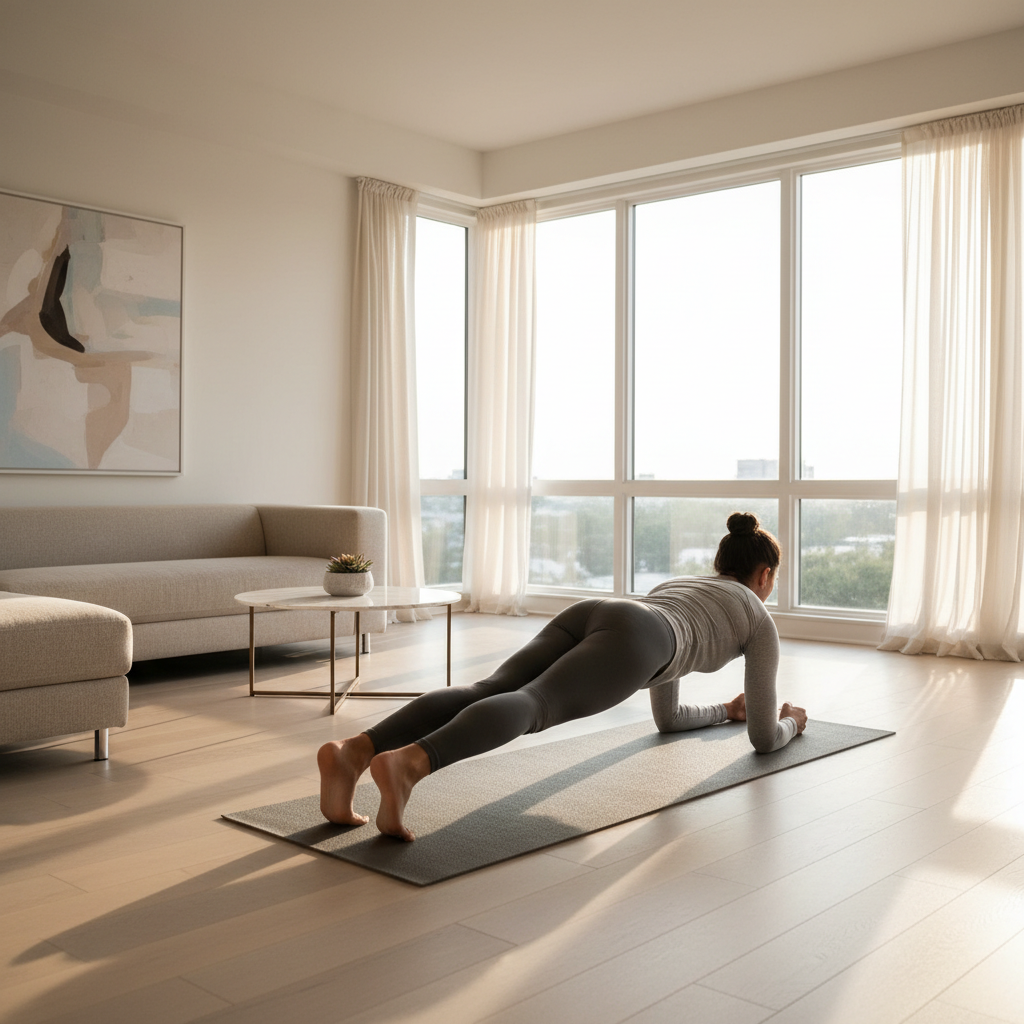
This guide gives you a short routine you can run in 10–20 minutes, plus a simple way to scale it up or down depending on your back, your schedule, and how trained you already feel. You’ll also get a quick self-check list so you don’t guess.
What “core” training really means (and why crunch-only plans stall)
Your core is more than the front of your stomach. In training terms, it’s the system that helps you resist motion and transfer force, so your spine stays stable while your arms and legs move. That’s why planks, carries, and anti-rotation work tend to pay off.
According to the American Council on Exercise (ACE), core training supports posture and stability, and a well-rounded approach typically beats a single-move obsession. Translation, you want a mix of anti-extension (don’t let the low back arch), anti-rotation (don’t twist), and lateral stability (don’t collapse sideways).
When a home core workout “doesn’t work”, it’s often because it’s all flexion-based moves (endless sit-ups) and no stability work. For many people, that pattern also makes the hip flexors take over, so the abs never really get a clean stimulus.
Why your home core workout might feel easy (or hurt your back)
Core work should feel challenging, but it should not feel like sharp back pain. Many at-home programs go wrong in predictable ways, especially when people rush.
- You’re moving through your lower back instead of bracing your trunk, common in fast mountain climbers and sloppy leg raises.
- You’re holding your breath, pressure spikes, you fatigue early, and technique falls apart.
- Your range of motion is too big for your current control, the pelvis tips forward and the low back takes the load.
- You’re only training one pattern, like planks only, so progress stops and motivation drops.
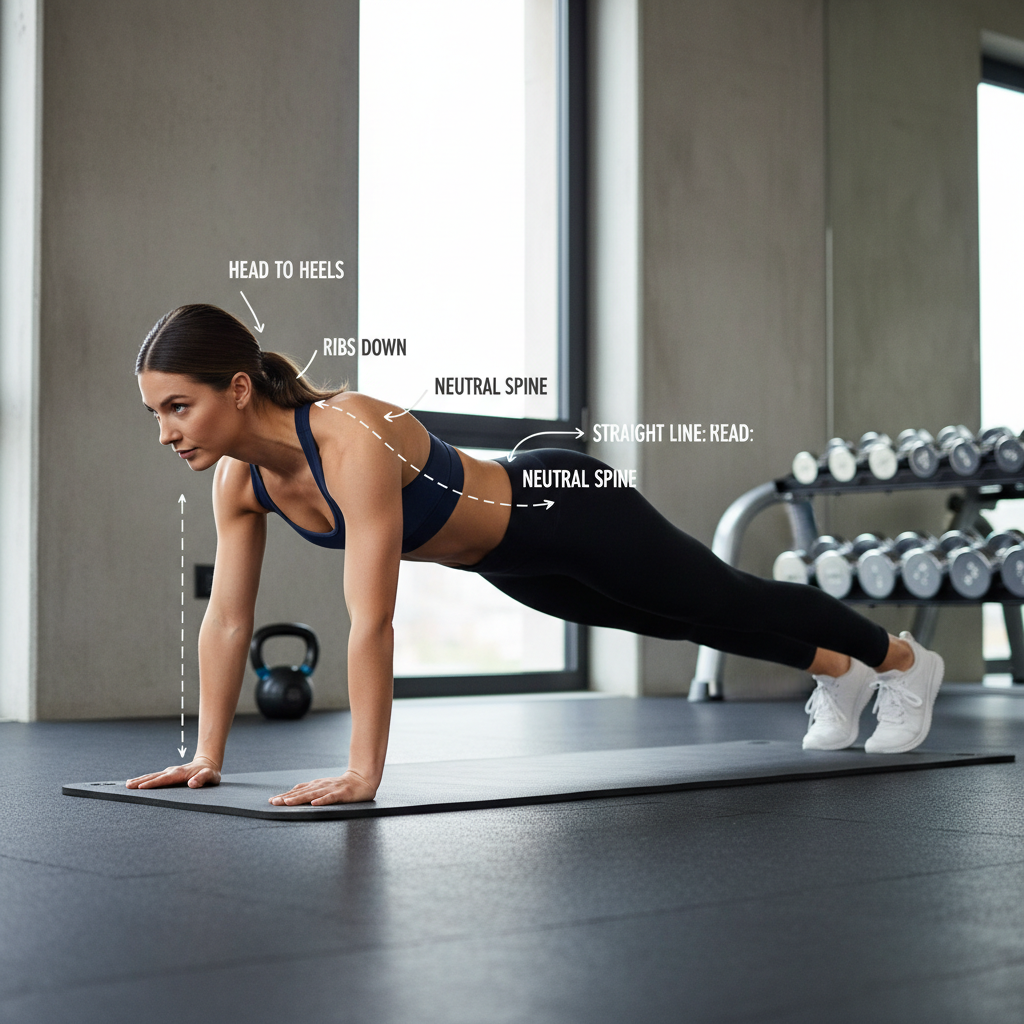
- You’re missing the “set-up”, ribs flared, neck craned, shoulders shrugged, your plank becomes a shoulder endurance test.
If you’re dealing with current injury, recent surgery, pregnancy or postpartum considerations, or persistent radiating pain, it’s smart to check with a qualified clinician or trainer who can assess you in person. Online routines can’t see your compensation patterns.
Quick self-check: pick the right difficulty in 60 seconds
Before you start, use this checklist. It prevents the classic mistake, choosing exercises that look “advanced” but train the wrong thing for your body right now.
- Plank test: Can you hold a solid plank for 20–30 seconds without shaking your low back or holding your breath?
- Dead bug control: Can you move one arm and the opposite leg slowly while keeping your low back gently heavy to the floor?
- Side stability: Can you side plank (knees down is fine) for 15–20 seconds without shoulder pain?
- Next-day signal: Mild muscle soreness is fine, but back tightness that lingers may mean you need easier progressions.
Rule that keeps you honest: if you can’t keep smooth breathing, you’re training beyond your current control. Scale down, then build back up.
The 12-minute no-equipment home core workout (beginner-to-intermediate)
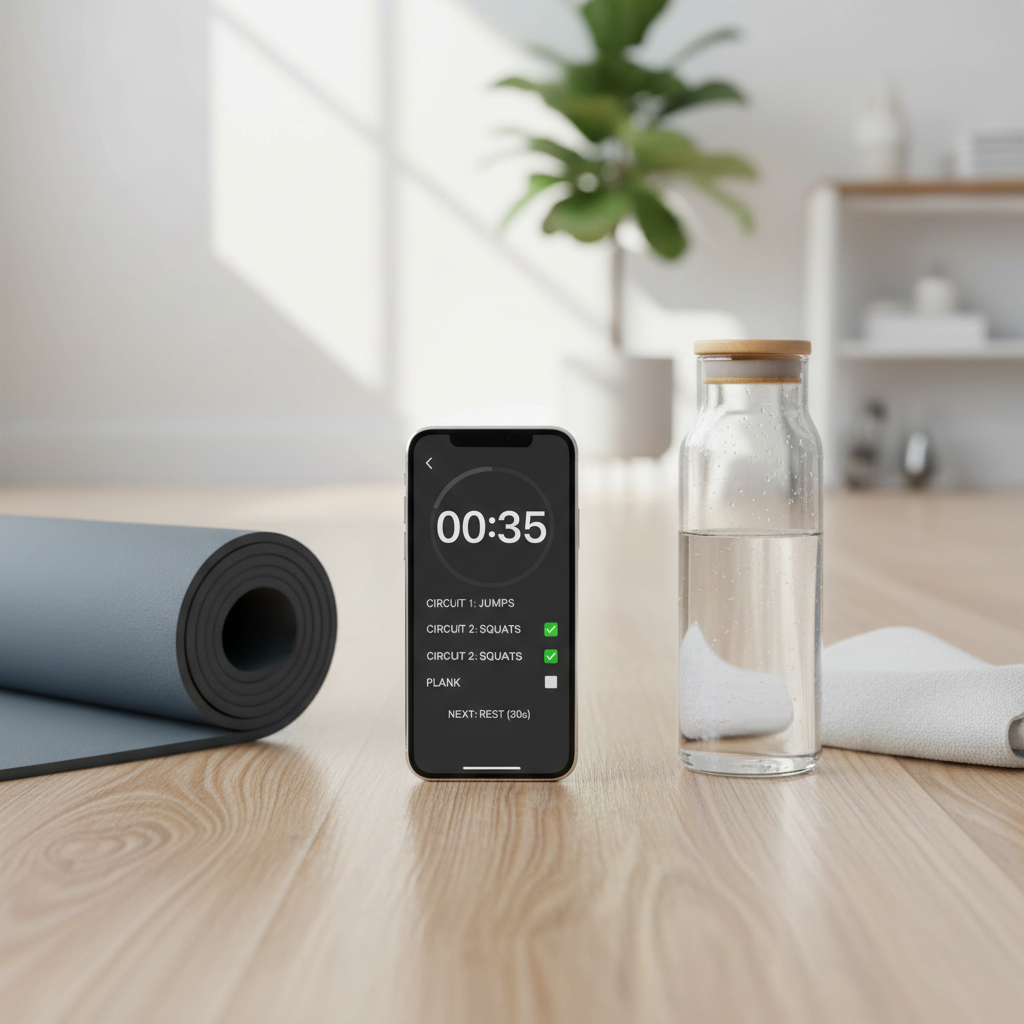
This home core workout uses 6 moves, 40 seconds on, 20 seconds off, repeat for 2 rounds. If 40 seconds feels long, start with 25–30 seconds and keep quality high.
Round structure
- Warm-in (1 minute): 3 slow breaths lying on your back, ribs down, then 5–6 cat-cow reps.
- Main circuit (10 minutes): 6 moves x (40s work + 20s rest) x 2 rounds.
- Finish (1 minute): Child’s pose breathing or a gentle hip flexor stretch.
The 6 exercises (with the cue that matters)
- Dead Bug: Move slow, keep ribs down, think “zip up” the front of your body.
- Forearm Plank: Push the floor away, squeeze glutes lightly, long neck, breathe quietly.
- Side Plank (knees or feet): Hips forward, shoulder stacked, don’t sink into the bottom shoulder.
- Glute Bridge March: Hips stay level as one foot lifts, avoid twisting.
- Bear Hold (hover): Knees 1–2 inches off floor, back flat, small breaths.
- Slow Mountain Climber (controlled): Knee toward elbow without rocking hips, slower is harder here.
Quick technique guardrails
- Stop a set if your low back pinches or your shoulders take over completely.
- Keep reps “boring”: smooth, controlled, consistent tempo, no flopping.
- Exhale on effort: that simple cue often fixes rib flare and back arching.
Progression table: how to make it easier or harder
Most people don’t need new exercises every week, they need a clearer knob to turn. Use this table to scale your home core workout without changing the whole plan.
| Exercise | Make it easier | Standard | Make it harder |
|---|---|---|---|
| Dead Bug | Arms only or legs only | Opposite arm + leg | Heels hover, slower tempo |
| Forearm Plank | Hands-elevated on couch | Forearms on floor | Long-lever plank (feet back) |
| Side Plank | Knees down, short hold | Feet stacked | Top-leg raise or longer holds |
| Glute Bridge March | Regular bridge hold | Alternating marches | Single-leg bridge (controlled) |
| Bear Hold | Knees down, rock gently | Hover, still | Hover + shoulder taps |
| Mountain Climber | Hands elevated | Slow, controlled on floor | Pause each rep, longer set |
If you’re unsure which column to use, pick the version where you can keep steady breathing and clean alignment for the whole interval. That’s the one that builds capacity fastest in real life.
How to fit this into your week (without overthinking it)
Consistency beats hero sessions. For most busy schedules, two to four short sessions per week is plenty, especially if you also walk, lift, or play a sport.
- 2 days/week: Run the 12-minute circuit, focus on form, keep it repeatable.
- 3 days/week: Alternate standard day and “lighter control” day, use easier progressions on the lighter day.
- 4 days/week: Keep two sessions short (10–12 minutes) and two slightly longer (15–20 minutes), avoid going to failure every time.
According to the CDC (Centers for Disease Control and Prevention), adults should aim for regular physical activity across the week. Your core work can slot in as a short add-on after walks, strength training, or even during a lunch break.
Common mistakes that waste time (and what to do instead)
These show up constantly in at-home training, and they’re fixable without buying gear.
- Chasing burn over control: If the set burns but your hips sag, you’re practicing a bad pattern. Shorten the set, tighten technique.
- Only training front abs: Add side plank and anti-rotation patterns, your back often feels better when the “sides” get stronger.
- Going fast to feel athletic: Speed hides weak positions. Earn speed later, start with slow reps now.
- Ignoring shoulder discomfort: Elevate your hands on a couch or do dead bug variations until shoulders calm down.
- Expecting visible abs from core work alone: Definition depends heavily on nutrition, sleep, and overall training load, not just a plank streak.
When to get extra help (and why it can be worth it)
If you repeatedly feel symptoms that don’t match “normal muscle fatigue”, don’t brute-force it. Getting eyes on your movement can save months of frustration.
- Low back pain that worsens during core moves, or lingers after sessions
- Numbness, tingling, or pain that radiates down the leg
- Diastasis recti concerns postpartum, or pelvic floor symptoms like heaviness or leaking
- History of hernia, disc issues, or recent abdominal surgery
A physical therapist, certified personal trainer with corrective exercise experience, or qualified medical professional can help match the right progressions to your body and goals. Many cases are very manageable, but guessing tends to keep you stuck.
Key takeaways (keep these, skip the noise)
- Train the core to resist motion, not just to flex.
- Breathing is a technique test, if you can’t breathe smoothly, scale the move.
- Short sessions win, a repeatable 12-minute circuit beats a perfect plan you never run.
- Progressions matter, make moves easier or harder without changing everything.
Conclusion: a simple plan you can actually repeat
A home core workout works best when it feels doable on your busiest day and still challenges your control. Run the 12-minute circuit two or three times this week, pick one exercise to improve with the progression table, and keep the focus on bracing, breathing, and clean reps.
If you want one small action today, set a timer for 12 minutes and do one round only, stop while form still looks good, and write down which move felt most unstable. That note tells you exactly where to focus next time.
FAQ
- How often should I do a home core workout?
Most people do well with 2–4 sessions per week. If your main training already includes compound lifts or sports, 2 short sessions may be enough. - Is it normal to feel core exercises in my hip flexors?
Some hip flexor work is normal, but if they dominate, reduce range of motion, slow the tempo, and emphasize ribs-down bracing in dead bug and mountain climbers. - What if planks hurt my shoulders?
Try hands-elevated planks on a couch, shorten your holds, and focus on pushing the floor away. If pain persists, consider professional guidance. - Can this routine help lower back discomfort?
It may, especially when you improve trunk control and glute engagement, but back pain has many causes. If discomfort is sharp, persistent, or radiating, consult a professional. - Do I need to feel a burn for it to work?
No. A strong set often feels like steady tension and shaking near the end, not a dramatic burn. Quality positioning matters more than sensation. - How do I make a home core workout harder without equipment?
Extend the lever (longer plank position), add pauses, slow tempo, or increase total time under tension. Avoid rushing reps just to feel tired. - Will this give me visible abs?
It can build stronger abs, but visibility depends on overall body composition, which usually involves nutrition, recovery, and full-body training.
If you’re trying to stay consistent and want a more “set it and follow it” approach, consider saving this routine as a repeating calendar block and tracking one metric, total quality time per move. That little structure often makes at-home training feel less random and more motivating.