
Yoga strap use can turn a “too tight to reach” stretch into something you can actually hold with good form, without yanking or holding your breath. If you have stiff hamstrings, shoulders that feel stuck, or hips that resist certain poses, a strap often helps you get the benefit of the stretch while keeping joints in a safer position.
The catch is that many people use a strap like a tow rope: they pull hard, shorten the hold, and end up feeling pinchy. Used well, a strap works more like an extension of your arms, it creates just enough length so you can relax into the shape and stay there long enough to change tissue tolerance.
This guide covers what to adjust, how to choose strap length, and a few go-to stretches you can repeat at home. You’ll also get quick self-checks and troubleshooting tips, because small tweaks usually matter more than “stretching harder.”
Why a yoga strap helps (and when it doesn’t)
A yoga strap helps most when flexibility limits your reach, not when strength, balance, or pain limits your movement. It’s a simple distinction, but it prevents a lot of frustration.
- Better leverage without strain: The strap lets your hands stay where your shoulders can relax, instead of forcing a grip that hikes the shoulders up.
- More consistent alignment: With extra length, you can keep the spine long and ribs stacked rather than rounding to “get deeper.”
- Longer holds: When you’re not fighting to reach, it’s easier to breathe and stay 30–60 seconds, which is where many people feel the most change.
- Clear feedback: Strap tension tells you if you’re pulling aggressively or maintaining a gentle, steady stretch.
When it may not help much: sharp pain, numbness, tingling, or joint pinching. Those cues usually call for a different setup, a smaller range, or advice from a qualified clinician.
Pick the right strap and set it up fast
You don’t need a fancy strap, but details do affect how usable it feels.
Length, material, and buckle
- Length: Many adults do well with 8–10 ft. If you’re tall or tight in shoulders/hamstrings, 10 ft often feels less cramped.
- Material: Cotton grips better and feels less “slippery.” Nylon tends to slide more, but dries fast.
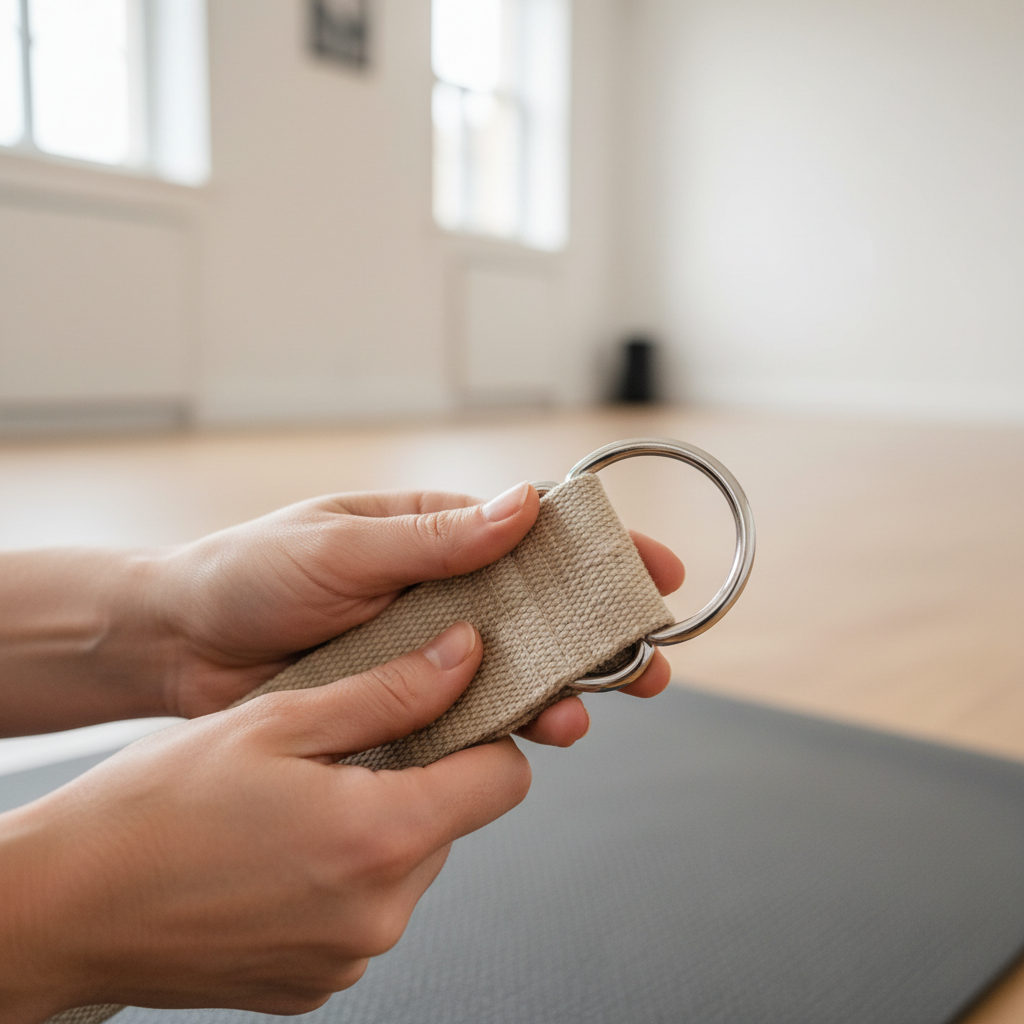
- Buckle type: A D-ring or cinch buckle makes loops easy. If you’re doing foot stretches, a secure buckle matters.
Two setups you’ll use constantly
- Open strap: Hold an end in each hand for shoulder mobility or binds.
- Loop strap: Feed the strap through the buckle to make a stable loop for feet or thighs, so you’re not constantly readjusting.
Quick rule: if you feel like you’re wrestling the strap, it’s usually too short for that pose, or your loop is too small.
Safety cues: what “good stretch” should feel like
Most strap stretches should feel like a steady pull in muscle tissue, not a jab in the joint. That difference matters more than intensity.
- Aim for 4–6/10 intensity: enough to feel clear sensation, not so much that you tense or grimace.
- Breathe normally: if breathing gets choppy, you’re often past your useful edge.
- Protect joints: keep a small bend in the knee or elbow if locking creates discomfort.
- Back off for nerve-like symptoms: tingling, buzzing, numbness, or burning can mean you’re tugging on neural tissue.
According to American Council on Exercise (ACE), stretching should be controlled and pain-free, and ballistic bouncing tends to raise injury risk for many people. A strap supports that “controlled” part, but only if you keep the pull gentle.
If you have hypermobility or very flexible joints, your “edge” can be misleading. In that case, use the strap to limit range, keep things stable, and prioritize strength in end range.
Self-check: do you need a strap, or a different approach?
If you’re unsure whether yoga strap use is the right fix, run through this quick checklist.
- You likely benefit from a strap if: you can feel the target muscle stretch when supported, but you lose form when reaching.
- You may need mobility plus strength if: you can reach with the strap, but you cramp or shake immediately and can’t hold the position.
- You should modify or stop if: you get sharp pain, joint pinching (front hip, back of knee, shoulder), or nerve-like sensations.
- You might need coaching if: the stretch always hits the low back or neck instead of the intended area.
Be honest here: a strap can mask poor alignment. If the strap makes you “look” deeper but feel worse after, it’s giving you range you can’t control yet.
How to use a yoga strap for stretching: 6 practical moves
These are the staples most people repeat for weeks, not the flashy variations. Keep the strap tension steady, and let the breath do some work.
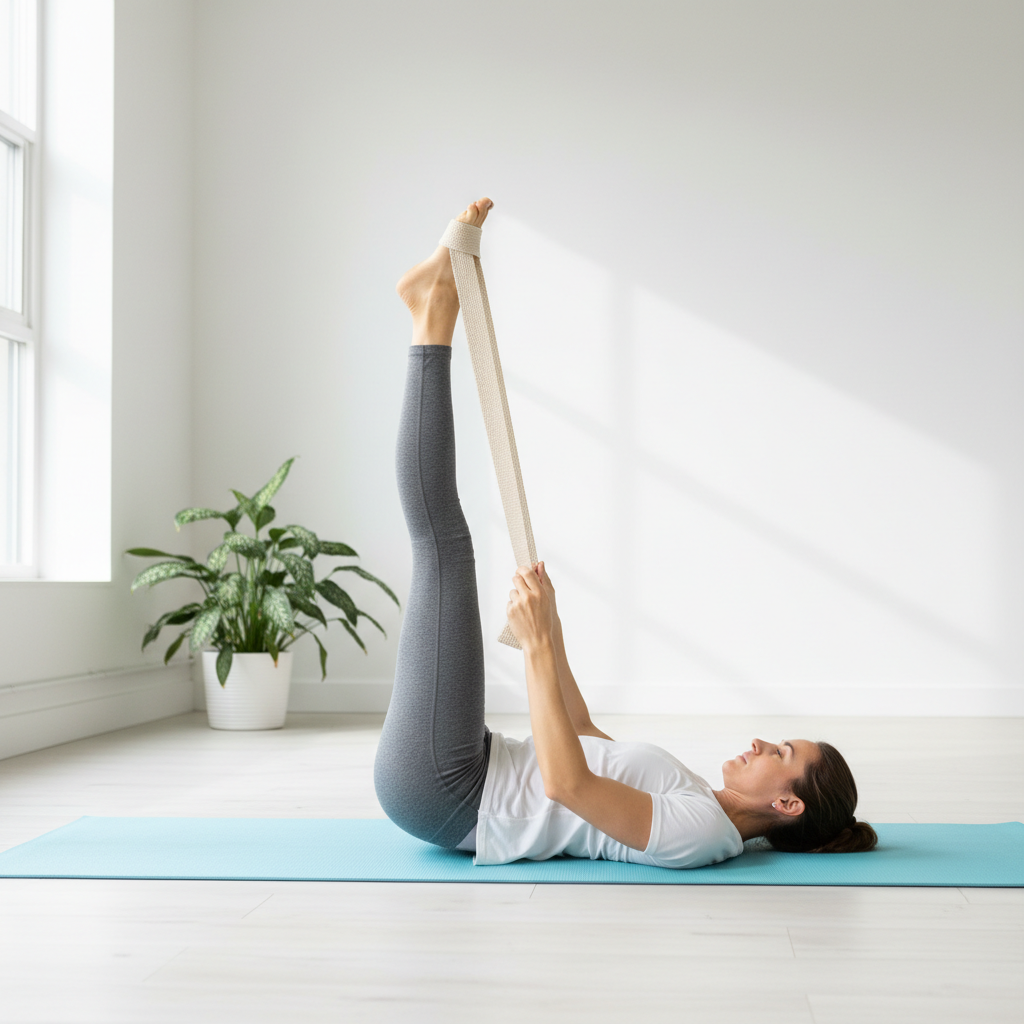
1) Supine hamstring stretch (strap on foot)
Lie on your back, loop the strap around the ball of one foot, extend the leg toward the ceiling. Keep the other leg bent or long, whichever keeps your pelvis steady.
- Do: keep a tiny knee bend if your low back rounds.
- Avoid: pulling so hard your shoulders lift off the floor.
- Hold: 30–60 seconds, 2 rounds per side.
2) Reclined figure-four (strap behind thigh)
Cross one ankle over the opposite thigh, then loop the strap behind the uncrossed thigh to draw the legs in. This often targets glutes and external hips without forcing a deep fold.
- Do: flex the crossed foot to support the knee.
- Avoid: letting the crossed knee collapse inward.
3) Seated forward fold support (strap around feet)
Sit tall, loop the strap around both feet, and hinge forward slightly while keeping length through the spine. This is where yoga strap use often prevents the “round and yank” habit.
- Do: think “chest forward” more than “head down.”
- Avoid: pulling your torso with your arms, the hinge should come from hips.
4) Shoulder opener (wide grip strap pass-through)
Hold the strap wide, arms straight, then slowly bring it overhead and behind you as far as you can without rib flare. Widen the grip until it feels smooth.
- Do: keep ribs down and neck relaxed.
- Avoid: going narrow too soon, that’s where shoulders complain.
- Reps: 6–10 slow passes.
5) Bound angle support (strap around low back and feet)
Sit with soles of feet together, then loop the strap around the low back and over the feet. Tighten until you can sit upright without clenching your inner thighs.
- Do: use the strap to maintain posture, not to force knees down.
- Hold: 45–90 seconds, easy breathing.
6) Supported quad stretch (side-lying strap on ankle)
Lie on your side, loop the strap around your top ankle, and guide the heel toward the glute. Keep hips stacked so the stretch stays in the front thigh, not the low back.
- Do: keep pelvis neutral and glute lightly engaged.
- Avoid: arching to “get more.” More is not always better here.
A simple weekly plan (and a table you can follow)
If flexibility feels random, it’s often because practice feels random. Here’s a realistic schedule for most people: short sessions, repeated often, not heroic weekend marathons.
| Goal | Sessions/week | Session length | Recommended strap stretches |
|---|---|---|---|
| Tight hamstrings | 3–5 | 8–12 min | Supine hamstring, seated forward fold support |
| Hip stiffness | 3–4 | 10–15 min | Figure-four, bound angle support |
| Shoulder mobility | 2–4 | 6–10 min | Wide grip pass-throughs, gentle behind-the-back hold |
| General maintenance | 2–3 | 10 min | Pick 2–3 moves, hold longer, keep it easy |
Key point: if you only stretch when you feel “super tight,” the body often stays in that loop. Consistency usually beats intensity.
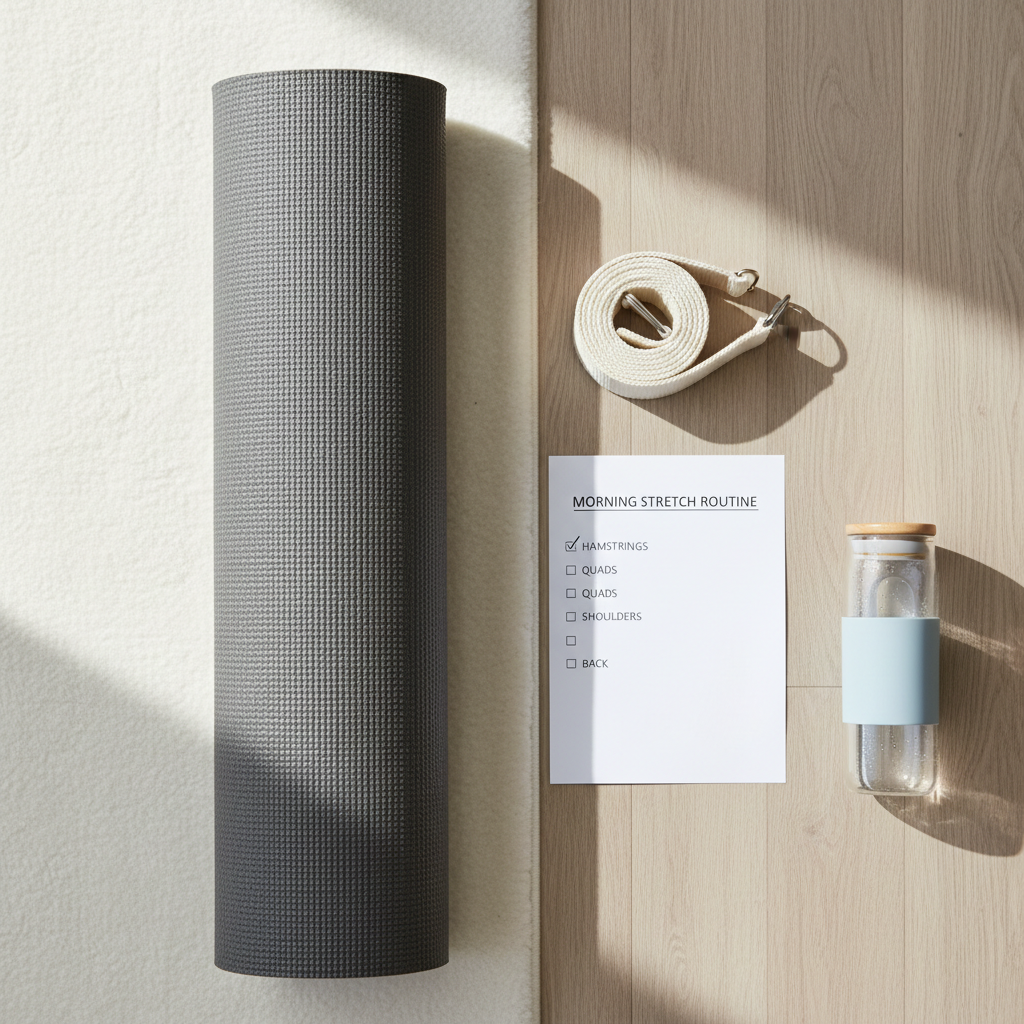
If you want a quick win, pick one area that annoys you most and stay with it for two weeks, then reassess range and comfort.
Common mistakes that make strap stretching less effective
- Turning it into a pulling contest: if your hands work harder than the target muscle, you’re probably overdoing it.
- Chasing depth instead of sensation: a smaller range with calm breathing often creates a better outcome.
- Letting posture collapse: rounding the low back in folds or flaring ribs in shoulder openers changes the target.
- Too-short holds: 10 seconds feels productive, but many bodies respond better to 30–60 seconds in a tolerable position.
- Ignoring asymmetry: one side almost always feels different, adjust strap length or hand position per side.
One more subtle one: using the strap only at the end range. Sometimes the best use is mid-range, where you can keep control and train the position calmly.
When to get help from a pro
Most people can experiment safely, but certain patterns deserve more caution. Consider checking with a physical therapist, qualified yoga therapist, or a clinician if you notice any of the following.
- Pain that feels sharp, shooting, or worsens after stretching sessions
- Numbness or tingling during strap-assisted hamstring work
- History of joint dislocation, significant hypermobility, or recent surgery
- Shoulder pain with overhead motion even using a very wide grip
According to National Institutes of Health (NIH), persistent or severe musculoskeletal symptoms merit professional evaluation, especially when nerve symptoms show up. That’s a good boundary to keep in mind while you explore yoga strap use at home.
Conclusion: make the strap your “range manager,” not your engine
Yoga strap use works best when it helps you stay calm, aligned, and patient inside a stretch. Keep tension gentle, choose setups you can repeat, and track progress in weeks rather than days.
If you want a clean next step, pick two stretches from the list, do them three times this week, and write down what feels different, range, comfort, or breathing. That quick note usually tells you whether to adjust intensity or switch strategies.
FAQ
How long should I hold strap-assisted stretches?
Many people do well with 30–60 seconds per hold, especially for hamstrings and hips. If you feel shaky or guarded, shorten the hold and reduce intensity, then build up gradually.
Is a yoga strap better than a towel or belt?
A towel works in a pinch, but it can stretch, bunch up, or slip. A yoga strap tends to give more predictable length and grip, which makes controlled stretching easier.
Can yoga strap use improve flexibility fast?
It can help you access positions more comfortably, but flexibility changes usually take consistent practice. If you measure success by “how deep today,” progress often feels slower than it really is.
What if I feel the stretch in my low back instead of my hamstrings?
Try a small bend in the knee, keep the opposite foot planted, and stop pulling the leg toward you. In many cases, a more neutral pelvis shifts sensation back into the hamstrings.
How do I use a yoga strap for tight shoulders without pain?
Start with a very wide grip for pass-throughs, move slowly, and keep ribs from flaring. If the front of the shoulder feels pinchy, widen your hands more and reduce range.
Should I stretch before or after workouts?
Before workouts, many people prefer lighter mobility with short holds. After workouts or on rest days, longer strap holds can feel better, as long as intensity stays moderate.
Can beginners use a yoga strap even if they’re not doing yoga?
Yes, a strap is basically a leverage tool. The main skill is learning to use it to reduce strain, not to force positions.
What strap length should I buy?
For many adults, 8–10 ft works well. If you’re taller, have limited shoulder mobility, or want more options for loops, 10 ft usually feels more versatile.
If you’re trying to build a simple stretching routine and want something you can repeat without overthinking, start by choosing one strap setup for legs and one for shoulders, then keep the same plan for two weeks before you change anything. Consistency makes the strap feel less like gear and more like a useful habit.