
Running injury prevention usually comes down to a few repeatable habits: sensible training load, decent strength, enough recovery, and quick action when a “small” pain keeps showing up.
If you run in the U.S., you’ve probably seen the pattern, a good streak, a new goal, a little extra mileage, then a knee or shin that starts talking back. Most running injuries are not a single dramatic moment, they build when tissue stress outpaces tissue capacity.

This guide stays practical: why common injuries happen, a quick self-check to spot your risk, and a plan you can actually follow week to week. You’ll also see a simple table that links symptoms to likely causes and first steps, because guessing rarely helps.
Why common running injuries happen (and why they keep returning)
Most “runner issues” show up when one piece of the system takes more load than it is ready for. Pain might appear in the foot, knee, hip, or back, but the driver often sits in training decisions.
- Ramp-up that outpaces adaptation: adding miles, intensity, or hills too fast is a classic setup for trouble, especially after time off.
- Intensity stacking: speed day plus long run plus a hard group run, not much easy running in between.
- Sleep and stress mismatch: recovery capacity drops when life gets heavy, even if your plan stays the same.
- Strength and control gaps: weak calves, hips, or feet can force other tissues to “cover,” often seen with Achilles, plantar fascia, and knee pain.
- Sudden surface or shoe change: new carbon shoes, minimalist shoes, or a switch to cambered roads can irritate tissues that were fine last month.
According to the American Academy of Orthopaedic Surgeons (AAOS), many overuse injuries relate to training errors and inadequate rest, which is why most fixes start with load management, not fancy gear.
Quick self-check: which risk bucket are you in?
You do not need lab tests to get value here. Answer honestly, and you’ll usually see why running injury prevention keeps slipping.
Training and recovery
- In the last 2–4 weeks, did your weekly mileage jump noticeably?
- Do you run hard more than 2 days per week (speed, hills, tempo, races)?
- Do you often “make up” missed runs by doubling up?
- Do you average under 7 hours of sleep most nights?
Body signals
- Does pain warm up, then return later or the next morning?
- Does one spot feel stiff for the first few minutes of a run, especially Achilles or plantar fascia?
- Do you feel soreness that gets worse run to run, not better?
How to interpret: if you checked multiple items in both sections, treat yourself as “higher risk” for overuse flare-ups and plan a conservative next 2–3 weeks.
Train smarter: a simple load rule that actually works
Running injury prevention is not about never pushing, it is about pushing with guardrails. Your tissues adapt, but they need time and steady exposure.
Try this simple approach for most recreational runners:
- Keep easy days truly easy: conversational pace, no hero workouts on random Tuesdays.
- Cap hard sessions: many runners do well with 1–2 quality days weekly (total), including long run if it is demanding.
- Add one stressor at a time: mileage, speed, or hills, not all three in the same week.
- Use a down week: every 3–5 weeks, reduce volume a bit to absorb training.
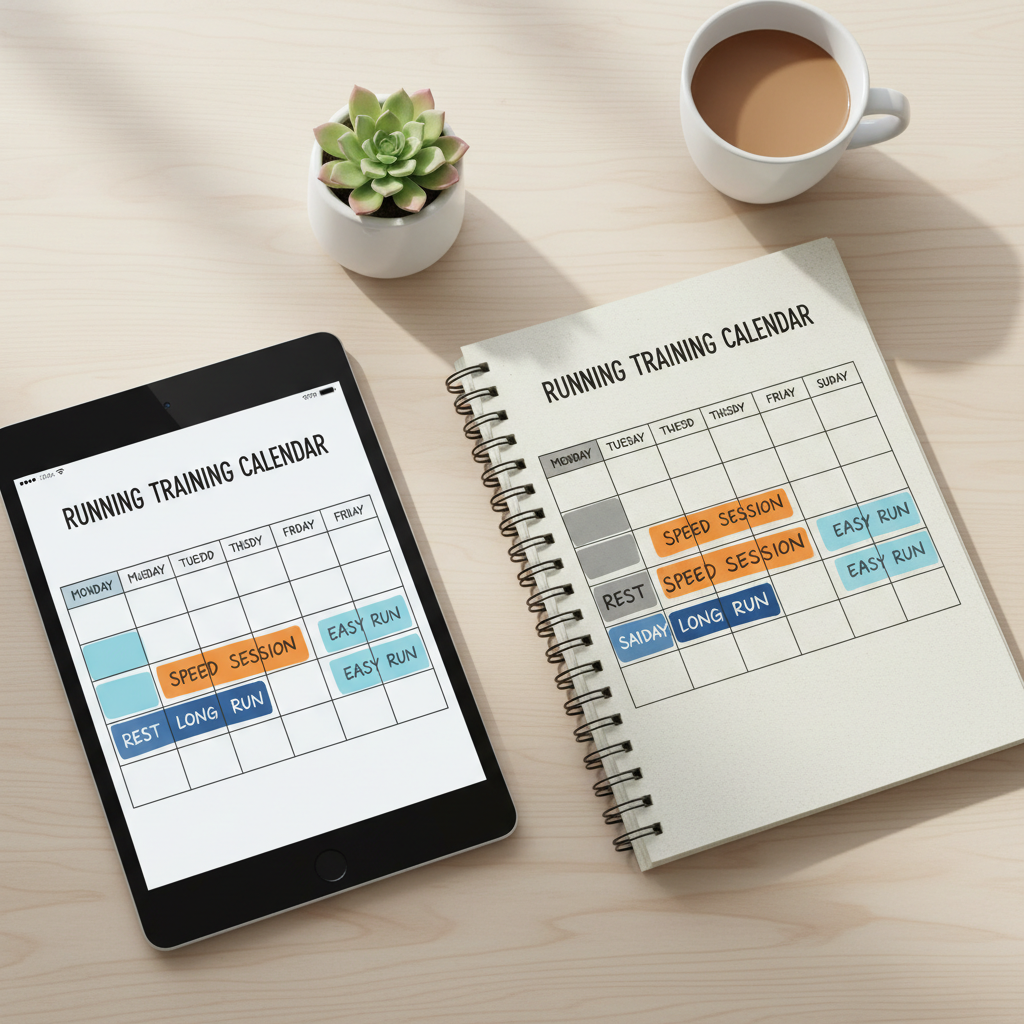
If you only adopt one habit, pick consistency over spikes. A slightly “too easy” month often beats a big month followed by two weeks off.
Strength and mobility that pay off for runners
Strength work is not a punishment, it is insurance. You do not need a full gym routine, but you do need enough capacity in calves, hips, and trunk to handle repetitive load.
A runner-friendly 20–30 minute routine (2x/week)
- Calf raises (straight-knee and bent-knee): build Achilles and soleus capacity.
- Split squats or step-downs: control knee tracking and quad strength.
- Single-leg RDL: hip stability and hamstring strength.
- Side planks or dead bugs: trunk control so stride stays stable when fatigued.
- Foot work (short-foot drill or towel scrunches): helpful if arch and plantar fascia feel cranky.
Keep it boring and progressive, add a little load or reps every 1–2 weeks if form stays clean. If you already have pain, you might need to scale range of motion or resistance and consider guidance from a clinician.
Shoes, surfaces, and form: what matters (and what usually doesn’t)
Shoes can help, but they rarely fix a training problem. Many runners chase footwear when the real lever is load and recovery.
- Shoe changes: if you switch to a very different shoe style, ease in over several weeks.
- Rotation: alternating two pairs may reduce repetitive stress patterns for some runners, though results vary.
- Surface variety: mixing trails, track, and road can help certain people, but sharp changes can also irritate tissues.
- Form tweaks: small cues like “shorter steps” sometimes reduce impact, but major form overhauls often backfire without coaching.
According to the American College of Sports Medicine (ACSM), gradual progression and adequate recovery are core principles of safe training; shoes and technique are usually secondary levers unless something is clearly off.
Early action plan: what to do when a niggle starts
Most runners wait too long because the pain is “not that bad.” The better play is to respond early, while you still have options.
48–72 hour decision guide
- If pain rises during the run and changes your stride, consider stopping and swapping to walking or cross-training.
- If pain is stable and mild, shorten the run, stay easy, and avoid speed or hills for a few days.
- If next-day soreness escalates, reduce weekly load and add recovery until the trend improves.
Think “calm it down, then build it back.” This is where running injury prevention becomes real, because you are managing the trend, not chasing daily perfection.
Common injury patterns: symptoms, likely drivers, first steps
This table is not a diagnosis. It is a way to connect common patterns to sensible next moves. Persistent or severe pain deserves professional evaluation.
| Area | Common pattern | Often linked to | Practical first steps |
|---|---|---|---|
| Knee (front/around kneecap) | Hurts on stairs, downhills, after longer runs | Fast mileage build, weak quads/hips, too much downhill | Reduce volume, avoid steep downhills, add step-downs/split squats |
| Shin | Ache along tibia, worse with impact | Surface change, ramp-up, low calf capacity | Back off impact, calf strengthening, gradual return, consider clinician if focal bone pain |
| Achilles | Morning stiffness, tender tendon, worse with speed | Speed/hills spike, shoe drop change, calf weakness | Reduce intensity, progressive calf raises, avoid aggressive stretching if very irritable |
| Foot/heel (plantar fascia) | First-step pain in morning, sore arch | Sudden mileage, long standing, stiff calves | Load management, foot and calf strengthening, supportive footwear temporarily |
| Hip (side) | Pain outside hip, worse on one-leg stance | Too much speed, hip abductor weakness | Ease intensity, add side planks/hip work, avoid excessive cambered roads |

Key takeaways you can use this week
- Most injuries come from load mistakes, not a “bad body.” Fix the pattern, not just the symptom.
- Protect easy days, they make hard days possible.
- Strength twice weekly often prevents the same issues from cycling back.
- Respond early when pain trends upward, small adjustments beat forced rest later.
When to get professional help
It is smart to ask for help sooner if anything feels off in a “red flag” way. Consider a sports medicine clinician or physical therapist if you notice any of the following:
- Pain that is sharp, worsening, or localized to a small point on a bone
- Swelling, bruising, numbness, or instability
- Night pain or pain that does not improve with a week of reduced load
- A limp, or you cannot hop comfortably on the affected side
According to the Centers for Disease Control and Prevention (CDC), physical activity is beneficial for health, but choosing safe progressions and addressing injuries appropriately helps people stay active longer. If you have medical conditions or are unsure, it’s reasonable to consult a qualified professional.
Conclusion: stay healthy by staying consistent
Running injury prevention is not a secret program, it is steady training, a bit of strength, and enough recovery to let your body catch up with your goals. If aches keep repeating, treat that as feedback, not failure.
Pick one action today: trim intensity for the next week, add two short strength sessions, or plan a conservative build for your next training block. Small moves, done consistently, usually keep you running.
FAQ
How do I know if my pain is “normal soreness” or an injury?
Normal soreness tends to feel diffuse, improves as you warm up, and gets better over a few days. Injury patterns often feel more specific, repeat in the same spot, and trend worse when you keep the same training load.
Does stretching prevent running injuries?
Stretching can feel good and may help range of motion for some runners, but it is not a reliable standalone solution. Many overuse issues respond more to smart loading and strengthening than to longer stretching sessions.
What is a safe way to increase mileage without getting hurt?
Increase slowly, keep most runs easy, and avoid adding speed and hills at the same time you add volume. If fatigue or soreness starts stacking, hold mileage steady for a week before building again.
Should I run through mild Achilles or shin pain?
Many runners can continue with modifications if pain stays mild and does not worsen during or after the run, but it is a gray area. If you notice morning stiffness increasing, a changing stride, or next-day pain climbing, dial back and consider professional input.
Do I need special shoes for running injury prevention?
Usually you need a shoe that fits well, feels stable for your stride, and matches your training. “Special” shoes might help certain patterns, but footwear cannot compensate for aggressive training spikes.
Is cross-training useful when something hurts?
Often yes. Cycling, swimming, or elliptical can maintain fitness while reducing impact, which helps many overuse flare-ups settle. The key is keeping intensity reasonable so recovery still happens.
How many strength days do runners really need?
For many recreational runners, two sessions per week is enough to make a noticeable difference. If you run high mileage or have a repeat problem area, a third shorter session can help, as long as it does not compromise sleep and easy runs.
If you’re trying to keep training steady but aches keep interrupting, a simple audit of your weekly load and a targeted strength plan can be a more “doable” solution than guessing day to day. If you prefer, a running-focused physical therapist or coach can help you match workouts, recovery, and strength to your current capacity.