
Weight lifting warm up matters because your first working set is not the time to find out your shoulders feel sticky, your hips feel tight, or your heart rate is still asleep.
A good warm-up does two jobs at once, it raises tissue temperature and it “rehearses” the lifts you plan to do, so your first heavy rep feels familiar instead of rushed. That usually means less joint crankiness, cleaner technique, and more consistent performance across sets.
Most people don’t skip warm-ups completely, they just do a random mix, a few arm circles, a treadmill jog, maybe some stretching, then jump straight into a max-ish set. This article lays out a simple structure you can repeat, plus quick tweaks for common training days like squat, bench, and deadlift.
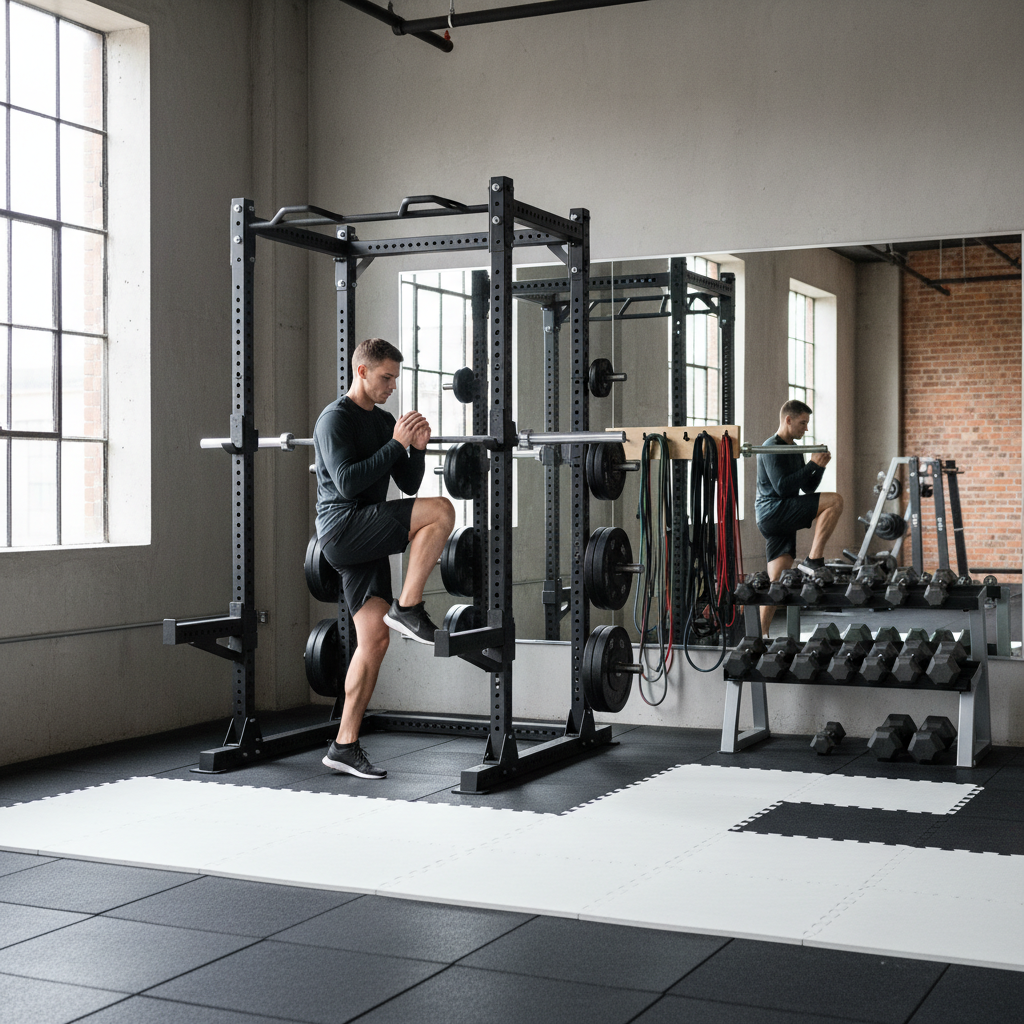
What a “proper” warm-up actually includes
Think of a warm-up as three layers. If you keep these layers, you can swap exercises without losing the point.
- General warm-up: a short pulse-raiser to increase blood flow and temperature.
- Mobility and activation: move joints through useful ranges and “turn on” key muscles that tend to lag.
- Specific warm-up sets: practice the exact lift pattern with lighter loads, then ramp toward working weight.
According to the American College of Sports Medicine (ACSM), a warm-up is commonly recommended before exercise to prepare the body for more intense activity. In practice, lifters get the most value when the warm-up looks like the session, not like a separate cardio workout.
Why warm-ups fail in real gyms (and how to fix it)
Warm-ups usually go wrong for predictable reasons, not because people lack discipline. Fix the reason and the routine becomes easy to repeat.
Problem: Too long, too sweaty
If you’re tired before your first work set, the warm-up stole your performance. Keep the general portion short, you want “warm,” not “winded.”
Problem: Random mobility that doesn’t match today’s lift
Some drills feel good but don’t transfer. For a lower-body day, prioritize ankles, hips, and bracing. For upper body, prioritize thoracic motion, scapular control, and shoulder comfort.
Problem: Skipping the ramp-up sets
This is the big one. Many lifters do band work then load a plate-heavy bar and wonder why rep one feels off. The specific sets are where coordination locks in.
Problem: Static stretching right before heavy sets
Static holds can be useful in some cases, but right before heavy lifting they often make people feel “loose” without feeling stable. If you like static stretches, keep them brief and pair them with activation and technique sets.
Quick self-check: do you need more warm-up or different warm-up?
Use this quick list before you add more exercises. More warm-up isn’t always the answer, sometimes you just need better sequencing.
- You feel joint pinching on set one, but it settles by set three.
- Your first working set looks like a “practice set” on video.
- You struggle to hit depth or position early, then it improves.
- Your heart rate spikes too fast when the load gets real.
- You feel one side doing most of the work.
If two or more show up often, your weight lifting warm up probably needs a clearer general-to-specific flow, not a bigger pile of drills.

The 10–15 minute warm-up template (works for most lifters)
This template stays consistent, you just swap a few mobility and activation drills based on the day.
1) General warm-up (3–5 minutes)
- Bike, rower, incline walk, or jump rope at an easy pace
- Breathing stays controlled, you can talk in full sentences
2) Mobility + activation (4–6 minutes)
- One lower-body drill: hip airplanes, 90/90 transitions, or ankle rocks
- One trunk drill: dead bug, bird dog, or side plank variations
- One upper-body drill (even on leg day): band pull-aparts or scap push-ups
3) Specific warm-up sets (3–8 minutes)
Do 3–6 ramp-up sets for your first big lift. Keep reps low so you stay fresh.
- Empty bar or very light: 8–10 reps
- Moderate: 5 reps
- Heavier: 3 reps
- Near working weight: 1–2 reps
Key point: every set should look like your working sets, same tempo, same bracing, same setup ritual.
Warm-up examples by lift (squat, bench, deadlift, overhead press)
Here are practical “plug-and-play” options. Pick what matches your day and your limitations.
Squat day
- General: bike 4 minutes
- Mobility: ankle rocks 10 per side, 90/90 transitions 6 per side
- Activation: glute bridge 8–10 reps, dead bug 6 per side
- Specific: bar squat 10, then ramp sets 5/5/3/2/1
Bench day
- General: rower 3–4 minutes
- Mobility: thoracic rotations 6 per side
- Activation: band pull-aparts 12–15, scap push-ups 8–10
- Specific: bar bench 10, then ramp sets 5/5/3/2/1
Deadlift day
- General: incline walk 4 minutes
- Mobility: hip hinge patterning with dowel 6 reps, hamstring flossing 6 per side
- Activation: side plank 20–30 seconds per side, kettlebell deadlift light 8 reps
- Specific: barbell RDL 6–8, then ramp pulls 5/3/3/2/1
Overhead press day
- General: bike 3 minutes
- Mobility: wall slides 6–8 reps
- Activation: band external rotations 10–12, face pulls 10–12
- Specific: empty bar press 8–10, then ramp sets 5/3/3/2/1
A simple table: warm-up sets based on your working weight
If you like numbers more than guesswork, use percentages for your first main lift. The goal is readiness without fatigue.
| Set | Load | Reps | Notes |
|---|---|---|---|
| 1 | ~20–30% | 8–10 | Dial in setup, full range, smooth tempo |
| 2 | ~40–50% | 5 | Start bracing like a working set |
| 3 | ~60% | 3–5 | Speed stays crisp |
| 4 | ~70–75% | 2–3 | Rest a bit longer |
| 5 | ~80–85% | 1–2 | Last “check-in” before work sets |
If your working sets start above 85% of your max that day, add one extra single around 90% only if it helps confidence and doesn’t grind.

Common mistakes and safety notes (what to avoid)
A weight lifting warm up can still miss the mark if it creates fatigue, irritation, or false confidence. These fixes are usually simple.
- Turning warm-up sets into workouts: if warm-up reps slow down or you start “chasing a pump,” cut reps and increase rest.
- Ignoring pain signals: sharp pain, numbness, or radiating symptoms are not “tightness,” consider stopping and getting evaluated.
- Only stretching what feels tight: tight often means weak or under-controlled. Pair mobility with activation.
- Copying a routine from a different goal: a powerlifting peak, bodybuilding session, and beginner strength plan do not warm up the same way.
According to the Centers for Disease Control and Prevention (CDC), strength training is beneficial for health, but exercise should be performed safely and appropriately for the individual. If you have a prior injury, high blood pressure concerns, or persistent joint symptoms, it’s smart to ask a qualified coach or clinician for guidance.
Practical “do this next” recommendations
If you want a routine you can actually follow on busy days, keep it boring and repeatable, then adjust one variable at a time.
- Set a timer for 12 minutes, finish general + mobility by minute 6, start ramp-up sets by minute 7.
- Keep a short list of “go-to” drills per lift, avoid scrolling for new warm-up ideas mid-session.
- Film one warm-up set and one working set, if they look different, fix the warm-up ritual.
Bottom line: the best warm-up is the one that reliably gets you into your first work set feeling stable, warm, and technically sharp, without draining energy.
If you’re unsure where to start, run the 10–15 minute template for two weeks, track how set one feels, and only then decide what to add or remove.
FAQ
How long should a weight lifting warm up be?
For most recreational lifters, 10–15 minutes covers it. If you train early mornings, in a cold gym, or you’re returning from a layoff, you might need closer to 15–20, but keep intensity low so you don’t arrive tired.
Should I do cardio before lifting?
Light cardio can help raise temperature and reduce the “stiff first set” feeling. Keep it short and easy, the goal is preparedness, not conditioning.
Is static stretching bad before lifting?
Not automatically, but long holds right before heavy efforts can make some people feel less stable. Many lifters do better with dynamic mobility and then specific warm-up sets that reinforce control.
What’s the best warm-up for sore knees or shoulders?
It depends on the cause, but a common approach is reducing range temporarily, using slower controlled warm-up reps, and adding activation for the muscles that stabilize the joint. If pain persists or worsens, consult a qualified professional.
Do I need activation drills every session?
Not always. If your main lifts feel crisp after general movement and ramp sets, activation can be minimal. If you tend to “feel nothing” in key areas like glutes or upper back, short activation often helps.
How many warm-up sets before my first working set?
Most people land around 3–6 sets depending on how heavy the day is. More isn’t better if your last warm-up set feels like a grind.
Can I warm up with just the empty bar?
You can, especially for upper body, but it’s usually not enough for heavier lower-body days. A brief general warm-up plus a couple ramp steps tends to improve positioning and bracing.
What if I’m short on time?
Keep general warm-up to 2–3 minutes, do one mobility drill and one activation drill, then prioritize the ramp-up sets for your first lift. If you cut anything, cut “random extras,” not the specific practice sets.
If you’re trying to build a repeatable warm-up that fits your schedule and your lifts, it often helps to write it as a simple checklist you can keep in your notes app, then refine it based on how your first working set feels each day.