
Yoga props for beginners often come down to two tools that change everything fast: blocks and straps, because they make poses feel more reachable without forcing your body into shapes it does not own yet.
If you ever felt like yoga “isn’t for flexible people like me,” you’re not alone. A lot of beginners quit because the first few classes feel like a wrestling match with hamstrings, shoulders, and balance.
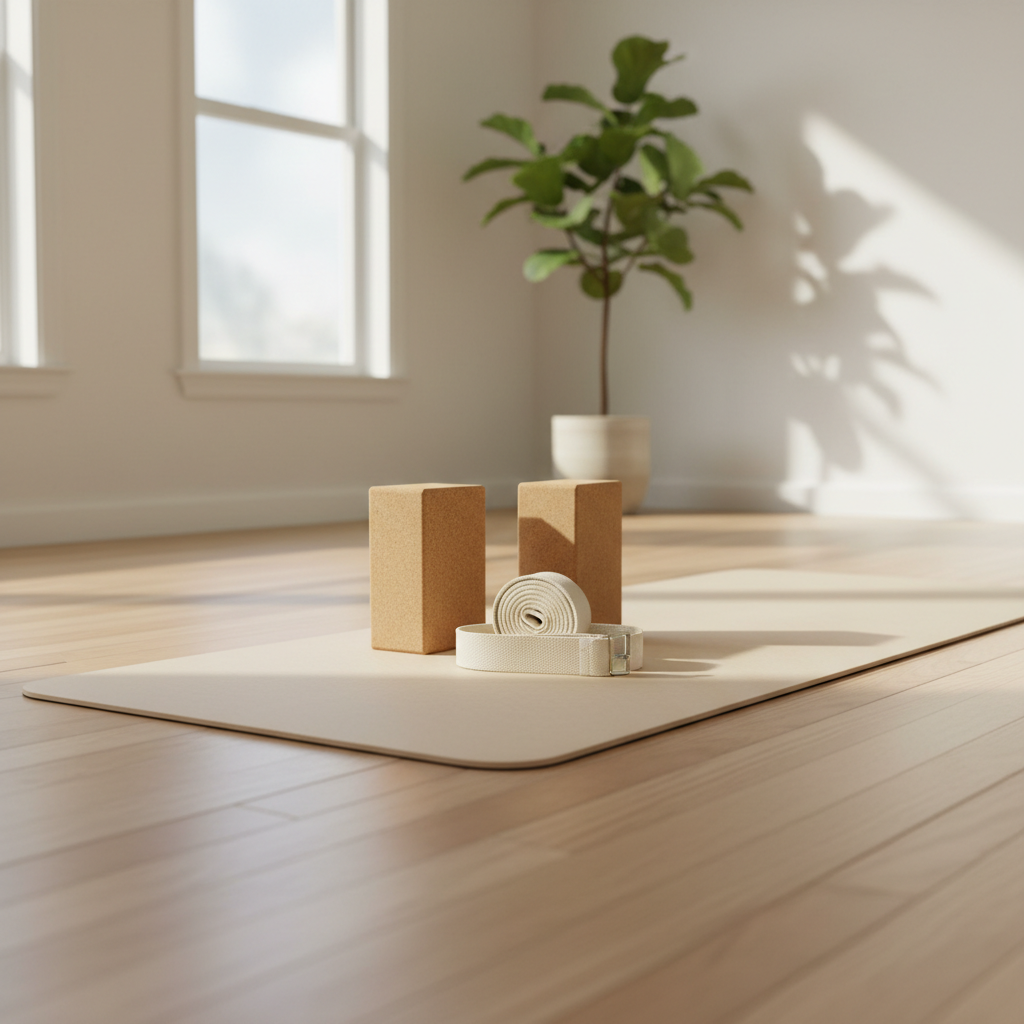
This guide breaks down what blocks and straps actually do, how to pick them, and how to use them in the poses beginners practice most. No hype, just the stuff that tends to make yoga feel safer, steadier, and more enjoyable.
Why blocks and straps help beginners (and what they do)
Think of props as “range-of-motion tools.” They do not make a pose easier in a lazy way, they make the pose available with better alignment, which often feels harder in the right places.
- Blocks bring the floor closer, so you can keep your spine long and your shoulders organized instead of collapsing to “touch the ground.”
- Straps extend your reach, so tight hamstrings and shoulders do not force you to round your back or yank joints into uncomfortable angles.
According to Yoga Alliance..., yoga should be practiced with attention to safe alignment and personal limits. Props are one of the simplest ways to respect those limits while still building skill.
Quick self-check: do you need yoga props right now?
If you answer “yes” to even one or two of these, props usually help right away.
- You feel strain in your lower back during forward folds, especially when trying to reach your toes.
- In Downward-Facing Dog, your shoulders feel pinched or your hands feel far away from stable.
- You wobble in standing balances and hold your breath because you feel rushed.
- Your hips feel tight in seated poses and you end up slouching to compensate.
- You skip binds or shoulder stretches because you cannot reach comfortably.
A helpful rule: if the “effort” feels like joint pressure or sharp discomfort, props are a smart pivot. If you have a prior injury, especially in wrists, shoulders, hips, knees, or spine, consider checking in with a qualified instructor or healthcare professional before pushing range.
Choosing yoga blocks: material, size, and when each works
Blocks look simple, but the right block choice changes stability a lot, especially when you lean weight into your hands.
Block materials (real-world tradeoffs)
- Cork: grippy, stable, usually heavier, great if you want a “solid” feel.
- Foam: lighter, softer on wrists, can feel less stable for weight-bearing.
- Wood: very firm, very stable, less forgiving, not ideal if you bruise easily.
Size notes most beginners care about
Most blocks come in a “standard” size and that works for many people, but hand size and shoulder comfort matter. If you have smaller hands or sensitive wrists, a slightly narrower block can feel more secure.
Pro tip that saves frustration: buy two blocks. One block helps, two blocks create symmetry in many poses and reduce twisting or dumping into one side.
Choosing yoga straps: length, buckle type, and comfort
A strap should feel like a reliable extension of your arms, not something you fight with mid-pose.
Length (what usually makes sense)
- 6 ft: works for many beginners for shoulder stretches and hamstring work.
- 8 ft: more versatile for larger bodies, tighter shoulders, or more wrap-around options.
- 10 ft: useful for some binds and restorative setups, often more than a beginner needs.
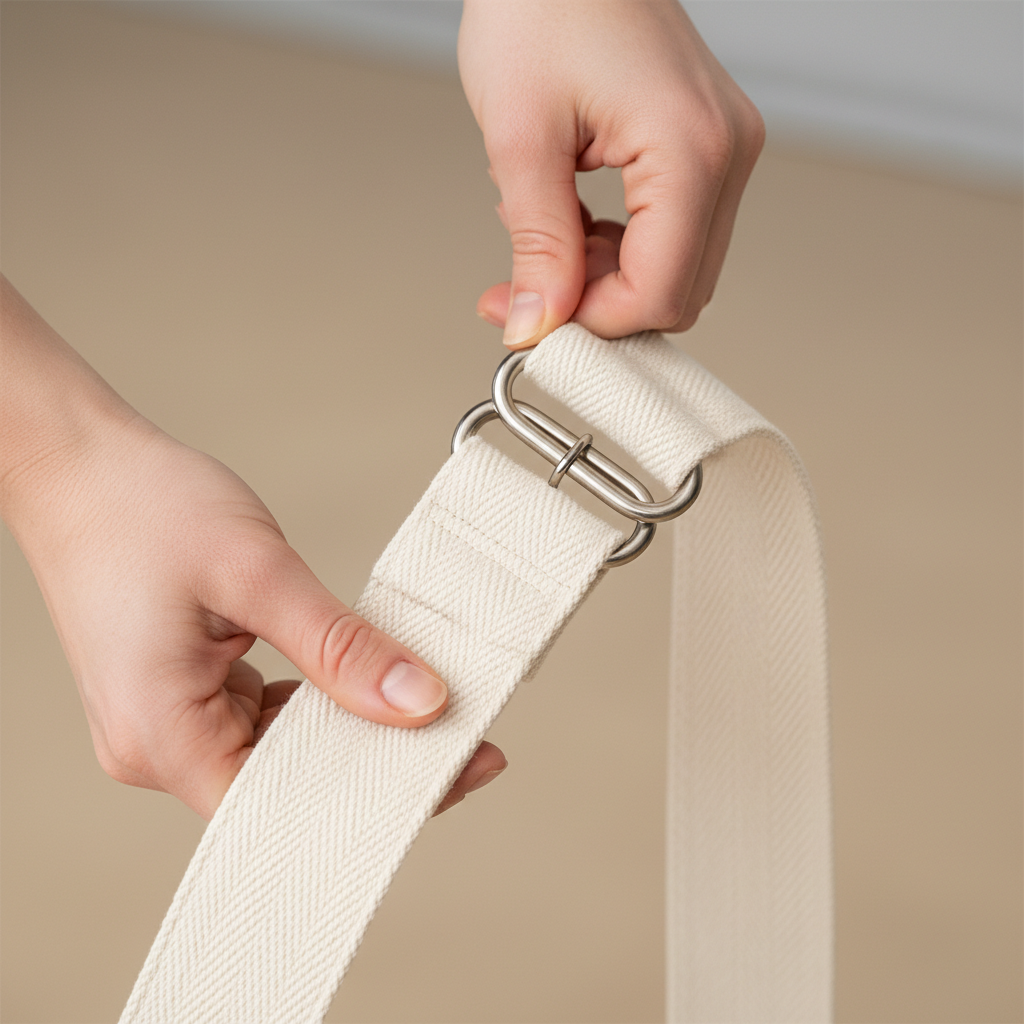
Buckle types (what feels easiest)
- D-ring: common, secure, easy once you learn the threading.
- Cinch buckle: quick adjust, convenient for on-the-fly changes.
Comfort matters more than people admit. Rough webbing can irritate hands in longer holds, so a softer cotton strap often feels better for beginners.
How to use blocks and straps in common beginner poses
Below are practical setups you can try immediately. The goal is not “deeper,” it is cleaner alignment with calmer breathing.
Forward Fold (Uttanasana) with blocks
- Place blocks on the highest height under your hands.
- Bend knees slightly, keep spine long, let the fold come from hips.
- If your neck grips, look toward your knees, not forward.
Downward-Facing Dog with blocks (for shoulder space)
- Put hands on blocks at the lowest height if wrists or shoulders complain.
- Press firmly through knuckles, keep ribs from flaring.
- Keep knees soft, prioritize length in spine over straight legs.
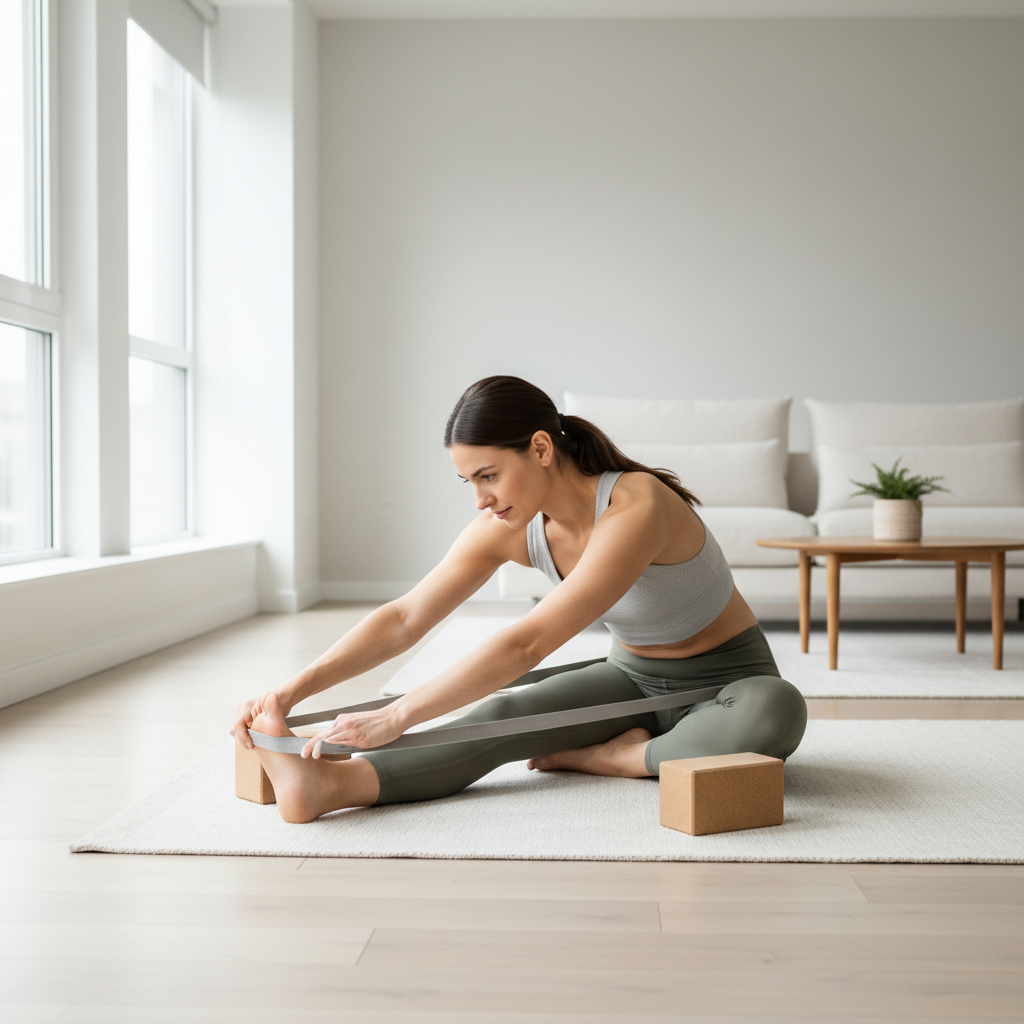
Seated Forward Fold (Paschimottanasana) with a strap
- Loop strap around the balls of your feet, hold ends evenly.
- Pull just enough to keep spine tall, avoid yanking yourself forward.
- Exhale and hinge from hips, stop before your back rounds aggressively.
Reclined Hand-to-Big-Toe (Supta Padangusthasana) with a strap
- Lie on your back, loop strap around one foot, extend leg up.
- Keep the other leg bent if your back arches.
- Use the strap to guide the leg, not to force it.
Bridge Pose (Setu Bandha Sarvangasana) with a block
- Place a block under your sacrum for a supported bridge.
- Choose height that feels stable, not like your lower back is compressed.
- Stay 5–10 breaths, then lower slowly.
In many yoga props for beginners setups, “less range, more control” turns out to be the fastest path to progress.
Practical starter plan: what to buy and how to practice (without overthinking)
If you want a simple setup that covers most at-home flows and studio classes, this usually works well:
- 2 blocks (cork or firm foam)
- 1 strap (6–8 ft)
Try this 10-minute mini-routine 3–4 times a week:
- 1 minute: Supported Chest Opener with strap behind back, gentle
- 2 minutes: Down Dog with knees bent, hands on floor or blocks
- 2 minutes: Forward Fold with blocks, slow breathing
- 2 minutes: Supta Padangusthasana with strap each side
- 3 minutes: Supported Bridge with block, then rest
Keep a tiny log for two weeks: which pose feels calmer with props, which feels unchanged. That feedback tells you more than chasing a “perfect” setup.
Common mistakes with props (and how to avoid them)
- Using props to force depth: if you crank a strap to “win” the pose, you often irritate hamstrings or shoulders. Keep tension mild.
- Going too low too soon: blocks have heights for a reason. Start higher, earn lower.
- Ignoring symmetry: one block under one hand in standing folds can twist the torso; two blocks can fix this fast.
- Letting props replace engagement: supported does not mean collapsed. Keep light muscle tone and steady breath.
According to American Council on Exercise (ACE)..., stretching should stay within a tolerable range and avoid sharp pain. If a prop setup causes pinching, numbness, or zinging sensations, back off and adjust.
Block vs strap: when to reach for which (quick table)
If you are standing on a mat wondering what to grab, this is the fast decision tool.
| Situation | Use a Block | Use a Strap |
|---|---|---|
| Floor feels “too far” in folds | Yes, lift the floor to your hands | Not the first choice |
| Hamstrings tight in seated poses | Sometimes, sit on a block | Yes, loop around feet |
| Shoulders tight in binds or overhead work | Occasionally for support | Yes, extend your reach safely |
| Wrist discomfort in weight-bearing | Maybe, hands on blocks can help | No, unrelated |
| Restorative support and gentle opening | Yes, supported shapes | Yes, gentle holds |
Key takeaways (save this)
- Yoga props for beginners are not a crutch, they are a way to practice alignment while flexibility catches up.
- Two blocks usually beat one, especially for symmetry and stability.
- Straps help most in hamstring and shoulder work, as long as you avoid pulling hard.
- If discomfort turns sharp or joint-focused, adjust immediately and consider professional guidance.
Conclusion: make yoga feel doable, then make it consistent
You do not need a complicated gear closet to feel confident in yoga. A strap and a pair of blocks cover a surprising amount of ground, and they make many “beginner-unfriendly” poses feel honest instead of discouraging.
If you want one action step today, bring blocks to your next class and give yourself permission to use the highest setting. Comfort is not cheating, it is how consistency starts.
FAQ
- Are yoga blocks worth it for beginners?
Yes for many people, especially if you round your back to reach the floor or feel unstable in standing poses. Blocks let you keep better shape while you build mobility. - What size yoga strap should a beginner buy?
A 6–8 ft strap works for most beginners. If you have broader shoulders, a larger frame, or very tight range, 8 ft often feels less cramped. - Can yoga props for beginners help with wrist pain?
Sometimes. Blocks can reduce wrist extension in poses like Down Dog, but wrist pain can come from many causes, so it helps to ask an instructor to check your hand and shoulder setup. - Is foam or cork better for yoga blocks?
Cork tends to feel more stable and grippy, foam feels lighter and softer. If you plan to put weight on them often, cork or firm foam usually feels more secure. - How do I use a strap without overstretching?
Keep a little slack, move slowly, and treat the strap as a guide. If you cannot breathe smoothly or you feel sharp sensations, ease off. - Do I need two blocks or is one enough?
One block can help, but two blocks solve more problems, especially in forward folds and symmetrical standing work where one-sided support can twist you. - When should I avoid using props?
If you use props to force a shape past your current control, it can backfire. Also, if you feel unusual pain, numbness, or tingling, stop and consider professional advice.
If you are building an at-home routine and want a more friction-free start, a simple kit with two blocks and a strap can remove a lot of guesswork, then you can focus on the part that matters: showing up and practicing.